The 3rd International Symposium for a New Elefsina returns to the place of the famous Mysteries – where for over 15 centuries the idea of inner transformation and initiatory knowledge has been cultivated – for a three-day event of reflection, inspiring dialogue, and visionary action. From 25 to 27 September 2025, the World Human Forum invites innovative speakers from a variety of fields to the Old Elefsina Olive Factory in Elefsina for the symposium entitled “Reinventing the World”. Content: how we can restore our relationship with life, nature, others, and ourselves to pave the way for a new eco-civilization.
Alexandra Mitsotaki, president and co-founder of the World Human Forum, and Spyros Doukakis, assistant professor at the Department of Informatics at the Ionian University and president of the Institute of Educational Policy, talk to Protothema.gr about the Symposium.
“This is the third year that the World Human Forum returns to Elefsina, a place that for 1,500 years, with its Mysteries, was the spiritual reference point of antiquity. A lot of work has been done for Elefsina to become the European Capital of Culture. The investments and infrastructure that have been made, the money that has been spent, must not be wasted. When we first went to Elefsina in 2023, as part of the 2023 Elefsis European Capital of Culture, we made a promise: that every year at the end of September, we would return. We are keeping this promise this year and hopefully for many years to come,” Mitsotaki begins to say, while referring to the issues that are to be highlighted in the context of the Conference, she notes: “The symposia we organise in Elefsina seek to approach holistically the major issues, the major concerns of our time. At a time when humanity is facing multiple crises – in relation to the environment, democracy, work, but more specifically, crises of loneliness and the meaning of life – Elefsina can again play an important role. Each of these is not a different crisis. They are interconnected. They are a matter of cultural crisis and a crisis of values. That is why, when we talk about re-engaging the world, we do not want to limit the discussion to a narrow framework – after all, some conferences focus on individual themes. In Elefsina, from 25 to 27 September 2025, distinguished speakers from around the world will speak to us in a new way and with a new perspective, offering us hope about the economy, democracy, sustainability, health, education, art, and inner transformation. But we will not only listen to the speakers. Those of you who join us in Elefsina will participate in hands-on workshops and experiences, and each evening in unique artistic events. The last evening, even in the unique Archaeological Site of Elefsina, in the Ceremonial Hall, where the Mysteries used to take place.”
In the age of the dominance of the image, what place can the ‘inner transformation’ of man occupy? Is it a realistic goal? “It is a necessary goal,” answers the WHF president, “Our age, with its rapid changes and in which one ‘image’ chases after another, most of the time unfortunately does not bring man greater happiness, bliss. So the deep questions that torment man about his own path and the meaning of life remain the same. The excessive speed of changes and developments, which we find it very difficult to follow and understand, creates even greater difficulty in finding a balance with ourselves. Our discussions in Elefsina remind us how important all these reflections are. There is no “one size fits all” here; there is no absolute rule of thumb for how to do this. Everyone is looking for it in their own way.
According to Mitsotaki, the concepts of “re-initiation” are not only incompatible with the economy and work. The economy is not an end in itself. In this sense, it has, perhaps, the most important role to play in the flourishing of society and people. It is therefore by no means a matter of incompatible concepts. For a successful life, the economy has to be compatible with both our values and our activities. A successful life is a life in which our work is as close as possible to what fulfills and satisfies us. At the 3rd International Symposium for a New Elefsina, we approach the economy in a more creative and hopeful way. Through three sub-themes that allow us to see it differently. We will discuss the necessity and potential of impact investing, the lessons we can learn from nature, and how what we see as junk can eventually become “treasure”. We need to rethink how we can live with nature, how to get out of the logic of an extractive economy that does not invest in sustainability or redistribution of wealth. Many people believe that all this is utopia. I personally believe that it is utopian to continue to go with the logic of business as usual, when in so many areas we have gone beyond the limits of what life on the planet can sustain.”
Regarding man’s relationship with food and how it can contribute to the inner transformation of man, he adds: “A healthy mind in a healthy body, the ancient Greeks used to say. The ancient Greeks also said: ‘Man is one: mind, spirit, body. There is no way to be complete, with a spiritual and balanced life, unless we coexist healthily with our body as well. I was recently reading a study about processed foods and their detrimental effect on the body… Proper nutrition, which we now so lack, is essential for our physical and, by extension, spiritual health. Eleusis was a centre of worship of the goddess of agriculture, Demeter, who taught people how to cultivate the land. Looking at our relationship with food, we see how much man has also become disconnected from his relationship with the land, with production. Greece is a country with a small area of land that can and should be cultivated with quality. So I am very happy to see more and more people in our country cultivating the land differently and feeding themselves differently. The Mediterranean diet is one of the strong advantages of our region. It could not be absent from the discussion at our symposium. In the relevant panel, the emeritus professor of the Medical School of the University of Athens, Ms. Antonia Trichopoulou, will also participate.”
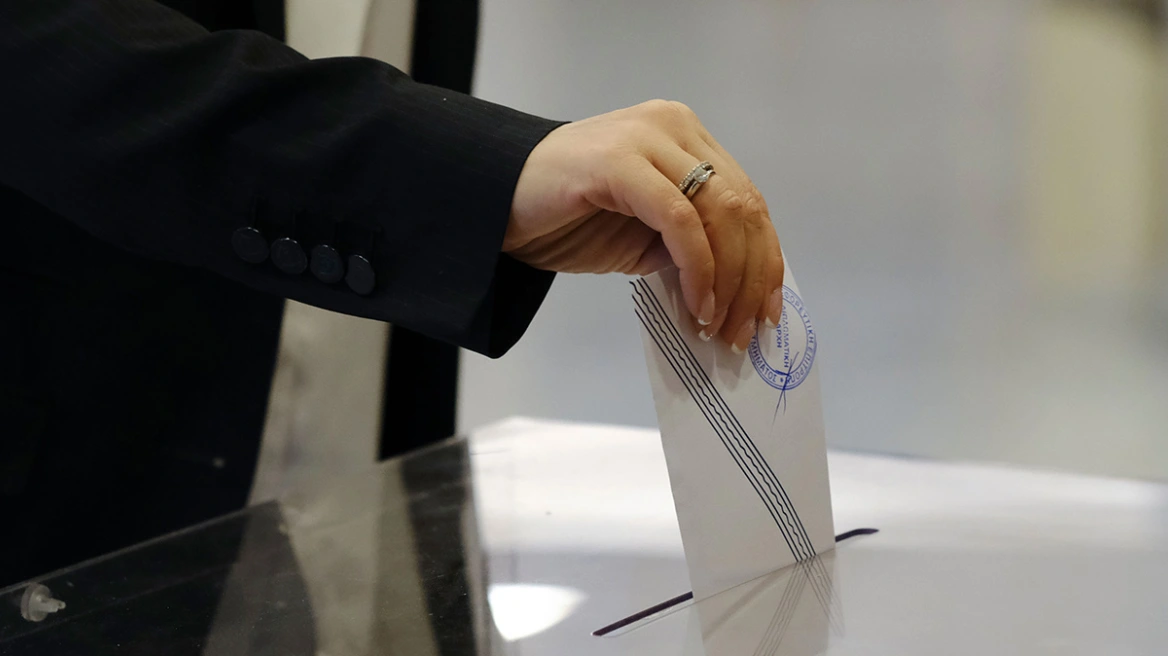
As to why the concept of democracy is called upon to ‘re-inspire’, the question arises as to whether its charm has been ‘dulled’ in its birthplace, Greece. Alexandra Mitsotaki comments: “Democracy is going through a very big crisis on an international level. More and more countries are being ruled by authoritarian regimes. In the European continent, and I am afraid in our country too, we are seeing a shift towards populism that is putting democracy at risk. Tools like social media and the internet, we thought at one point that it would be a new opportunity for democracy. In the end, they often end up confining us to our own microcosm, to our own barriers, creating fewer opportunities for exchange and dialogue. Each person, locked up in his own ‘cloud’ of ideas and beliefs, can no longer even listen to what the person he considers to be his near-opponent has to say. Developments in the USA, unfortunately, confirm this phenomenon. We believe – and this will be discussed in Elefsina – that more and better democracy is needed. Democracy cannot be just casting our vote every four years to give someone the responsibility to govern us. Real democracy means effective activation, empowerment, participation, and responsibility of citizens for what happens in our society.”
Children, who have always served as the driving force of humanity, can only have a place at the symposium: “Citizen activation, in which we at the World Human Forum believe so strongly, can start at a very young age. That is why actions involving children are at the centre of our attention,” explains the President. “In Greece, we inspired the creation of the Sustainability Education Network “From Mythology to Space – Myth2Space”. A network created by the teachers themselves in Athens and the region. Almost a thousand schools take part in it, and in early 2026, it will hold its second student conference in Athens. But we are also bringing Design for Change to Greece. We are talking about the largest change movement in the world by and for children. And to think that it was started by a mother in India who, without being a teacher, decided to create her own school, which, 20 years later was awarded as the best school in the world. She shared this experience through Design for Change with hundreds of educators in 72 countries and more than 2 million students worldwide. These children are finding solutions and making not only their school, their neighbourhood, but also the whole world a better place. After India, Dubai and Japan, in November 2026, our country will host the first international Design for Change meeting for the first time. These children are our hope for a truly better world.”
On the part of the Institute of Educational Policy, its president, Spyros Doukakis, talks about ‘reimagining the world’ through education: ‘It is the search for a new look towards knowledge, creation, and life. It is the moment when school is not limited to the transmission of information, but becomes once again a place of inspiration, of innovation, and empowerment for students. At the Institute for Education Policy, we are working to make the education system a place of re-invention. We develop new Curricula that foster critical thinking, creativity, and collaboration. We are implementing multiple textbooks, which gives teachers the choice and students the experience of different approaches. We integrate whole literature books, and we use artificial intelligence in inclusive education so that every child has real learning opportunities. And at the same time, we are paving the way for a new pedagogical culture where the student is not a mere receiver but an active creator.
Digital technologies are becoming part of this journey. Through European programmes, virtual and augmented reality, students can walk through ancient civilisations, explore the secrets of nature, experience historical events. With artificial intelligence they learn to manage information, analyse data and develop critical thinking. With digital platforms they have access to open and collaborative learning that transcends the boundaries of the school and connects them to the world.
Re-engaging the world means bringing wonder, imagination and hope back into learning. A school that unites technology with values and prepares students not just to stand in the world, but to shape it as active citizens. This is the school we deserve, and this is the vision we serve at IEP; because only through partnerships, only truly together for education, can we bring back the wonder in learning.
Topics and speakers
Issues to be explored at the 3rd International Symposium for a New Elefsina:
– Art as a gateway to inner transformation
– Rebuilding the economy, work, and neighborhoods
– Our relationship with food
– Democracy as a shared vision
– Children as a reservoir of humanity’s dreams
– The role of psychedelics in consciousness and healing
The list of speakers and participants includes, among others. Stefanos Gandolfo, Daniel A. Barber, Anis Barnat, Antonia Trichopoulou, Jehangir Mehta, Maria Loi, Hélène Landemore, Lex Paulson, Achilleas Tsalta, Spyros Dukakis, Gary Bolles, Marlis Petersen, Pavlos Kavouras, etc.
The artistic events
– 25/9 | Cinema Elefis: Screening of the film Mystery 14: Human Requiem in Eleusis by Stephan Talneau
– 26/9 | Old Olive Factory: Psychelectronica music performance by Superwave (Leonidas Danezos & Tasos Sotiriou)
– 27/9 | Elefsina Archaeological Site: Sacred Paths performance, From the Mysteries of Elefsina to Byzantine Chanting and the tradition of the Mevleviades Dervishes – the Rotating Dervishes of Constantinople, the Choir of the En Athinais Association of Music lovers of Constantinople, Socrates Sinopoulos and Michael Marmarinos compose a mystical experience at the emblematic archaeological site.
A few words about the World Human Forum
The World Human Forum is a think tank and action tank that seeks to contribute to the creation of a new, ecological civilization. Taking Delphi as its symbolic base and starting point, it harnesses the power of emblematic places (Elefsina, Delos, Ancient Olympia, Aristotle’s Lyceum) and connects innovative forces of our planet to create a new narrative for humanity. WHF’s methodology is reflected in the “Delphic Cube”, a holistic approach based on the values of sustainability and regeneration, democracy, education, inner transformation, science and technology and art.
Ask me anything
Explore related questions