





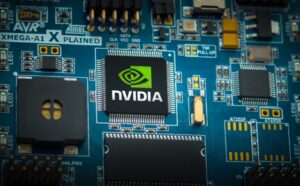
Nvidia and Intel have entered into a “mega-deal,” with Nvidia announcing a $5 billion investment in Intel. Both companies will collaborate on developing microchips for computers and data centers, in a surprising move since it strengthens a key competitor.
Nvidia will purchase Intel shares at $23.28 each. Intel will integrate Nvidia’s graphics technology into upcoming PC chips and will supply its processors for data center products based on Nvidia hardware.
The two companies have not provided a timeline for the release of the first products and clarified that this announcement does not affect their future plans.
Intel’s stock “soared” as much as 26% in pre-market trading.
This new funding for Intel follows an approximately 10% investment by the U.S. government in August, with Donald Trump taking on a role as “backer.” In addition, Japan’s SoftBank made an emergency $2 billion investment last month, while Intel has also been raising capital through asset sales. Intel’s current operations are struggling from market share losses and cannot bear the costs of producing advanced chips.
This collaboration highlights the shifting power dynamics in the computer and artificial intelligence industries. Intel gains financial backing and access to top-tier technology from a company it once considered “second-rate.”
Nvidia CEO Jensen Huang stated that the partnership links Nvidia’s AI ecosystem with Intel’s x86 architecture, creating “a foundation for the next era of computing.”
Intel will provide PC microchips that combine general processing with Nvidia’s powerful graphics in order to compete with AMD, Nvidia’s main graphics rival. In data centers, Intel will supply processors for products incorporating Nvidia’s AI units.
Nvidia continues to design its own processors using Arm Holdings technology, with no changes to its corporate roadmap. With a market cap exceeding $4 trillion, Nvidia’s investment in Intel represents less than 5% of its value.
Nvidia is largely defining the industry’s future through its dominance in AI computing. The demand for new chips to power services such as ChatGPT was anticipated and executed by Nvidia before its competitors. In 2025, Nvidia is projected to generate about $200 billion in revenue, gradually surpassing Intel’s annual performance.
Intel, which once dominated the industry through its advanced manufacturing technology, has failed to develop competitive AI accelerators and now relies on TSMC for producing its top products. Under the leadership of Lip Boo Tan, Intel is moving toward a more open strategy, seeking partnerships and offering third parties access to its manufacturing facilities.
Ask me anything
Explore related questions




