After two decades of systematic efforts and a ten-year public consultation, the Mount Parnona – Cape Maleas region has earned a place on the global map of sustainable development.
Specifically, the Development Agency of Parnona S.A., its staff, and the Candidacy Support Committee, following a long and demanding process, achieved the designation of the Mount Parnona – Cape Maleas area as a Biosphere Reserve (BR) and its inclusion in UNESCO’s global network of Biosphere Reserves (BRs) under the Man and the Biosphere (MaB) Programme.
The decision, which was announced in the presence of representatives from 150 countries, followed a rigorous evaluation process by UNESCO’s Scientific Committee.
According to officials, meeting the high and demanding criteria for this international recognition was anything but easy.
“The inclusion of the Mount Parnon – Cape Maleas region in UNESCO’s Biosphere Reserves Network is the highest form of a sustainable development model,” said Professor Michael Skoullos, President of the Greek National Committee for MAB/UNESCO, during a press briefing in Athens.
“There were many pioneers behind the success of this long-term effort.”
Both Marinis Beretsos, CEO of the Parnona Development Agency, and Kosmas Sidiropoulos, economic advisor, explained that this milestone marks the beginning of a new chapter for Eastern Peloponnese, aiming at economic and social development in harmony with nature.
They added that this international recognition will serve as a tool for action and funding to promote sustainable development in the area.
A Region of Unique Natural and Cultural Value
This international distinction acknowledges the exceptional natural and cultural heritage of the region, bringing global prestige not only to Parnona–Maleas but also to Greece as a whole.
UNESCO’s Man and the Biosphere (MaB) Programme aims to improve the relationship between people and their natural environment. It integrates natural and social sciences to enhance human well-being and protect both natural and managed ecosystems, promoting innovative and sustainable approaches to development.
The Parnona–Maleas Biosphere Reserve includes:
- the Tegea Plateau,
- the Eurotas Valley,
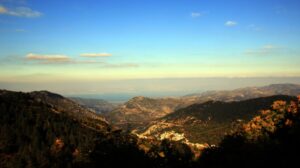
- the Parnona mountain range extending to Cape Maleas,
- the Eastern Peloponnese, and
- the surrounding marine zone.
The total area covers 516,412 hectares, with 77% being land and 7% designated as core conservation zones. The population of the region is approximately 80,000 residents.
The area is home to numerous historical and cultural monuments (Monemvasia, Mystras, Geraki, etc.), intangible cultural heritage (the Tsakonian language, traditional weaving), renowned agricultural products (Tegea apples, Malvasia and Moschofilero wines, Tsakonian eggplants, Vatika onions, Parnon chestnuts), historic monasteries (Loukou, Taxiarches, Karyes), geological formations (the Kastania cave, fossil complexes of Agios Nikolaos Voion), and traditional settlements (Leonidio, Kastanitsa, Kosmas, Geraki, etc.).
A Collective Effort
The initiative was supported by the Region of Peloponnese, seven municipalities (Tripoli, Sparta, Eurotas, Monemvasia, North Kynouria, South Kynouria, and Elafonisos), the Greek Government, and over 50 civil society organizations.
More than 70 meetings were held to raise awareness and mobilize local communities throughout the candidacy process.
This is Greece’s fourth Biosphere Reserve and the first in the Peloponnese.
(The others are Mount Olympus, Samaria, and the Asterousia Mountains.)
Ask me anything
Explore related questions