The New Face of the Ministry of Defence: A Modern Tribute to History and Mission
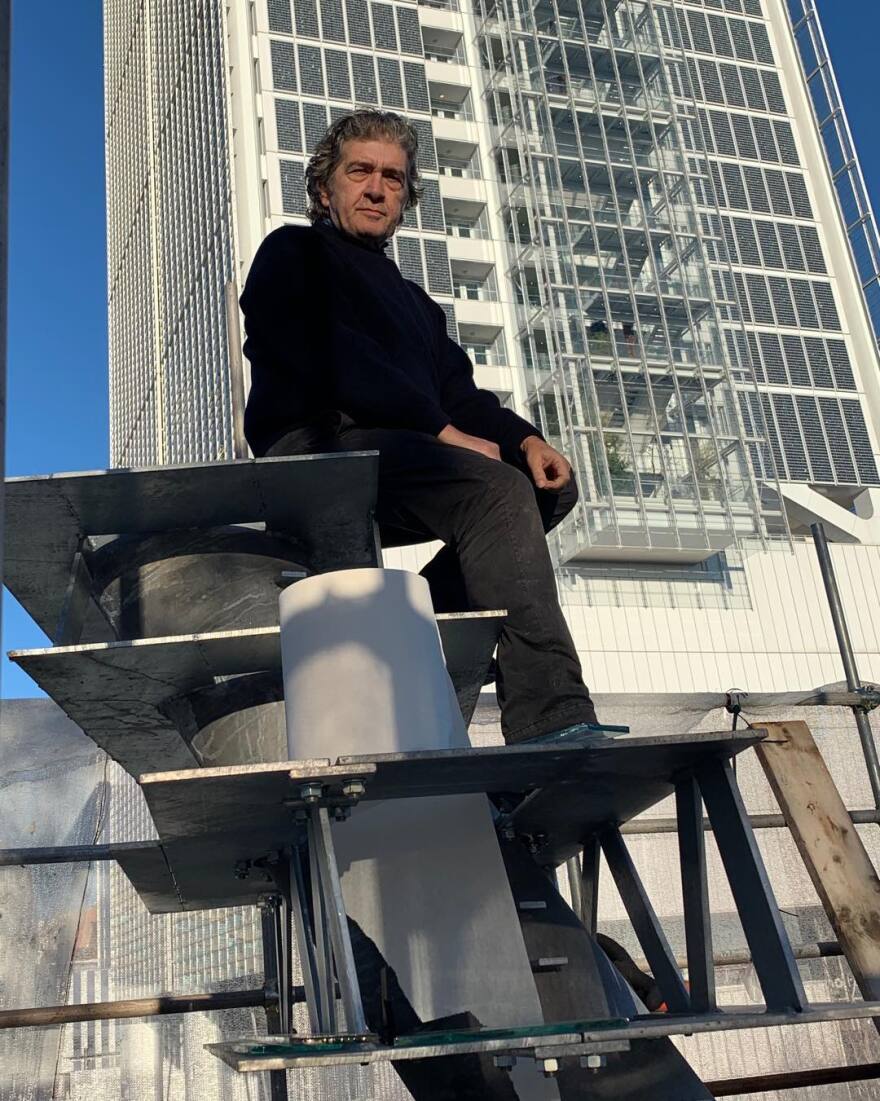
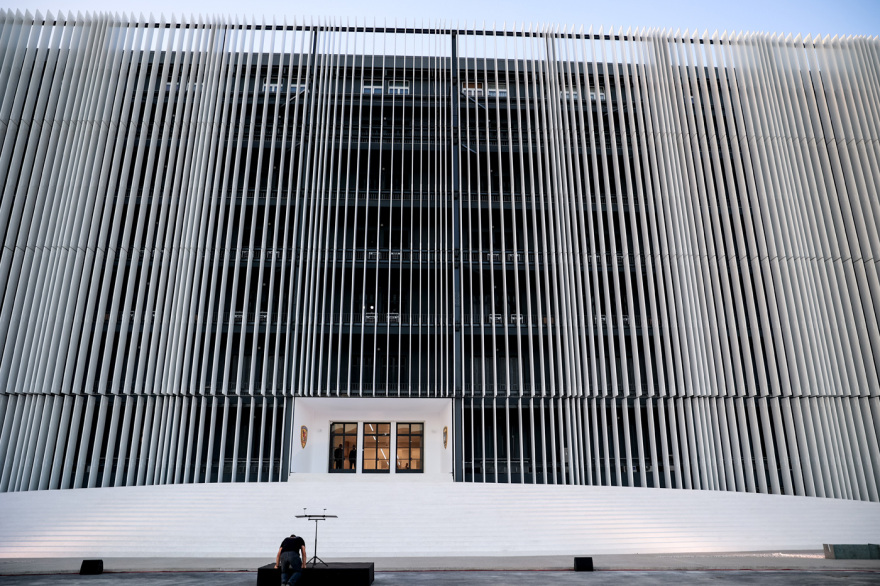
The transformation of the iconic Ministry of Defence building on Mesogeion Avenue, the physical and administrative headquarters of Greece’s Armed Forces, is now complete. The radical renovation of its façade, combined with the redevelopment of the surrounding area, was designed by internationally renowned sculptor and Aristotle University of Thessaloniki architecture professor Kostas Varotsos, along with his collaborator, architect-engineer Chrysanthi Asproulopoulou. The project was made possible thanks to a generous donation from Metlen Energy & Metals S.A.
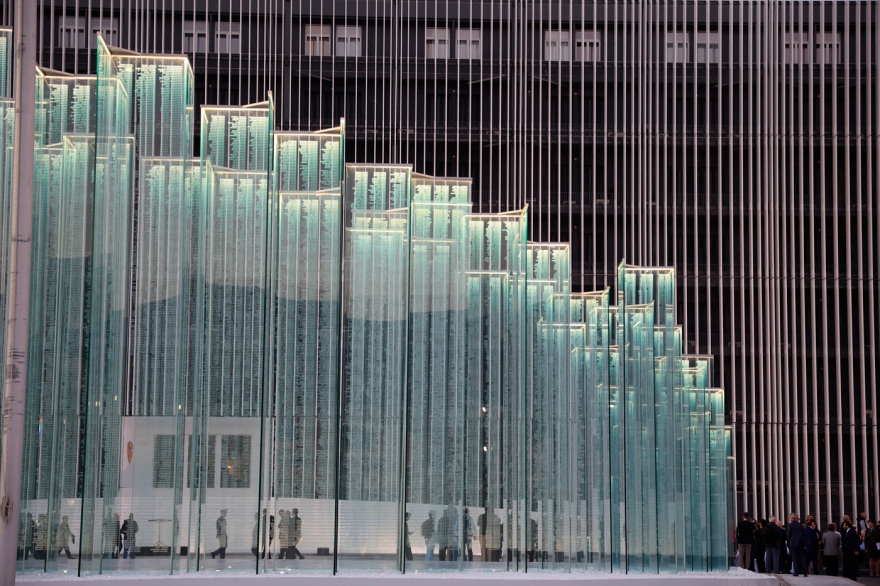
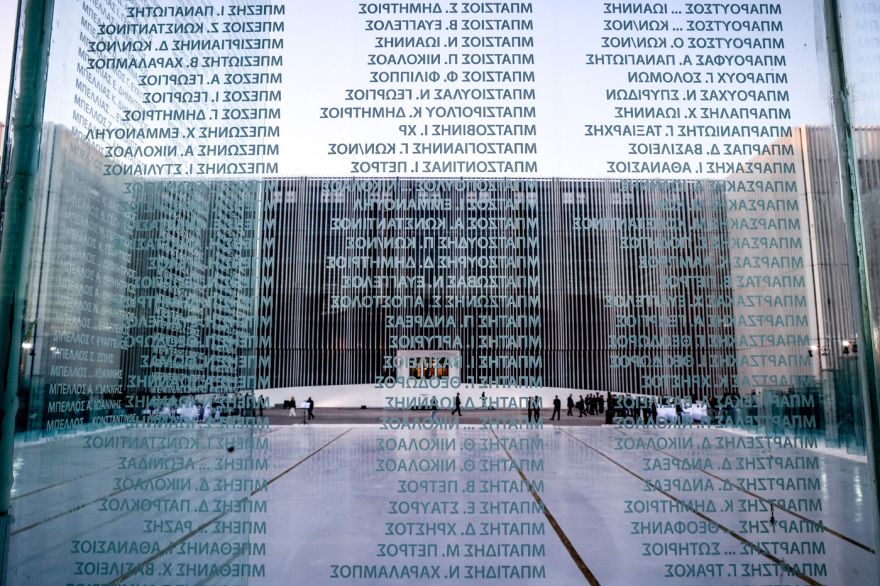
At the center of the new façade stands Varotsos’ work Ark of National Memory, inaugurated on 26 March 2025. This monumental piece features glass columns up to six meters high, inscribed with the names of the 121,692 Greeks who fell in national conflicts. Light passes through the glass, creating the striking illusion of names floating in space. Flanking the “Ark” are two olive groves, with 25 and 28 trees respectively, symbolizing the national anniversaries of 25 March 1821 and 28 October 1940.
Varotsos, who conceived both the monument and the building’s façade, spoke to Newmoney about his vision and the principles guiding his work, which seeks to resonate across generations.
On the Creative Process
Did you know from the start what you wanted to do at the Ministry of Defence?
“No. Initially, Minister Nikos Dendias contacted me to propose a concept for the National Memorial Ark, dedicated to the thousands of Greeks who died in wars from the beginning of the modern state to today. Once the monument proposal was approved, the discussion expanded to include the Ministry building itself, particularly the façade. The two projects, while separate, were closely related, so I approached them as one. I didn’t have the idea at the beginning; it evolved as I studied the space and developed my suggestions. Everything I do must respond to the space it occupies.”
Has this always been your approach?
“Yes, I’ve always sought to immerse myself in the space where my work exists, ensuring it integrates fully with its surroundings.”
On Design and Light
The façade gives the impression of hiding the building’s interior. Was that intentional?
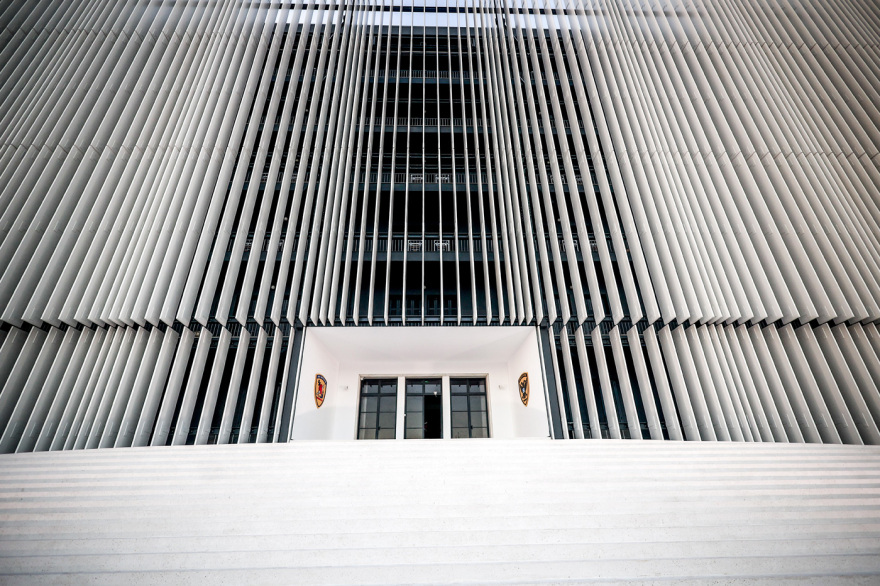
“The vertical elements are thinned where there are windows and thickened where there aren’t. This interplay of light helps save energy and also visually integrates the building with the monument. I painted the façade dark grey so the building ‘disappears’ behind the installation, creating what I call ‘urban camouflage.’”
The project is linked to war. What does that word mean to you?
“War is humanity at its worst. I believe that a nation’s politics, foreign policy, and culture should aim to avoid war. The Ministry’s role is defensive—to prevent conflict. That is why both the monument and the façade are dedicated to peace.”
On Challenges and Inspirations
What were the main technical challenges?
“The monument’s six-meter glass columns were particularly difficult to construct. The building itself was large but used well-known architectural technologies, which made it easier to implement. The monument, however, was unprecedented—pure glass of that scale was challenging.”
Did your architectural education help?
“Absolutely. It provided me with the tools to manage structural and aesthetic challenges, particularly in balancing the vertical elements harmoniously.”
How do you adapt your work to different cities and cultures?
“I always consider the social context of the place. My goal is to identify with the space first, not simply place my work within it.”
Do you have a process for each project?
“I spend months on site, building relationships with workers, officials, and the local community. The work must be born from the space itself.”
Why remain in Greece despite opportunities abroad?
“I could live anywhere, but I have a deep connection to Greece. I feel profoundly Greek and proudly carry that identity wherever I go.”
Ask me anything
Explore related questions