





Israeli Airstrike in Lebanon in Response to Hezbollah Rocket Barrage
An Israeli airstrike has targeted buildings and facilities belonging to Hezbollah in Dahieh, a southern suburb of Beirut, in response to a barrage of rockets launched by the militant group.
The Israeli army had warned Lebanese civilians several times in recent days—twice again today—to evacuate the suburb.
⚡️ A rocket hits a building in the Galilee, in northern Israel pic.twitter.com/Dk5VZCPhLp
— War Monitor (@WarMonitors) March 11, 2026
11/03/2026 – 21:09
Property damage in northern Israel from Hezbollah rocket
A Hezbollah rocket caused damage to a residential building in northern Israel.
11/03/2026 – 21:03
Watch video: Hezbollah rocket attack on northern Israel
11/03/2026 – 20:50
Watch video: Hezbollah rocket attack targeting northern Israel
11/03/2026 – 20:46
Israel: Anti-aircraft missile lands inches from fuel canisters
A disaster was narrowly avoided in northern Israel when an anti-aircraft missile landed extremely close—without exploding—to fuel containers stored in an area where settlers live.
🚨 ALERT: Iranian ballistic missile attack triggers sirens in northern Israel. pic.twitter.com/LHOlXOeRVL
— Israel War Room (@IsraelWarRoom) March 11, 2026
11/03/2026 – 20:34
Pezeshkian’s three conditions for ending the war
Iran’s president Masoud Pezeshkian set three conditions for ending the war.
In a post he wrote:
“In talks with the leaders of Russia and Pakistan, I reaffirmed Iran’s commitment to peace in the region. The only way to end this war—triggered by the Zionist regime [Israel] and the United States—is the recognition of Iran’s legitimate rights, the payment of compensation, and the provision of firm international guarantees against future acts of aggression.”
11/03/2026 – 20:26
Massive attack of 100 rockets from Hezbollah toward Israel
Channel 12 reported that Hezbollah launched around 100 rockets from Lebanon toward Israel.
11/03/2026 – 20:19
ABC: FBI warns California Iran could strike the U.S. West Coast
The FBI warned law enforcement authorities in California that Iran may retaliate for U.S. attacks by launching drone strikes on the West Coast, ABC News reported Wednesday.
11/03/2026 – 20:08
New Iranian missile attack toward central Israel
After five hours of relative calm, the Israeli military detected a new ballistic missile attack from Iran.
Sirens are expected to sound in central Israel and Jerusalem.
11/03/2026 – 19:47
Lebanon: At least 634 dead and over 800,000 displaced due to Israeli strikes
Israeli strikes in Lebanon have killed 634 people, including 91 women and 47 children, and injured 1,586 others over the past ten days, according to Lebanese Health Minister Rakan Nasser El Din.
During the same press conference, Social Affairs Minister Hanine Sayed said the number of displaced people has reached 816,000, including 126,000 sheltered in reception centers.
International Energy Agency approves the largest oil stock release in its history
The International Energy Agency (IEA) has approved the largest release of strategic oil reserves in its history.
The organization announced that its 32 member states unanimously agreed today to release 400 million barrels from their emergency reserves to the market in order to offset supply losses caused by the “effective closure” of the Strait of Hormuz.
The release is expected to take place over a period appropriate to the conditions of each member state, the IEA added.
The largest previous collective emergency stock release by IEA member states was 182.7 million barrels, following the energy crisis triggered by Russia’s full-scale invasion of Ukraine in 2022.
Trump: The war with Iran will end soon; there’s nothing left to target
Donald Trump said in a phone interview with Axios that the war with Iran will end “soon,” claiming that military operations have nearly exhausted the available targets.
“There are only a few things left here and there. Whenever I want it to end, it will end,” he said.
Despite Trump’s statements that operations have essentially achieved their objectives, U.S. and Israeli officials are reportedly saying that no internal directive has been issued regarding when military actions will stop.
At the same time, Israel’s Defense Minister Israel Katz said that operations will continue “without a time limit, for as long as necessary, until all objectives are achieved and a decisive victory is secured.”
Meanwhile, Trump confirmed that U.S. strikes on Tuesday destroyed 16 vessels used for laying naval mines, which he said disrupted Iranian plans.
“American forces continue to bring overwhelming military power against the Iranian regime. U.S. military strength is increasing, while Iran’s military strength is decreasing,” he said, adding that Iranian missile and drone attacks have dropped dramatically.
He also emphasized that operations are progressing faster than originally planned.
“The war is going extremely well. We are far ahead of schedule. We have caused more damage than we thought possible even in the original six-week plan,” he said.
“Their goal was also the rest of the Middle East. Now they are paying for 47 years of death and destruction that they caused. This is retribution. They won’t get away with it so easily,” the U.S. president concluded.
IEA Expected to Propose Release of 400 Million Barrels of Oil
The International Energy Agency (IEA) is expected to propose the release of 400 million barrels of oil from strategic reserves—the largest such move in the organization’s history—in an effort to curb rising crude prices amid the conflict between the United States, Israel, and Iran.
According to a source familiar with the discussions, the reserves would be released over a period of at least two months. Spain’s Energy Minister said countries could be given up to 90 days to channel the oil into the market.
The Paris-based IEA is expected to make the recommendation on Wednesday, ahead of the G7 leaders’ summit chaired by France, according to three sources.
Germany’s Economy Minister Katherina Reiche confirmed the proposed release of 400 million barrels and said Germany would participate in the initiative, noting that implementation details are still under discussion. She added that the United States and Japan are expected to be the largest contributors to the overall release.
The International Energy Agency did not immediately respond to a request for comment.
Even before the IEA completes its procedures, Japan has announced it will proceed with a unilateral release of oil reserves. Specifically, the Tokyo government plans to release an amount equivalent to 15 days of private-sector reserves and one month of government reserves.
“Instead of waiting for the official approval of the IEA for a coordinated international release of reserves, Japan will act first to help balance supply and demand in the global energy market, releasing reserves as early as the 16th of the month,” Japanese Prime Minister Sanae Takaichi said in a televised address.
Double the Amount Released During the Ukraine War
In 2022, IEA member states released a total of 182.7 million barrels of oil in two phases in an effort to stabilize markets following Russia’s full-scale invasion of Ukraine.
At the time, it was the largest intervention in the organization’s history.
“I would say this is the largest proposal in the history of the International Energy Agency,” said Spain’s Energy Minister Sara Aagesen.
“During the war in Ukraine, they discussed releasing about 182 million barrels, whereas now we are talking about a quantity that is more than double,” she added.
Western economies coordinate their strategic oil reserves through the IEA, which was established after the oil crisis of the 1970s.
11/03/2026 14:42
IDF Spokesperson: Hezbollah Has Launched More Than 850 Rockets and Drones at Israel; Iran Pushed It Into the War
Israeli army spokesperson Nadav Shoshani spoke to journalists on Wednesday morning about the situation on the Israel–Lebanon border, following Hezbollah’s involvement in the war in the Middle East.
Protothema.gr correspondents Giannis Charamidis and Marinos Aleiferis were present and reported Shoshani’s statements.
German Government Releases Part of National Oil Reserves
Under pressure from the rapid rise in energy prices caused by the new escalation in the Middle East, Germany is releasing part of its oil reserves, Economy Minister Katarina Reiche announced.
According to Reiche, the measure had previously been discussed within the G7 framework and is expected to calm markets and limit further increases in oil prices. At the same time, according to reports cited by the German news agency dpa, the government plans to limit price increases at fuel stations to just once per day.
The release of reserves was also requested by the Council of Economic Experts, with its chair, Monika Schnitzer, emphasizing earlier today that “the G7 oil reserves were created precisely for such crisis situations, as strategic reserves, so they can intervene in the event of severe supply disruptions.” Schnitzer also warned, in an interview with the RND Network, of the risk of “false hopes”: the release of reserves “can only offset short-term price increases, not neutralize a long-term rise in prices,” she stressed.
IDF: Iran Launches Ballistic Missiles and Drones from Densely Populated Urban Areas
The Israeli army (IDF) reports that Iran is launching ballistic missiles and drones from “densely populated urban areas,” putting civilians at risk.
“These actions deliberately and directly endanger Iranian citizens, both when the launchers are used and when they are destroyed by the Israeli Air Force,” stated army spokesperson Brigadier General Kamal Penhasi in Persian.
Video: Thousands Gather in Tehran for Funerals of Commanders Killed in Recent U.S.–Israel Strikes
Thousands of people gathered in Tehran for the funerals of Iranian commanders killed in recent U.S. and Israeli attacks.
Erdogan: The War Must End Before It Engulfs the Entire Region
Turkish President Recep Tayyip Erdoğan called for an end to the Middle East war “before it engulfs the entire region,” during a speech to his parliamentary group.
“This war must end before it worsens and sets the entire region ablaze. If diplomacy is given a chance, it is entirely feasible. We will continue our patient efforts to bring the parties to the negotiation table,” Erdoğan said.
He warned that continuing this “irrational, anarchic, and illegal war” would increase human and material losses and raise the cost for the global economy. “As peoples of the region, we must not let a war, of which we are already victims, bring us further suffering.”
Yesterday, Erdoğan issued a warning to Iran regarding any “provocative actions” after a second ballistic missile fired from Iran entered Turkish airspace. “Despite clear warnings, completely improper and provocative actions continue, endangering Turkey’s friendship with Iran,” he said.
570 Dead in Lebanon from Israel–Hezbollah Clashes
Fighting in Lebanon between the Israeli army and Hezbollah has killed 570 people, according to the country’s Ministry of Health.
The ministry provided a demographic breakdown of the casualties: 439 men, 45 women, and 86 children. It did not distinguish between fighters and civilians. The total includes 14 healthcare workers, the ministry reported.
The current conflict in Lebanon began last week when Hezbollah started firing on Israel, just days after the start of U.S.–Israeli attacks on Iran, which supports the terrorist organization.
About 150 U.S. Soldiers Injured in First 10 Days of Middle East War
Approximately 140 to 150 U.S. soldiers have been injured during the first ten days of the conflict between the United States and Iran, according to two sources with knowledge of operations who spoke to Reuters.
The number of casualties had not been previously disclosed. Until Reuters reported the figure, the Pentagon had only acknowledged eight U.S. soldiers seriously injured. In a statement following the report, the Pentagon estimated around 140 wounded, clarifying that the vast majority of injuries are minor.
“Since the start of Operation Epic Fury, about 140 U.S. service members have been injured during ten days of continuous attacks,” said Pentagon chief spokesperson Sean Parnell. Of these, 108 have already returned to duty, while the eight seriously injured soldiers are receiving the highest level of medical care. Reuters noted it was not possible to specify the types of injuries or whether traumatic brain injuries, which often occur after exposure to blasts, were included.
11/03/2026 12:51
Greek-Owned Vessel Among Three Ships Hit in the Strait of Hormuz
The Greek-owned ship Star Gwyneth sustained no serious damage, and, according to reliable sources, its crew remains safe.
11/03/2026 12:44
Israeli Army Intercepts 150 Drones and Missiles from Hezbollah
According to protothema.gr correspondent in Israel, Giannis Charamidis, the latest update from the Israeli army reports that 150 drones and rockets launched daily by Hezbollah toward Israel are being intercepted. The same update states that the Israelis have evidence that Hezbollah is communicating with Tehran.
11/03/2026 12:43
Operation Shields: The Frigate Hydra Protects Commercial Ships Traveling in the Red Sea
Peskov: Russia in Constant Contact with Iran’s Leadership, Ready to Contribute to Stabilization Efforts
Russia is in continuous contact with Iran’s leadership and is willing to contribute to efforts to stabilize the region, Kremlin spokesperson Dmitry Peskov said on Wednesday.
“Here, I can only say that we are in constant contact with the Iranian side and with the Iranian leadership,” Peskov told reporters.
“As President [Vladimir] Putin has said, Russia is always ready to do whatever it can to restore peace and stability in the region.”
French Foreign Minister: We Expect Iran “to Abandon Its Role as a Destabilizing and Dangerous Power”
The war in the Middle East “began with Israeli and American strikes, which we could not endorse, because they were carried out without a clearly defined purpose and, above all, outside international law,” French Foreign Minister Jean-Yves Le Drian said in a television interview today. He also stressed that “military escalation in the region poses significant risks to our interests, to our citizens in the area, to our partners, and to the global economy, due to rising diesel and gasoline prices.” To resolve the situation, he said, “the Islamic Republic of Iran must decide on a radical change of stance and make significant concessions in order for a sustainable solution to emerge.”
Jean-Yves Le Drian emphasized that France expects Iran “to abandon its role as a destabilizing and dangerous power,” condemning the regime’s “obsession” with its military arsenal and nuclear program. Asked about the possibility of the conflict escalating, he stated: “We are preparing for every eventuality. We ensure the protection of our citizens, provide all support (…) to Cyprus, to our partners who were unfairly targeted by Iranian drones and missiles, and we are working to support Lebanon in its current trial, as well as to safeguard freedom of navigation in the Red Sea and the Persian Gulf, to help reduce pressure on energy prices.”
“In this crisis, we are not mere spectators,” he assured. France intends “to organize a mission, following the example of what we did in the Red Sea, to ensure security in the Strait of Hormuz. This is by no means an involvement in the war,” and “the sole purpose is the protection of freedom of navigation,” he emphasized. If French bases are attacked and a response is required, “the principle of legitimate self-defense applies,” he added.
11/03/2026 12:20
FIFA President: Trump Assured Me That Iran Is Welcome to Participate in the World Cup
FIFA President Gianni Infantino said that U.S. President Donald Trump assured him during a meeting that Iran’s national team is welcome to participate in the World Cup matches to be held this summer in the United States.
Infantino stated that he met Trump on Tuesday to discuss preparations for the tournament, which begins in June, as well as Iran’s qualification for the event.
“During the discussions, President Trump reiterated that the Iranian team is, of course, welcome to participate in the tournament in the United States,” Infantino wrote in an Instagram post following the meeting.
11/03/2026 12:12
Qatar Announced It Repelled a “Missile Attack” – Earlier Reports Mentioned Multiple Explosions in Doha
FIFA President: Trump Assured Me That Iran Is Welcome to Participate in the World Cup
FIFA President Gianni Infantino stated that U.S. President Donald Trump assured him during a meeting that Iran’s national team is welcome to participate in the upcoming World Cup matches to be held this summer in the United States.
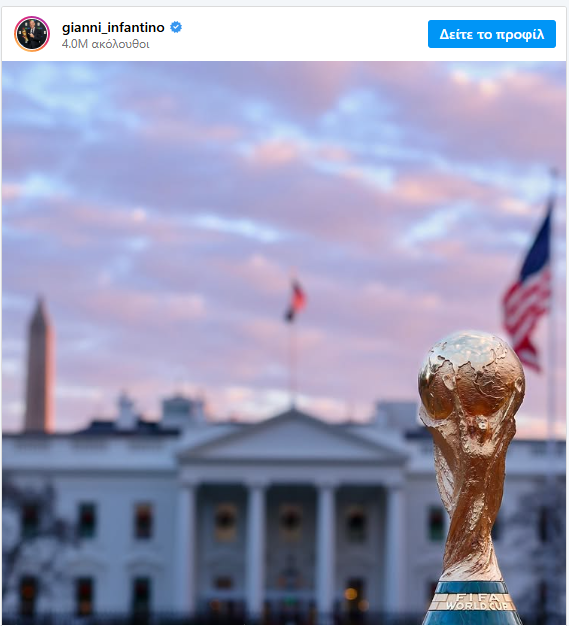
Infantino said he met with Trump on Tuesday to discuss preparations for the tournament, which kicks off in June, as well as Iran’s qualification for the competition.
“During our discussions, President Trump reiterated that the Iranian team is, of course, welcome to participate in the tournament in the United States,” Infantino wrote in an Instagram post following the meeting.
Ursula von der Leyen: The path to a free Iran can be opened
“There is hope that this moment can open the way to a free Iran. This is what the Iranian people deserve: freedom, dignity, and the right to decide their own future. But allow me to highlight an important point. Seeing the world as it is in no way diminishes our determination to fight for the world we want,” said the President of the European Commission, Ursula von der Leyen, in a speech to the European Parliament on Wednesday morning.
The air defense system of the United Arab Emirates intercepted a wave of Iranian missiles and drones. The UAE Ministry of Defense issued a statement confirming that incoming missiles and drones from Iran were successfully intercepted. The loud noises heard in the sky were reportedly caused by these defensive actions.
Lebanese media reported new bombardments in the southern districts of Beirut. Meanwhile, an Israeli official told Reuters that Iran’s new leader, Mojtaba Khamenei, was slightly injured during the attacks on Iran, which may explain his absence from public appearances.
The Iranian Revolutionary Guards released a list of “legitimate targets,” including technology companies whose products have military applications, such as Google, Microsoft, Palantir, IBM, Nvidia, and Oracle. Iranian military officials also declared that banks connected to the U.S. and Israel in the Middle East are now targets. They warned residents to stay at least one kilometer away from these financial centers, promising “painful retaliation” against American-linked institutions.
G7 Energy Ministers Ready to Take “All Necessary Measures” in Coordination with the IEA
The energy ministers of the Group of Seven (G7) industrialized nations, who met yesterday in Paris amid the war in the Middle East and heightened oil price volatility, announced that they are “ready” to take “all necessary measures” in coordination with the International Energy Agency (IEA).
“In principle, we support the implementation of decisive actions to address the situation, including the use of strategic reserves,” the G7 energy ministers said in a joint statement released today.
Meanwhile, French Economy Minister Roland Lescure stated that the G7 heads of state and government, who will meet tomorrow in Paris at the request of French President Emmanuel Macron to discuss the war in the Middle East, “will undoubtedly address the issue of strategic oil reserves.”
According to The New York Times, Mojtaba Khamenei was reportedly injured in the legs. However, the son of Iranian President Masoud Pezeshkian wrote on Telegram that Mojtaba is safe and unharmed. Meanwhile, Iran’s armed forces carried out large-scale missile strikes against American and Israeli targets, with Iranian state television describing the operation as the “most intense and heaviest attack since the start of the war.”
The attack reportedly lasted three hours and targeted southern Tel Aviv, western Jerusalem, Haifa, multiple American targets in Erbil—the capital of Iraq’s Kurdistan Region—as well as the base of the U.S. Navy’s Fifth Fleet in Bahrain. In addition, an unmanned aerial vehicle struck a major U.S. diplomatic facility in Iraq on Tuesday. The U.S. military also announced that it destroyed 16 Iranian vessels capable of transporting and laying mines near the Strait of Hormuz.
Tensions in the Middle East intensified dramatically as Iran launched a large-scale wave of missile and drone attacks against Israeli and American targets across the region, while the United States responded by striking Iranian naval assets near the strategically vital Strait of Hormuz.
According to reports, the overnight operation carried out by Iranian forces lasted approximately three hours and was described by Iranian state media as the “most intense and heaviest attack since the beginning of the war.” Missiles and drones reportedly targeted several locations, including southern Tel Aviv, western Jerusalem, Haifa, and multiple U.S.-related facilities in the region. Among the locations mentioned were American targets in Erbil, the capital of Iraq’s autonomous Kurdistan region, and the headquarters of the U.S. Navy’s Fifth Fleet in Bahrain.
At the same time, regional air defenses were activated across the Gulf. Qatar announced that it had intercepted incoming missiles, while Saudi Arabia said it shot down several ballistic missiles aimed at the Prince Sultan Air Base near Riyadh, which hosts U.S. military personnel. Saudi authorities also reported intercepting drones believed to be targeting major oil infrastructure. The United Arab Emirates confirmed it responded to missile and drone threats as well, and Bahrain warned residents to seek shelter amid the escalating situation.
Meanwhile, the United States Central Command reported that American forces destroyed 16 Iranian vessels capable of laying naval mines near the Strait of Hormuz. The strike was carried out amid growing fears that Iran might attempt to disrupt shipping through the narrow waterway, one of the world’s most critical oil transit routes. Approximately one-fifth of global oil supplies pass through the Strait, making any threat to navigation there a major concern for international markets.
The escalating conflict has already begun affecting global energy markets. Oil prices experienced sharp fluctuations as traders reacted to the possibility of supply disruptions. Brent crude initially fell sharply before rebounding, reflecting uncertainty over whether shipping through the Strait of Hormuz could be interrupted.
Reports also emerged regarding the condition of Mojtaba Khamenei, a prominent Iranian political figure. Sources cited by international media claimed he had suffered injuries to his legs early in the conflict. However, officials connected to the Iranian government later suggested that he was safe and continuing his duties.
The violence has not been limited to military targets. In Beirut, an Israeli strike reportedly hit a residential building in the southern part of the city, killing at least four people. Iranian media also reported casualties in the city of Aligudarz following strikes attributed to U.S. and Israeli forces.
Elsewhere in the region, a drone struck a U.S. diplomatic support facility near Baghdad International Airport. Although the attack caused limited damage and no casualties, it underscored the expanding geographic scope of the conflict.
As military exchanges intensify and regional actors become increasingly involved, fears are growing that the conflict could expand further across the Middle East. Governments and international organizations have begun calling for de-escalation, warning that continued attacks could destabilize global energy supplies and trigger wider geopolitical consequences.
For now, the situation remains volatile, with both sides signaling readiness to continue military operations while the international community watches closely for signs of further escalation.
Ask me anything
Explore related questions




