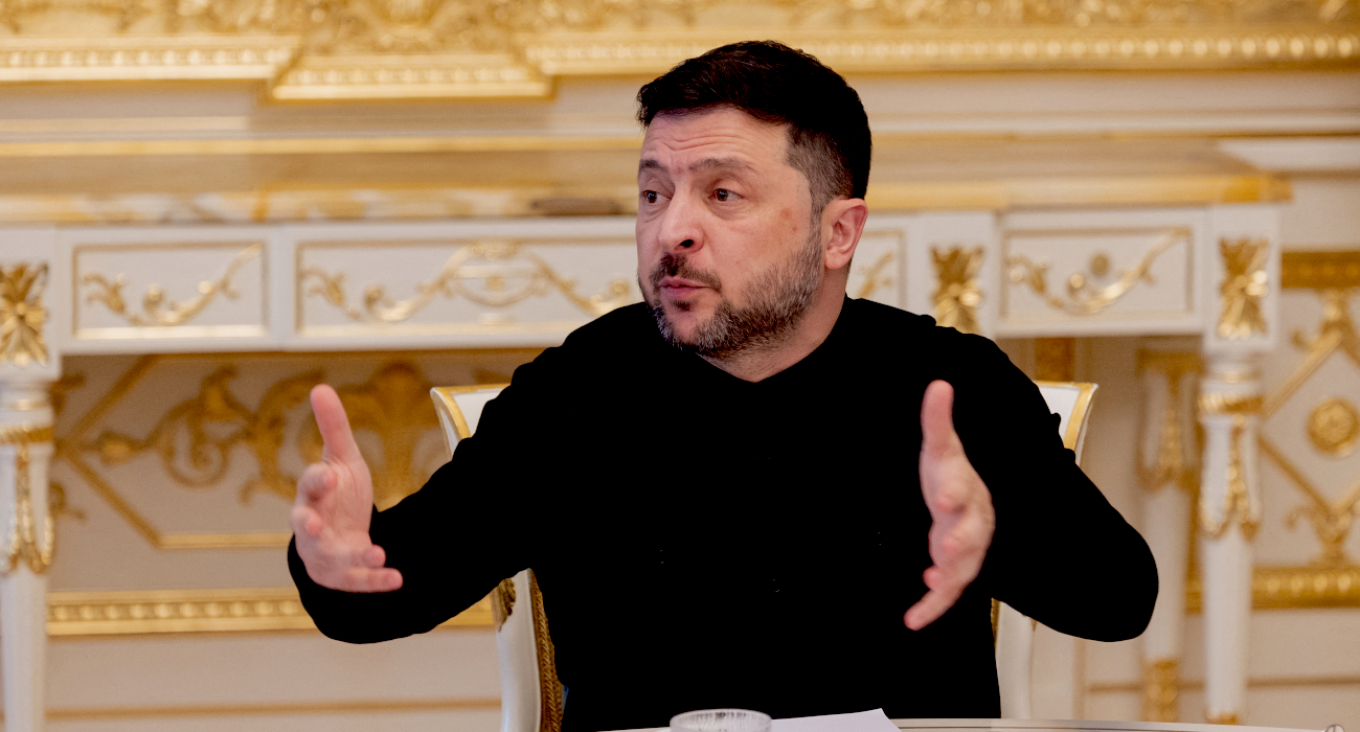
Ukrainian President Volodymyr Zelensky finds himself between a rock and a hard place, confronted with a fateful choice: either agree to the 28-point plan drafted by the White House — which entails major concessions — or end up isolated, fighting alone against the Russian war machine, which in recent months has made gains on the battlefield.
In this context, and following yesterday’s communiqué from the European members of the G20, senior officials from the United States, Ukraine, and the European E3 alliance countries (France, Britain, Germany) are holding crucial talks today in Geneva on the American draft proposal to end the war, which the Trump administration has submitted as a basis for negotiation. EU representatives are also participating in the discussions, while Italy has sent its own official.
U.S. Special Envoy Steve Witkoff and Secretary of State Marco Rubio are arriving in Geneva today with the aim — according to a U.S. official who spoke to Reuters — “to smooth out the final details” and prepare an agreement “beneficial for Ukraine.” The same official stressed that “nothing will be agreed until both presidents are together,” meaning Donald Trump and Volodymyr Zelensky.
Also already in Geneva is U.S. Secretary of the Army Daniel Driscoll, while a Ukrainian delegation was scheduled to arrive last night. Kyiv has officially confirmed its participation.
The talks are taking place in view of Thursday’s deadline, which U.S. President Donald Trump has given Zelensky to approve the 28-point plan. The framework includes territorial concessions to Russia, limits on Ukraine’s military capabilities, and abandoning its path toward NATO membership — elements that have caused serious concern in both Kyiv and among Europeans.
European and other Western leaders have described the American plan as a “basis for negotiation,” while pointing out that “additional work” is needed to secure a more favorable agreement for Ukraine. A source within the German government said that a European peace draft, based on the U.S. proposals, has already been sent to both Kyiv and Washington.
Shortly before the talks, Zelensky warned that Ukraine risks losing “its dignity and freedom,” or even Washington’s support, if it is forced to accept the framework. At the same time, Russian President Vladimir Putin described the American plan as a “basis for resolving the conflict,” although Moscow may disagree with certain points, since it includes withdrawal of Russian forces from occupied territories.
Today’s talks in Geneva come at one of the most sensitive phases of the war, as Ukraine enters its fou
U.S. Secretary of State Marco Rubio insisted last night that the plan to resolve the conflict in Ukraine announced this week was indeed drafted by the United States and does not simply reflect Russian demands, as some American senators have claimed.
The Secretary of State, who is expected in Geneva today for talks with European and Ukrainian officials, thus refuted statements made by three U.S. senators, who argued that the document fully embraces Russia’s demands.
“The peace proposal was drafted by the U.S.,” Rubio countered on X. The text “is offered as a strong framework for ongoing negotiations. It is based on elements contributed by the Russian side, but also on previous and ongoing contributions from Ukraine,” he added.
Earlier, State Department spokesperson Tommy Pigott said on X—responding to the statements of the three senators—that what they had claimed was “blatantly false.”
The three members of the U.S. Senate—Republican Mike Rounds, Independent Angus King, and Democrat Jeanne Shaheen—argued that Marco Rubio told them the document does not express official U.S. positions, and is merely a starting point for talks containing “a list of Russian wishes.”
“Secretary Rubio called us in the afternoon. I think he explained very clearly that what we received was a proposal forwarded by one of our representatives. It is not our recommendation. It is not our peace plan,” Senator Rounds stated.
Mr. Rubio is expected in Geneva today, along with President Donald Trump’s diplomatic envoy Steve Witkoff, for talks with Ukrainians and Europeans, who have not hidden their concern about the 28-point plan.
The document—published by various media outlets, including AFP—repeats Moscow’s key demands, particularly the cession of Ukrainian territory to Russia, the reduction of the size of Ukraine’s military, and the permanent abandonment of its effort to join NATO. It also offers Western security guarantees to Kyiv to prevent any future Russian attack.
U.S. President Trump has given Ukrainian President Volodymyr Zelensky until November 27, Thanksgiving Day, to respond to the proposal.
However, yesterday the Republican answered simply “no” when asked whether the plan to resolve the conflict was Washington’s “final offer.”
“We are trying to end” the war, “one way or another, the conflict must end,” the U.S. president insisted, without providing further details about the war that escalated with the Russian invasion of Ukrainian territory on February 24, 2022.
Ask me anything
Explore related questions