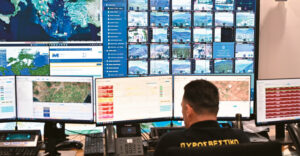
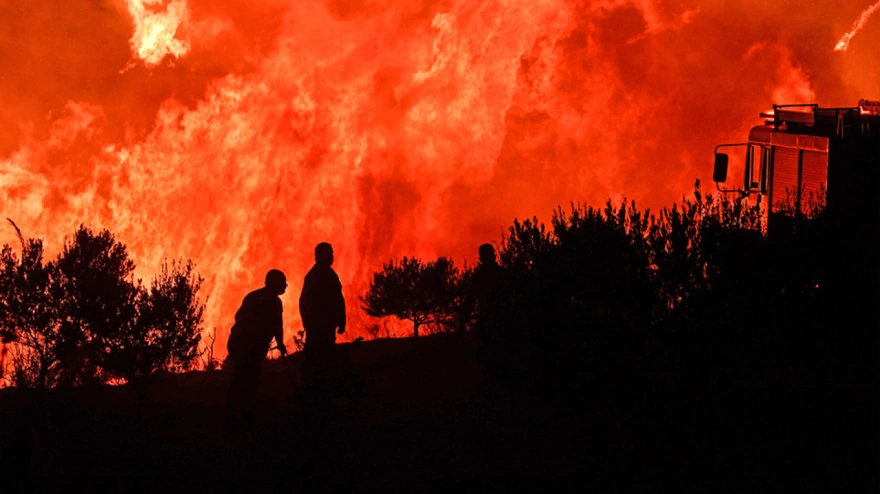
Significant reforms in forest protection are coming with the new bill that Minister of Climate Crisis and Civil Protection, Giannis Kefalogiannis, will present to the Cabinet this week. Among the changes are controlled and planned burning of selected forest areas by the Fire Department and the creation of regional war rooms to tackle wildfires more effectively.
The bill, revealed by “Proto Thema,” aims to completely overhaul the philosophy of Civil Protection by establishing a new model for prevention, response, and coordination in the face of increasingly severe wildfires, whose nature has changed due to the climate crisis. A central element of the bill is the official introduction of prescribed burning into the Greek legal framework as a formal prevention tool. For the first time, Greece will have an institutionalized system for controlled burning of combustible forest material, conducted by competent state authorities, with the goal of reducing the risk of large-scale fires.
What is Prescribed Burning?
Prescribed burning is a controlled, planned, and scientifically justified procedure during which specialized teams from the Fire Department and Forestry Service ignite fires in selected areas. This reduces combustible material, creates firebreak zones, and protects critical infrastructure, settlements, and sensitive ecosystems. The process is strictly scheduled outside of the fire season, under specific weather conditions, with full operational documentation, strict safety protocols, and mixed crews from Fire and Forestry Services.
This practice is deemed an “indispensable tool” in a new prevention strategy, addressing the core issue of fuel buildup in Greek forests. It has been systematically used for decades in countries like the USA, Italy, Spain, and Portugal and is now formally incorporated in Greece under a rigorous scientific framework. This aligns with the 2023 report of the Academy of Athens, which highlighted that Greece has underutilized prescribed burning despite its recognized international importance as a complement to mechanical clearing and controlled grazing. Experts say this marks a major structural change in how Greece prevents—not just fights—wildfires, adapting to the Mediterranean’s new fire-prone climate.
Operational Centers
Another major innovation in the bill is the establishment of Operational Centers within the Regional Fire Departments. These specially designed centers will be staffed by experienced personnel and will provide real-time situational awareness for each region.
These centers will gather information from local fire services, facilitate coordination between different departments and central agencies, and ensure rapid data flow to the National Civil Protection Operations Coordination Center (ESKEDIK).
The creation of these centers introduces a new operational model aimed at enhancing interoperability, minimizing delays in decision-making, and improving preparedness before incidents occur.
Key Changes in the Bill
Registry of Auxiliary Forces
For the first time, a comprehensive registry of auxiliary forces will be created. This includes individuals, legal entities, associations, and specialized professionals who can support official units during crises. Local authorities will be able to update and share their relevant data through this interoperable system.
Updating of Local Government Risk Plans
Municipalities and regions are required to update their Risk Management Plans every two years, following specific timelines and methodologies defined by the bill. These plans will include sections on forest fire prevention, such as mapping critical fire-prone areas, recording risk points, planning escape routes, designating water access points, listing available machinery and technical resources, and cataloging teams capable of immediate clearing operations. These plans will be digitized.
Upgrading the Arson Crimes Directorate
This department will be organizationally strengthened, gaining additional responsibilities and modern tools aimed at faster detection of fire causes and more effective prosecution of perpetrators. A comprehensive central structure will be created, including modern investigative units with cross-regional presence, a registry of certified experts, and a new operational framework.
Reorganization of the Firefighting Academy
The bill calls for a significant upgrade of the Firefighting Academy, modifying its structure and curriculum to better reflect the needs of the new operational reality.
Firefighting Posts on the Islands
The bill also provides for the establishment of new firefighting posts on remote or smaller islands. These posts will be authorized by the Fire Service Chief, equipped adequately, and assigned clear responsibility zones to ensure that local communities have immediate firefighting coverage.
Ask me anything
Explore related questions