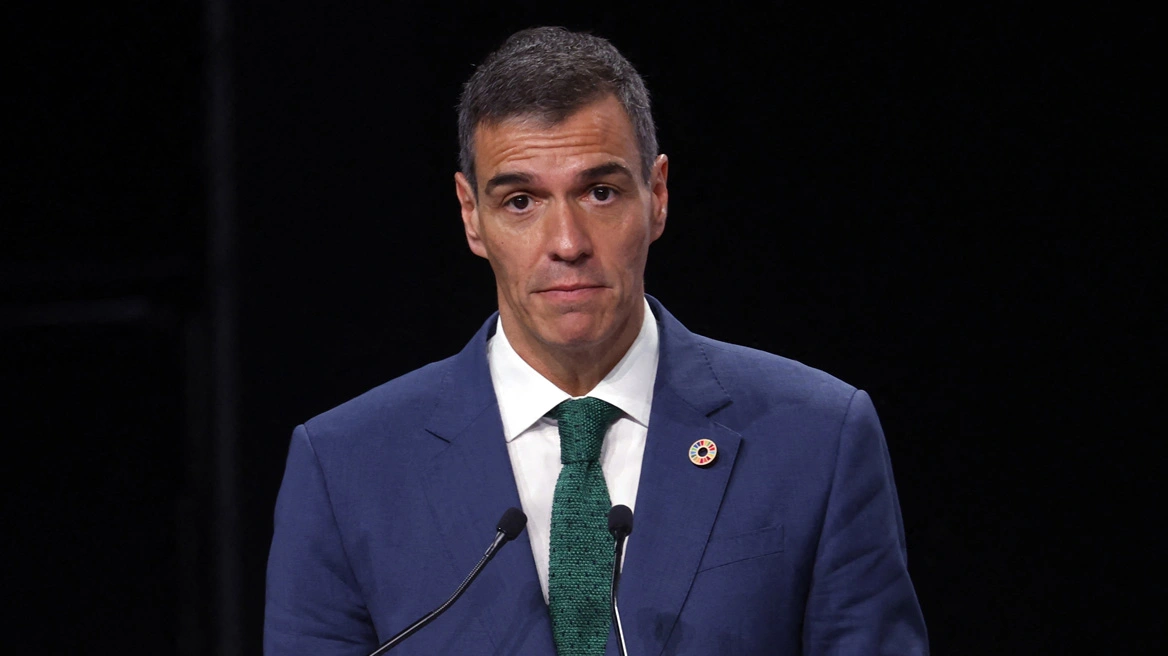
The Spanish PM spoke on Tuesday in Dubai on the World Government Summit. There he stated that his government will introduce five measures aimed at social media platforms:
1. Algorithmic manipulation and amplification of “illegal content” will be a new criminal offense.
2. Spain will, from now on, hold platform executives personally and legally accountable for many infringements that take place on their sites.
3. Spain will introduce “a hate and polarization footprint system to track how platforms fuel division”.
4. Spain will ban access to social media for minors under the age of 16, with platforms required to deploy effective age verification systems, “not just checkboxes, but real barriers that work”.
5. The Sánchezgovernment will work with the public prosecutor to “investigate and pursue the infringement committed by Grok, TikTok, and Instagram”.
He went even further, describing the social media platforms as “a failed state, a place where laws are ignored and where disinformation is worth more than truth.”
It all seems to be serving a noble cause: the protection of the public from the “digital Wild West” (sic) of social media. But this is where the problems begin. In what can be described as a direct hit on “freedom of reach” (the ability for one’s content to be widely distributed, amplified or made visible by a platform’s algorithms), Spain will criminalize the amplification of “illegal content”. But who is going to decide what is or isn’t illegal?
The argument that this refers primarily to sexual content and the protection of children does not hold much water. Access to hardcore pornography on the internet is already widespread and largely unregulated, which makes this justification look like a poor excuse. But an excuse for what?
In practical terms, these measures grant the government the power to indirectly dictate how algorithms are written. Naturally, one must ask: what happens if a post reveals something damaging to the government? Under these new laws, such a post could easily be labeled “polarizing” or “disinformation,” and thus “illegal.” Will the Spanish government do this? Not necessarily – but should it choose to, it will now have the tools to do so.
But it doesn’t end there. Holding executives legally accountable practically for what users post, seems too much like an attempt to coerce CEOs into aligning their platforms with the government’s narrative, much like the way US President Donald Trump has exerted pressure on companies to abandon DEI policies, a practice condemned by many of the same voices now advocating these anti–social media laws.
The core problem with these measures is that, while they appear to address the undeniably powerful influence of social media in our lives, they leave the door wide open to ill-intentioned actors, who in the right position, could exploit this power over platforms and users to advance their own political or ideological priorities. It is folly to assume that the righteous will always be the ones in power.
The belated interest in defining what constitutes “illegal” content or “disinformation” should itself raise questions about the true intentions of those pushing similar agendas. The reason is that these phenomena are not new, nor do they occur more frequently now than in the past. On the contrary, in recent years we had a number of serious revelations on the subject.
Mark Zuckerberg, CEO of Meta (owner of Facebook and Instagram), admitted in an August 26, 2024 letter to House Judiciary Committee Chairman Jim Jordan that the company faced repeated pressure from the Biden administration to censor COVID-19-related content in 2021. In the same letter, Zuckerberg also noted that Meta temporarily demoted the New York Post’s 2020 story on Hunter Biden’s laptop, following an FBI warning about potential “Russian disinformation”.
Elon Musk, owner of X (formerly Twitter), has repeatedly stated that the platform’s previous management suspended accounts at the request of the U.S. government, as revealed in the Twitter Files releases he authorized. On January 3, 2023, Musk posted: “US govt agency demanded suspension of 250k accounts, including journalists & Canadian officials!”
Jack Dorsey, former CEO and co-founder of Twitter, admitted that the platform’s decision to block links to the New York Post’s 2020 Hunter Biden laptop story was a mistake.
Surprisingly, though, none of this was enough to mobilize anyone in Spain, the EU or the Western world more broadly to address the “algorithmic manipulation” in order to “protect the public” from “hate and polarization”. Not at least, until Elon Musk bought Twitter…
The loud -sometimes extreme- reactions to Musk’s declaration that X will be a free speech haven and his firm opposition to the woke culture, have formulated into legal action with the introduction of regulations, by the same people that until very recently were quite comfortable instrumentalizing platform algorithms to pursue their own agendas.
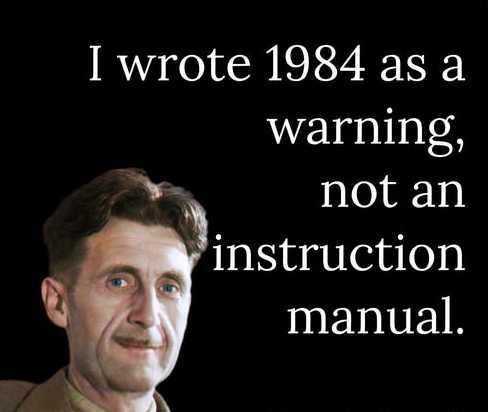
The fact that those pushing these measures tend to sit on the opposite ideological side of the political spectrum from Musk – as he is their main target – undermines the “purity” of their intentions and hints at their ultimate objective, for now concealed behind moving words like “accountability” and the “protection of children.” The road to Hell, after all, is full of good intentions… The key variable will always be who decides what is right or wrong. George Orwell described in his famous dystopian book 1984 the government’s attempt to control people’s minds through “Newspeak”, a controlled language designed to limit freedom of thought and eliminate political subversion, with the goal of eradicating…“thoughtcrime.” And as many memes on “the-platform-that-shall-not-be-named” point out, George Orwell wrote 1984 as a warning, not as an instruction manual.
Ask me anything
Explore related questions