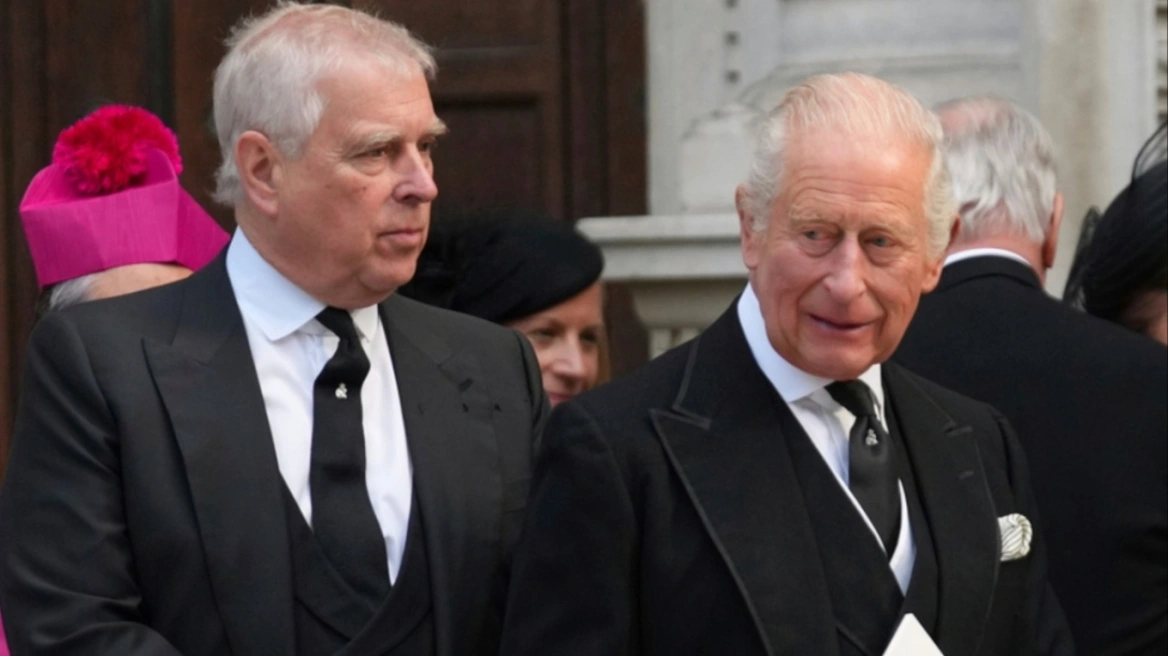
Revelations shaking Buckingham reveal evidence that King Charles had already been warned as early as 2019 that the royal family’s name was being “misused” through the business connections of his brother, Prince Andrew Mountbatten-Windsor.
According to revealing emails, a whistleblower informed the Palace that the then Duke of York maintained “secret” financial ties with controversial financier David Rowland, who—according to the allegations—was exploiting the royal connection for personal gain.
The Email That Reached the Then Prince of Wales
In August 2019, an individual with knowledge of Andrew’s business activities sent an email to the then Prince of Wales via the law firm Farrer & Co.
The message referred to “misuse of the Royal Family’s name” by Rowland, noting in particular:
“The actions of His Royal Highness The Duke of York suggest that he considers his relationship with David Rowland more important than that with his family.”
The whistleblower sent a second email directly to Rowland, copying Charles’s private secretary, Clive Alderton, and the late Queen’s lawyer, Mark Bridges.
In it, he claimed:
“The evidence unquestionably proves that you have misused the name of the Royal Family.”
Allegations of Banking License and Financial Arrangements
Particularly serious is the allegation that Rowland allegedly “paid” Andrew to secure a banking license in Luxembourg for his private bank, Banque Havilland. According to the revelations, the email even included bank account details allegedly linked to Andrew.
Banque Havilland lost its banking license in 2024 from the European Central Bank and has appealed the decision.
Meanwhile, Rowland is alleged to have:
- Given £40,000 to Andrew’s former wife, Sarah Ferguson, to repay debts.
- Repaid a £1.5 million loan on Andrew’s behalf in 2017.
During the period 2001–2011, when Andrew served as the UK’s trade envoy, Rowland and his son Jonathan took part in missions to China and former Soviet states.
Emails show that:
- Andrew repeatedly informed Rowland about business opportunities.
- He allegedly used a trade mission to facilitate a multi-million-dollar oil sale deal in China, with expectations of large profits alongside Jeffrey Epstein.
Jonathan Rowland was invited to a meeting at Buckingham Palace with the British ambassador to Montenegro to advance business interests.
Diplomats reportedly placed government staff at the Rowlands’ disposal, while Andrew even provided his official itinerary for a trip to Montenegro.
Arrest and Criminal Implications
The case takes a dramatic turn, as Andrew was arrested on suspicion of the offense of “misconduct in public office”—an offense carrying a potential sentence of up to life imprisonment. He has not been charged and was released under investigation.
The Metropolitan Police launched a process to trace and contact current and former officers who had served in his personal protection team.
Political Pressure and Succession
The case has triggered a political storm. MPs are calling for an immediate police investigation, while growing voices demand legislative action to remove Andrew from the line of succession, where he remains eighth.
American attorney Gloria Allred publicly called on the King and the Prince and Princess of Wales to cooperate with authorities, should they be asked.
Opposition figures described the revelations as “shocking but not unexpected,” demanding that “nothing remain in the dark.”
Credibility Crisis for the Monarchy
The Palace declined to comment due to the ongoing investigation, emphasizing that any material should be handed to the relevant authorities. However, the revelations intensify pressure on King Charles, as they raise questions about whether the 2019 warnings were adequately assessed.
The disclosures threaten to further entangle King Charles in the ongoing crisis affecting the British monarchy. The case had already been fueled by Andrew’s close ties to Epstein and by claims that he may have passed on sensitive or confidential documents.
Ask me anything
Explore related questions