





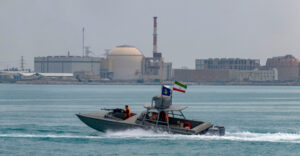
The sun is just rising over the horizon of the Persian Gulf. On the bridge of a massive VLCC oil tanker, sailors keep their eyes fixed on the radar screens as the coast of Iran emerges to the north and that of the United Arab Emirates to the south.
Ahead lies one of the planet’s key gateways for energy and trade: the Strait of Hormuz. It is a natural passage through which, in times of peace, goods worth billions of dollars pass every day. Entire states, economies, and the global energy market depend on it.
This maritime “chokepoint,” as it is often called, functions as the energy switch of the global economy, where the free flow of energy and goods spreads to every corner of the world. It is the most important energy corridor on the planet, linking the Persian Gulf to the Gulf of Oman and onward to the Indian Ocean. The passage resembles a natural bottleneck, forcing ships to navigate with extreme precision.
In recent days, only a few tankers have crossed the strait following ten attacks attributed to Iran, which resulted in the deaths of ten sailors. One exception is the tanker Shenlong, managed by the Greek company Dynacom Tankers Management of George Prokopiou. Carrying one million barrels of crude oil, it switched off its tracking transmitter in the Persian Gulf on 4 March while heading toward the Strait of Hormuz and began transmitting again five days later near the coast of India, reportedly generating significant profits.
Countries such as the United States and France are now discussing the possibility of military escorts for commercial ships in order to restore safe navigation through the Strait of Hormuz. For the moment, however, military planners are weighing the cost-benefit implications, as Iran is reportedly attempting to make the passage even more difficult by laying naval mines in the area.
3,500 Ships Per Month
Navigation through the strait follows a Traffic Separation Scheme (TSS) — a complex system that separates incoming and outgoing maritime traffic. One lane is used for ships entering the Gulf, another for those leaving it, with a neutral safety zone between them to prevent collisions. Ships move side by side through corridors just 3.7 kilometers wide for each direction.
Each passage is almost like a choreographed performance. Radar systems remain active while AIS (Automatic Identification System) screens process hundreds of data points to identify ships and monitor their positions to prevent collisions. Smaller patrol vessels also appear on the horizon, providing specialized information.
In peacetime, 114 to 138 ships cross the strait daily, including oil tankers, LNG/LPG carriers, container ships, and other commercial vessels. But the significance of Hormuz is not measured only in the number of ships.
It is measured in barrels of oil and cubic meters of gas. On average, 20–21 million barrels of crude oil pass through the strait each day, representing nearly 20% of global oil consumption. Around 3,500 ships navigate the area every month.
At the same time, about 20% of global LNG (liquefied natural gas) exports — mainly from Qatar — move through the strait. The primary destinations for these energy flows are the major economies of Asia, particularly China, India, Japan, and South Korea, which absorb more than 80% of these supplies.
To grasp the scale, the volume of energy and goods passing through the entrance and exit of the Persian Gulf each day — in peacetime — is equivalent to the entire energy balance of a developed continent, condensed into a single narrow waterway. Along the Gulf’s coastline lie some of the world’s largest energy powers:
- Saudi Arabia, the world’s largest crude oil producer
- United Arab Emirates and Qatar, major exporters of oil and LNG
- Iraq, Kuwait, Bahrain, and Iran, with vast energy reserves and export infrastructure
No Real Alternative
Most of their production is exported through the strait, where crude oil travels to refineries in Europe and Asia to be transformed into gasoline, marine fuels, jet fuel, and other critical energy products used in industry, transportation, and electricity generation.
Without this flow, many countries would have to rely on more expensive or less efficient routes, a shift that would immediately affect global oil and gas prices, transportation costs, and industries worldwide.
Few comparable alternatives exist. Some pipelines crossing Saudi Arabia and the UAE can transport limited quantities of oil, but even these can handle only around 3.5 million barrels per day. This means over 80% of the Gulf’s energy flow depends entirely on this single maritime passage, with virtually no meaningful alternative.
The shipping system itself follows strict rules. Ships heading into the Persian Gulf move through a northern lane, while vessels leaving it travel south toward the Indian Ocean. Between them lies a neutral safety zone to prevent collisions — a vital measure when massive vessels sail side by side in corridors sometimes just two nautical miles wide.
Every day, the busiest maritime passage on Earth becomes a carefully organized nautical highway, where ships move with patience and precision to avoid accidents that could trigger enormous economic and environmental consequences.
A High-Risk Maritime Zone
For ship crews, passing through Hormuz is far from routine. The extremely high density of maritime traffic requires constant vigilance on the bridge and strict adherence to international navigation rules.
Beyond modern geopolitical tensions, the region also faces traditional and asymmetric threats, even in peacetime. Drone or missile attacks, possible mining of sea lanes, harassment of merchant ships, and even tanker seizures for geopolitical reasons all pose ongoing risks.
At the same time, cyber threats targeting navigation systems and port infrastructure are increasing, adding further complexity to operations in the Persian Gulf. The result is a maritime zone where global shipping must operate under very high operational risk.
Because of its strategic importance, naval forces from several countries and international security missions operate in the wider area. They conduct patrols, maritime surveillance, and information exchanges with commercial vessels to ensure freedom of navigation.
A notable contribution comes from the European naval mission EUNAVFOR Operation Aspides, which supports merchant shipping through monitoring, intelligence sharing, and vessel escorts. Cooperation between commercial shipping and naval forces is essential for safe passage through one of the world’s most critical maritime corridors.
Geopolitics and Energy Rivalries
In the current period of heightened tension — with escalating conflict between Iran and the U.S.–Israel alliance — risks are multiplying. Even navigation infrastructure and port systems are becoming targets of cyber threats, making passage through Hormuz a high-risk operational challenge.
Beyond the naval dimension, the region has become a focal point of geopolitical competition.
China, the world’s largest energy importer, relies heavily on flows through Hormuz to sustain its industrial and energy needs. This dependence gives Beijing strong incentives to pursue strategic influence in the region and strengthen its naval presence along key sea lanes.
Meanwhile, the United States maintains diplomatic strategies and military deployments aimed at ensuring the stability of energy routes. The Middle East, its maritime energy corridors, and the Strait of Hormuz are central elements in the broader geopolitical rivalry among major powers.
A Domino Effect on the Global Economy
In a globalized economic system where over 80% of world trade is transported by sea, disruptions in flows through Hormuz have consequences far beyond the energy sector.
When maritime routes become more dangerous, insurance premiums rise, freight rates increase, and energy production costs climb, sending shockwaves through the global economy — from financial markets to supermarket shelves.
If the conflict were to last weeks, the strategic oil reserves that countries maintain for emergencies — typically sufficient for 60 to 90 days — would begin to decline. This could lead to sharp price increases and international crises.
The Strait of Hormuz is not simply a geographic location.
It is one of the most critical energy and commercial arteries of the global economy, where the pathways of oil and natural gas intersect with geopolitics, strategic security, and the lives of thousands of sailors who cross this narrow passage every day to keep the world running.
The History of the Strait
The strait has held strategic importance for thousands of years. In ancient times, caravans from the Arabian Peninsula used the Persian Gulf to transport spices, metals, and pearls to India and East Africa.
During the Achaemenid period (550–330 BCE), Persian authorities organized the administration of coastal cities and ports to facilitate trade through hubs such as Susa. Later, the Sassanid Empire (224–651 CE) maintained control over the Gulf and reinforced the security of the passage, protecting lucrative trade routes for minerals and spices.
In the Middle Ages, Hormuz’s strategic importance grew even more evident. In 1507, the Portuguese, under Afonso de Albuquerque, seized control of the strait in an effort to dominate Persian Gulf trade and the commercial networks of India.
In 1622, Persian forces, with the assistance of the English, recaptured Hormuz, placing the passage under Persian control while strengthening European commercial presence in the Gulf.
During the 18th and 19th centuries, the Persian Gulf and the strait became intertwined with European commercial rivalry in the East. The British established strategic bases along the coast, while the Dutch participated in regional trade, primarily through India and Indonesia.
The Era of Oil
The discovery of large oil reserves in the early 20th century gave the Strait of Hormuz a new dimension.
In 1908, the Anglo-Persian Oil Company discovered oil in Iran, and export infrastructure soon followed, making Hormuz a central hub for transporting oil to Europe, Asia, and North America.
During World War II, the strait became strategically vital for the Allied forces, as secure tanker routes were essential for fueling military operations. After the war and the establishment of the State of Israel in 1948, the region gained even greater geopolitical importance.
Throughout the Cold War (1947–1991), both the United States and the Soviet Union sought influence in the Persian Gulf to secure energy routes. By 1971, following the independence of the United Arab Emirates and the strengthening of U.S. military presence in the region, the Strait of Hormuz had firmly established itself as a central switch of the global economy.
Since then, it has remained a focal point of continuous strategic interest.
Photos: Getty Images / Ideal Image
Ask me anything
Explore related questions




