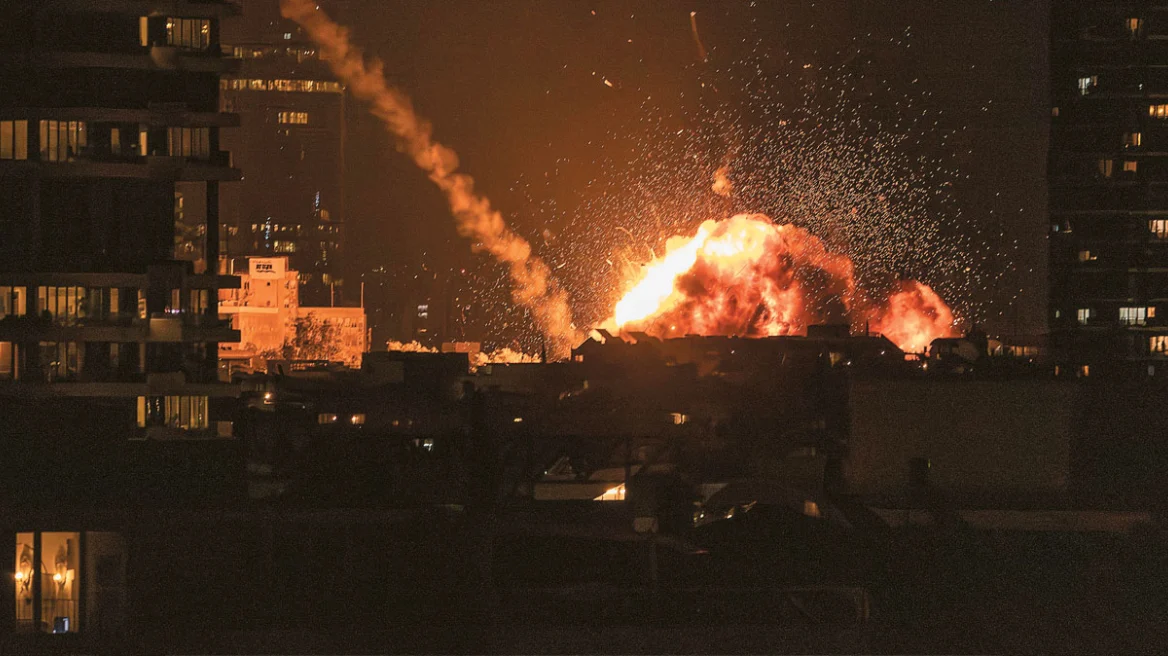
The main conclusion of the past few days—there are now such conclusions after more than 30 days of fighting—is that the war is heading neither toward a clear end nor toward an immediate, all-out confrontation that would decide everything with a single strike.
Instead, it is entering a more complex and perhaps more dangerous phase, where military pressure, energy suffocation, naval confrontation, and diplomacy coexist simultaneously. Reuters, Associated Press, the Wall Street Journal, as well as the author from the Israeli side of the confrontation, now see a conflict that has moved from the stage of initial shock to the stage of political and strategic endurance.
The question is not only who strikes harder, but who can continue to impose costs on the opponent without exhausting their own margins first.
The first and clearest line in these analyses is that the US and Israel have indeed imposed a very heavy cost on Tehran, but they have not achieved what in Western military thinking would be called the “complete neutralization” of the Iranian threat.
The Iranian missile network has been hit hard, with a reduction in launch rates—this remains conditional—and serious damage to its production base, but not elimination.
Targeted strikes
Iran continues to launch missiles, simply in a different way—fewer, more selective, from deeper or more protected positions, and with emphasis on targets that have greater political and economic “return.” This is critical because it means that Tehran no longer needs to prove it can prevail through massive saturation. It is enough to prove that it still has the ability to keep uncertainty alive.
This adaptation by Iran lies at the core of almost all recent foreign analyses. Iran does not appear as a power winning on the battlefield in the classic terms of overwhelming military superiority. However, it appears as a power trying to turn its survival into a strategic argument.
As long as it continues to threaten shipping, maintain strikes or the threat of strikes against Israel and the Gulf, force markets to fear the next shock, and compel Washington to keep military options constantly open, it can claim it has not been defeated—and that is true in strategic, purely military terms. At this stage, Iran does not need to win in the conventional way either. It is enough to convince that it cannot easily be forced into “submission.”
On the other side, there is an American strategy with a clear dual face. On the one hand, Washington continues to maintain the maximum possible threat of escalation. Donald Trump publicly warned that if there is no agreement, the US “will continue to hit them,” while at the same time the American side keeps on the table pressure regarding the opening of the Strait of Hormuz and the limitation of Iranian capabilities.
On the other hand, special envoy Steve Witkoff openly spoke about seeking an Iranian “off-ramp,” that is, a path out of the current escalation, and the transmission of a 15-point American plan via Pakistan was confirmed. In other words, Washington is attempting to combine pressure with a controlled avenue for negotiation.
The 10-day pause in strikes against Iranian energy facilities, until April 6, fits exactly into this logic. It is clear that this should not be interpreted as a sign of a shift toward peace, but as a test of intentions.
Washington appears to want to determine whether Tehran is indeed seeking time to enter negotiations or simply trying to buy breathing space to stabilize its positions, reorganize capabilities, and maintain Hormuz as a lever of pressure. In practice, this means that the next steps of the war will be decided not only on the battlefield but also within a window of a few days, where every move will be read simultaneously as a military and a negotiating message.
The problem, as recorded, is that the gap between the two sides remains deep. The American logic, as publicly described, links any pause or de-escalation with serious Iranian concessions on the nuclear issue, ballistic missiles, regional behavior, and the smooth functioning of the Strait of Hormuz.
Fragile truce
The Iranian logic, on the contrary, appears to demand a halt to attacks, compensation, a different starting point regarding the Strait, and above all a framework that will not appear domestically as unconditional surrender. Therefore, even if a channel of dialogue opens, we are not facing a mature agreement but an extremely fragile truce of intentions.
The point where all elements fully converge, however, is one: the center of gravity of the war is shifting from the air to the sea. Hormuz is now the most critical front. There is today an almost institutionalized Iranian process of controlling passage, a regime in which ships are inspected by the Revolutionary Guards and in some cases pay for safe passage.
At the same time, there are clearly serious impacts across entire supply chains—not only in crude oil but also in petrochemicals, plastics, fertilizers, LNG, even in European planning for natural gas storage ahead of winter. This proves once again that the Strait of Hormuz is not just a maritime passage, but the point where Iran can turn geography into strategic power.
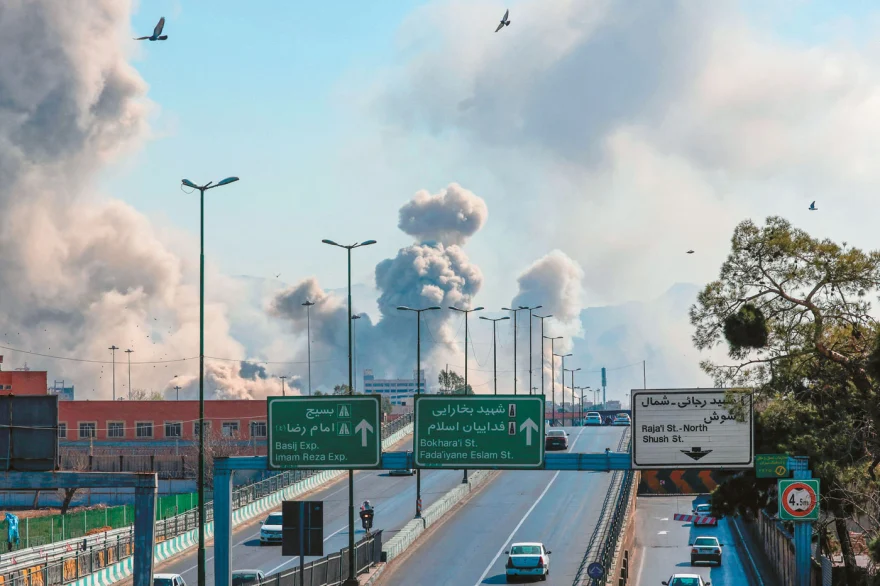
From this perspective, the most important next step of the war is not necessarily the next volley of missiles. It is whether Tehran will continue to tighten or loosen its grip on shipping and energy flows. Analysts consider this Iran’s real negotiating card.
It does not have the luxury of a long conventional confrontation against the US and Israel. However, it has the ability to raise the price of uncertainty enough to pressure not only governments but also markets, industries, insurers, shipping, and central banks. As long as this pressure remains active, Tehran retains negotiating value disproportionate to its conventional power.
Kharg Island
For this reason, several analyses revisit the scenario of a strike or a more direct operation against critical Iranian energy hubs. A prominent place is held by the case of Kharg Island, the main hub of Iranian oil exports. The essence of the analysis is twofold. Yes, an operation that would disable or isolate Kharg could deprive Tehran of revenue and negotiating depth.
However, the cost for the US would be significant: exposure to missiles, drones, mining, extended supply lines, and the risk of turning a pressure operation into a long, costly engagement. And if we all agree that the US indeed has the means to seize this key island, we should not be so certain about whether and for how long it could maintain control over it.
This is the critical point: Kharg is not an easy solution, but a high-risk pressure tool.
At the same time, the military picture is not limited only to Iran. Analyses increasingly emphasize that the war is acquiring a second axis, with the northern front potentially evolving into a separate center of gravity.
International media already report new waves of Israeli strikes in Iran without visible diplomatic progress, while other reports note that the conflict has produced casualties outside the main theater, with Lebanon remaining active and perhaps the most critical front for Israel today.
This is highly significant for the next steps: even if some temporary easing occurs at the US-Iran level, nothing guarantees that Israel will not continue to apply pressure within a broader regional framework. Therefore, de-escalation, if it comes, may be fragmented rather than comprehensive.
There is also another dimension, less spectacular but perhaps more critical for what follows: economic attrition. Reuters shows that the effects have already spread beyond the narrow oil market. Petrochemicals are facing supply crises, plastic prices are soaring, the fertilizer market is tightening, Europe is rushing to rethink gas storage, while costs and risk are transferring into the real economy.
This has a dual effect. First, it increases pressure on Iran because international frustration over Hormuz grows. Second, it also increases pressure on Washington, because the longer the crisis lasts, the harder it becomes to present it as a “controlled war” without significant side effects on the global economy.
This factor explains why major international media do not see unlimited American escalation as the most likely scenario. Instead, they see a Washington that wants results without “getting bogged down.” It wants to apply enough pressure to bend Iran’s position, but not so much as to become trapped in a new open-ended regional military commitment.
This is exactly where the tension of American strategy lies: to achieve a negotiating result, you must keep the threat credible. But if the threat becomes reality to an excessive degree, it may trigger a larger and more costly conflict than the one you wanted to avoid.
Hard stance
For Iran, on the other hand, the risk is different but equally serious. The more it is pressured militarily and economically, the more easily hardline logic may strengthen internally. It is no coincidence that the current picture, as emerging from international reports, does not show a regime ready to easily accept terms that would resemble a concession under pressure.
The Iranian leadership appears to be pursuing a narrative of survival: we were hit, but we stood, we kept the cost high, we did not bend. This narrative is valuable for the domestic front and explains why Tehran will likely try to link any discussion not only with a halt in attacks but also with some form of political recognition of its position.
If one puts all these elements together, the next steps of the war fall into four main trajectories.
The first is a fragile, controlled de-escalation: a few days or weeks of relative restraint, continuation of contacts through third parties, partial easing of pressure in Hormuz, and maintenance of military threat in the background.
The second is escalation through energy and shipping: greater Iranian pressure on the strait and Western response against critical energy hubs or Tehran’s maritime capabilities.
The third is a prolonged war of attrition, with fewer major strikes but constant costs in trade, transport, financing, and regional security. The fourth is geographic expansion, where Lebanon, the Gulf, and maritime passages become equal sub-fronts of a unified regional crisis.
Different approaches and the rift
The way US Vice President J.D. Vance spoke to the Prime Minister of Israel, and especially the fact that he chose to leak it to reputable Western media, once again makes it clear that Washington and Tel Aviv move together but, as in the 12-day war last summer, have completely different strategies and objectives along the way.
Vance accused Benjamin Netanyahu of having “sold a short war to Trump,” but if such a thing happened, Netanyahu is undoubtedly the most powerful politician on the planet. If what leaked from the Vice President’s office has a basis, then officially the US accepts that Israel “dragged” it into a war with Iran and that it made the wrong move against the wrong opponent, betting that there would be another 12-day or even three-day war. The fact remains the same: the US and Israel are together but also apart in this case, and Netanyahu clearly does not approve or sign any “exit narrative” to facilitate Washington.
For Tel Aviv, it is clear that the front with Tehran must remain open and escalate, and if it is up to its will or the weapons of its fighter jets, that is exactly what it will attempt. On the other hand, in Washington it seems that Trump’s remarks such as “they are begging me for a ceasefire” or plans for a ground offensive exist to signal, in his own way, the end.
The big issue, however, is that this time, unlike last summer, at this ending Iran must also gain something, and the regime’s successor situation will certainly present it as a victory and capitalize on it accordingly.
Netanyahu’s headache
The differing course of the US and Israel may, under certain conditions, also pressure Netanyahu himself, especially in an election year, as the country must go to the polls by October and scenarios suggest that “Bibi” may do so by May.
In the Knesset last Thursday, for the first time since the start of the new war with Iran and Hezbollah in Lebanon, opposition leader Yair Lapid sharply criticized Netanyahu’s handling of both fronts. Lapid himself had, in the first week of the war, given the government a blank check, stating that Iran must be “eliminated regardless of how long it takes.”
Lapid stressed that the country cannot remain at war without objectives since October 7, 2023, and that guarantees must be provided and objectives published both for the front with Iran and especially for the front with Hezbollah in southern Lebanon.
Especially on this front, Israel, beyond military losses—two soldiers lost their lives last Thursday and Friday—faces a major problem: Hezbollah, which Netanyahu had declared over a year ago was no longer a threat, today has the capability to launch more than 600 rockets daily toward Israeli settlements.
Pressures
The mayors of these settlements have already begun to publicly pressure the government, stressing that no new evacuation order is being given, as the government considers it an extremely costly move and the economy cannot bear such burdens today. In any case, today, given that the region is mainly inhabited by Arabic-speaking populations and Druze, the army may be advancing, but the consequences of that advance are borne by civilians with Israeli passports and voting rights.
The most likely immediate scenario, if one carefully reads the available data, is neither peace nor an uncontrolled explosion. It is a nervous intermediate phase. A phase where diplomacy will move, but under the shadow of new strikes. Where the market will hope for de-escalation but will still price in fear. Where Iran will try to keep its geoeconomic pressure alive without provoking an overwhelming response.
And where the US will try to show that it can end the crisis on its own terms of power, without entering a new, unpredictable regional quagmire. Essentially, we are faced with a timeless question produced in wars: is this the beginning of the end or the end of the beginning?
Ask me anything
Explore related questions