





The European Union is moving to strengthen its engagement with Syria by resuming formal political contacts and setting the stage for closer economic and defence cooperation, according to a document reviewed by Reuters. The development is the latest step in a broader policy shift after years of limited relations with Damascus.
The working paper, drafted by the EU diplomatic service and distributed to member states this week, says the union will fully reinstate the 1978 cooperation agreement with Syria and launch a High Level Dialogue with the country’s transitional authorities on May 11. This term is used by the EU to describe institutionalised and structured talks at the political level.
In a notable policy adjustment, the EU also says it will “redefine and adjust” the sanctions regime to maintain its influence, while engaging with Syria’s new leadership and targeting individuals or actors who may undermine the transition process.
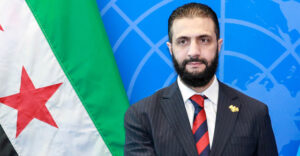
Syria, which came under most Western sanctions late last year, is seeking broader reintegration into the international community under interim President Ahmed al-Saraa, who led a coalition of Islamist rebel groups that overthrew former President Bashar al-Assad in late 2024 after a devastating 14-year civil war.
The document outlines plans to strengthen economic cooperation, including creating a framework for trade and investment, mobilizing private sector capital and supporting reforms to improve the business environment through a new technical support hub.
At the same time, the EU says it will work with the Syrian authorities to facilitate the “safe, voluntary and dignified return” of refugees and displaced populations.
Europe hosts more than one million Syrian refugees and asylum seekers, about half of whom are in Germany. Their return is a key issue in talks between European governments and Damascus after Assad leaves power at the end of 2024.
On the security level, the document says the EU could support the training of the Syrian police and the strengthening of the institutional capacity of the interior ministry, as well as work with the authorities to tackle terrorism, drug trafficking and organised crime.
At the same time, the document underlines the EU’s support for the implementation of an agreement reached in January between Damascus and the Kurdish authorities in northeastern Syria, which provides for the integration of local institutions into the state and the extension of the rights of Syrian Kurds in the context of the broader political transition.
Difficult negotiations with Israel
At the same time, in an interview with Turkey’s Anadolu news agency, al-Saraa said negotiations with Israel are difficult but have not reached an impasse. He stressed that Damascus was serious about seeking a security agreement that would ensure stability in the region, while accusing Israel of trying to maintain control over Syrian territory.
The Syrian president strongly criticized Israel’s stance, claiming that it is acting “with particular harshness” and maintaining a presence in areas near the Golan Heights, while the Syrian side, he said, has chosen the diplomatic route.
A significant part of the interview was devoted to relations with Turkey, which he described as a “strategic partnership that will affect the future of regional and global security.” As he said, Ankara has stood by the Syrian people for 14 years.
Domestically, Al-Saraa appeared optimistic about the national unification process, noting that the Syrian Democratic Forces are in an advanced process of integration into the state, while the last foreign military base in northeastern Syria was recently evacuated.
“We have achieved a lot in the last year in unifying the rebel forces that were divided,” he said.
In closing, the Syrian president addressed a message to the international community, arguing that the country has moved from a period of crisis to a phase of opportunity for reconstruction and stability.
“Syria has changed. We have gone from a situation of continuous crisis to a great historic opportunity for reconstruction and stability. The world saw what happens when Syria is in crisis, and now it is beginning to see what it can achieve when there is stability,” he said.
Ask me anything
Explore related questions




