





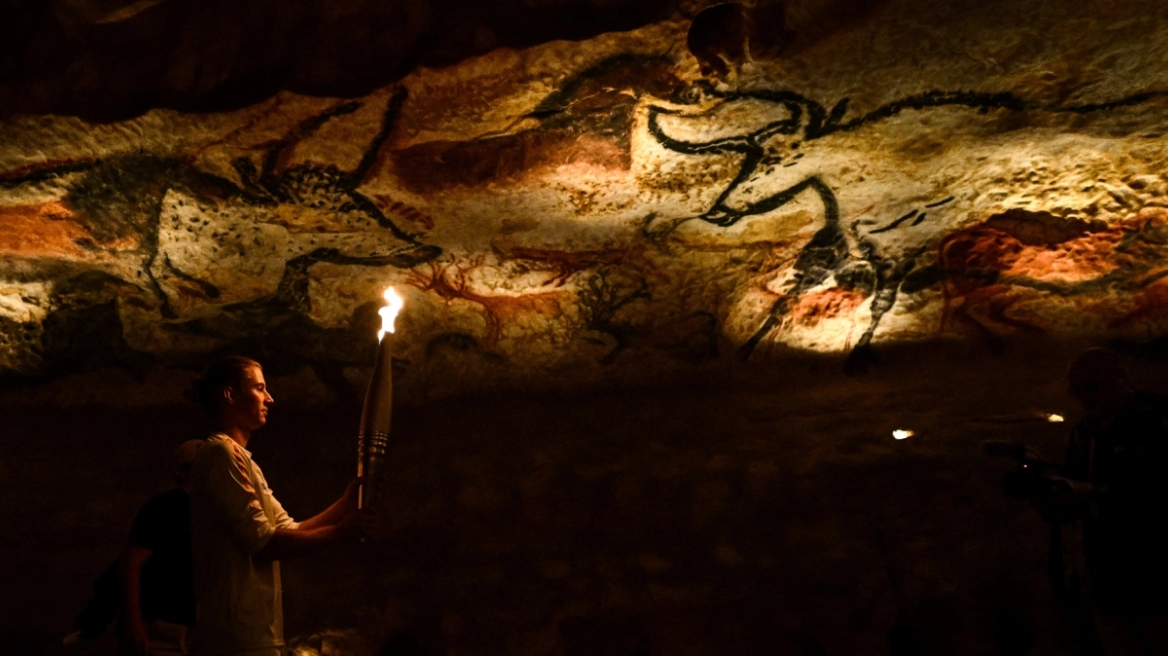
Beneath a wooded hill near Montignac in southwestern France lies the Lascaux Cave, one of the most important prehistoric monuments in the world. Despite its fame, most visitors will never see the original cave, as it has been closed since 1963, when it was discovered that human presence was altering its fragile environment.
The story of its discovery begins on 12 September 1940, when four local teenagers found an opening in the ground and decided to explore it. With makeshift lighting, they descended inside and followed a passage of about 30 metres until they saw the first paintings in what is now known as the Axial Gallery.
There are also accounts suggesting that a dog led them to the site, although this detail is not fully confirmed by official records, which focus on the boys’ own exploration.
They later returned with a rope and descended an 8-metre vertical shaft, where one of the cave’s most iconic scenes is found: a human figure facing a bison.
The Lascaux cave is not a single chamber but an extensive network of passages and rooms, with a total length of about 235 metres. According to official data from the French Ministry of Culture, around 680 painted figures and 1,500 engravings have been recorded—more than 2,000 representations in total.
Animals dominate the depictions—bulls, horses, and deer—along with abstract symbols. Some figures exceed two metres in length, showing that their creators worked with planning and technical precision despite the difficult lighting conditions inside the cave.
Closure
The age of the artworks, based on radiocarbon dating, is estimated between 15,500 and 18,900 years, with most evidence pointing to around 17,000 years ago.
The cave was opened to the public in 1948 and quickly became a major tourist attraction, receiving up to 1,800 visitors per day by 1960. However, the increased human presence had direct consequences: body heat, humidity, and carbon dioxide began to alter the cave’s microclimate.
By the late 1950s, green algae had appeared on the walls, an early warning sign. In 1963, authorities decided to close the cave to the public to protect the findings that had survived for thousands of years.
The management of the site has since become a complex scientific effort. Experts monitor carbon dioxide levels, water movement in the subsoil, and microbial communities inside the cave. In 2015, a scientific committee even decided to stop removing CO₂ from lower sections, showing that even well-intentioned interventions require continuous reassessment.
One of the most serious problems occurred in 2001, with the spread of the fungus Fusarium solani, which led to the use of chemicals and antibiotics to contain it. According to a 2008 UNESCO report, these interventions raised serious concerns due to their intensity.
As it became clear that direct access could destroy the cave, replicas were created. Lascaux II opened in 1983, reproducing key sections of the cave, while Lascaux III has been presented as a travelling exhibition since 2012.
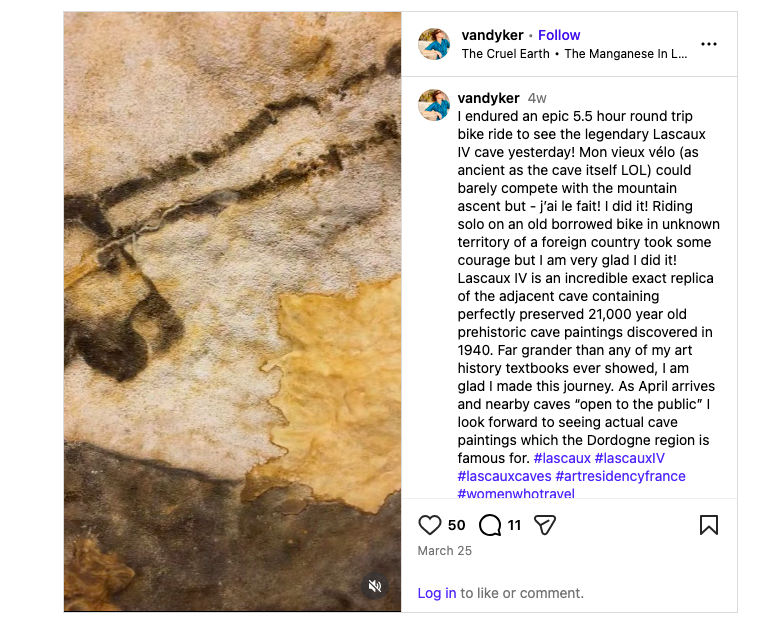
The most comprehensive solution came with Lascaux IV, the International Centre for Cave Art, inaugurated in 2016, which offers an almost complete reconstruction of the cave combined with modern digital technologies.
Today, Lascaux stands as a striking example of how a unique heritage site can be threatened even by human curiosity itself.
A place that remained untouched for thousands of years ultimately had to be protected from humans—confirming that, in some cases, the best visit is the one that never takes place in the original site.
Ask me anything
Explore related questions




