





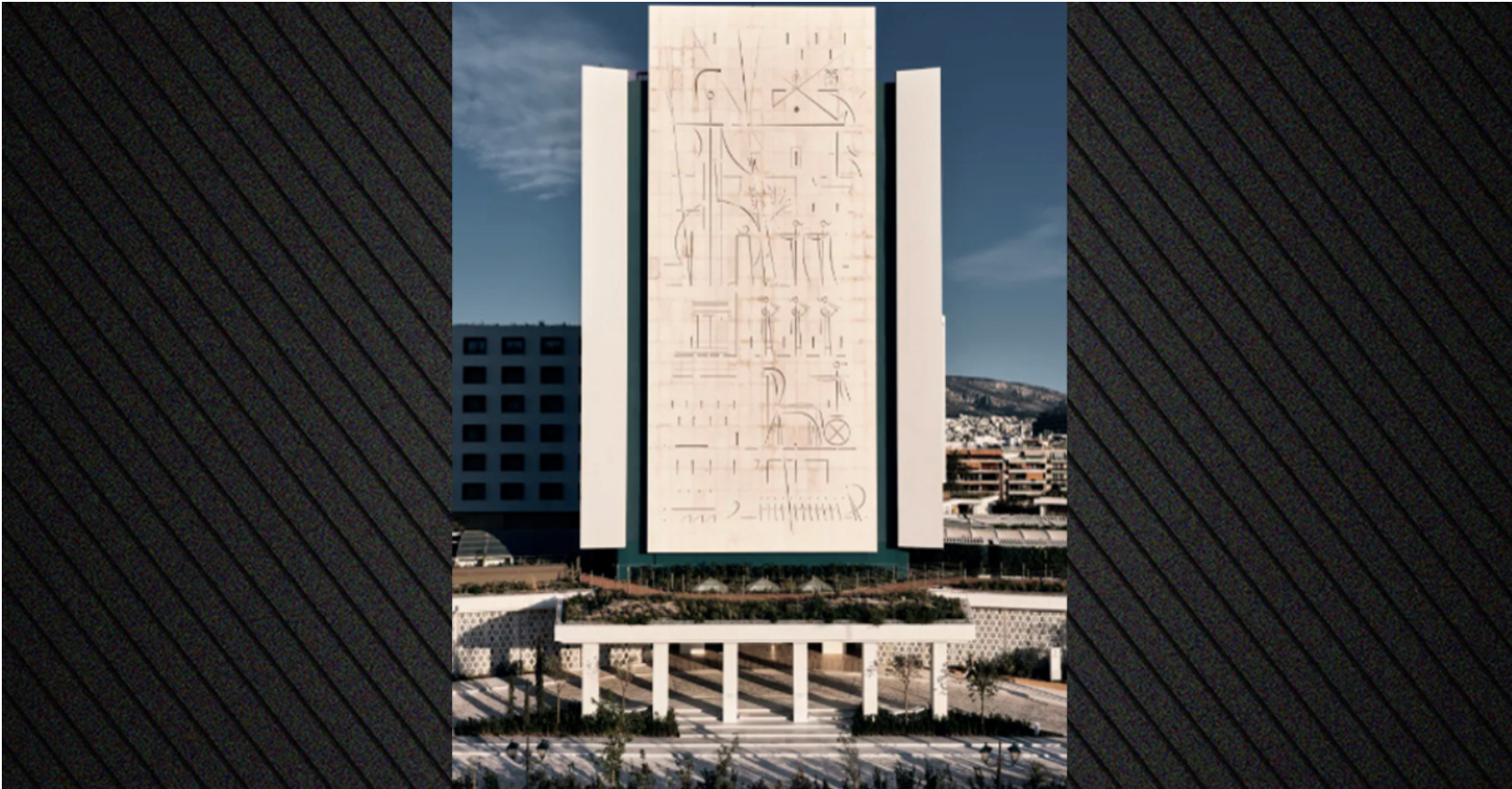
It was April 1963 when, alongside the highly anticipated inauguration of the iconic Hilton Athens in the heart of Athens, residents and visitors of the Greek capital saw for the first time the monumental sculptural composition by Yannis Moralis covering the entire façade of the impressive complex. Today, 63 years later, this work continues to symbolize the dialogue between past and present—from the old era of the Hilton to the new Conrad Athens The Ilisian, which opened its doors just a few days ago.
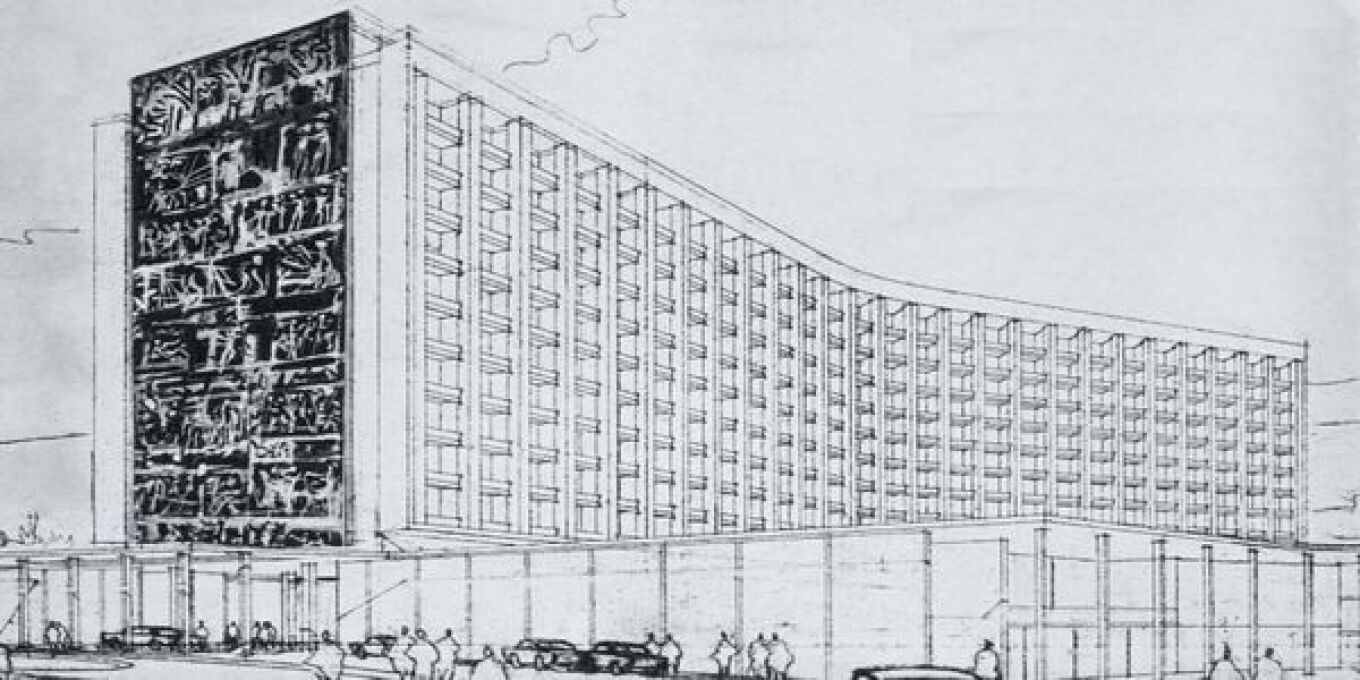
The commission for the design of the external walls on the northwest and southeast sides of the then monumental-for-its-time hotel was assigned to the distinguished artist in 1959 by the building’s architects, Emmanouil Vourekas, Prokopis Vasileiadis, Spyros Staikos, and Antonis Georgiadis. Moralis had already established himself both in Greece and abroad, having represented the country a year earlier—alongside Yannis Tsarouchis and sculptor Antonis Sochos—at the Venice Biennale. He was therefore considered the ideal choice to create a work symbolizing the convergence of Greek history with a new, Western-oriented way of life.
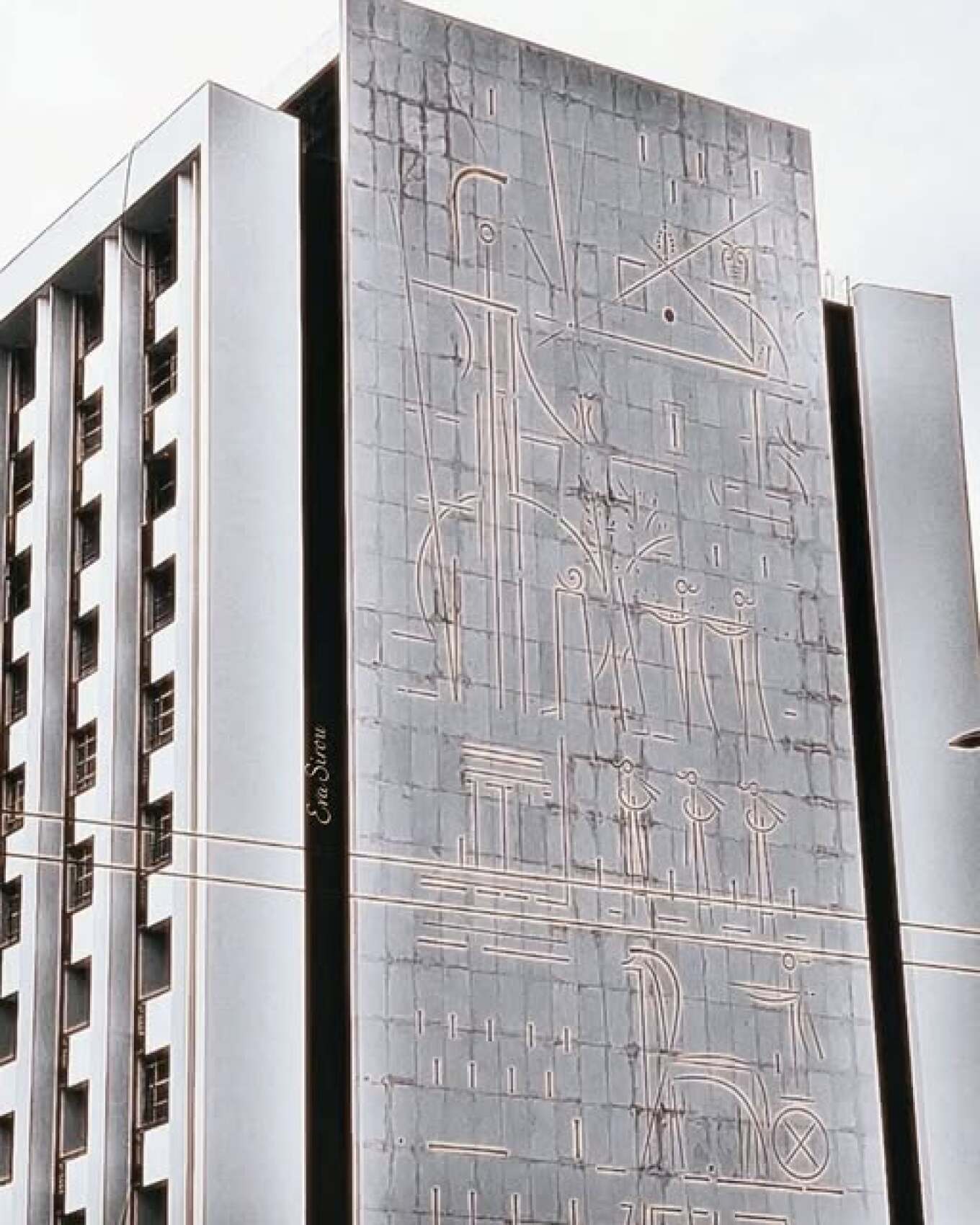
The initial idea was to create a ceramic composition. However, the cost proved prohibitive and the final artistic result uncertain, leading to the decision to opt for relief compositions carved into marble.
As for the theme, the architects imposed strict guidelines. They wanted it to draw from ancient Athens and to include symbols combining the ideas of hospitality, travel, entertainment, and luxury—elements that any foreign visitor could recognize and interpret.
Within these constraints, which confined his artistic imagination to specific parameters, Moralis began designing his sculptural representations on yellowish slabs of Ioannina marble, following the principles of linear drawing. It took him three full years to complete the work.
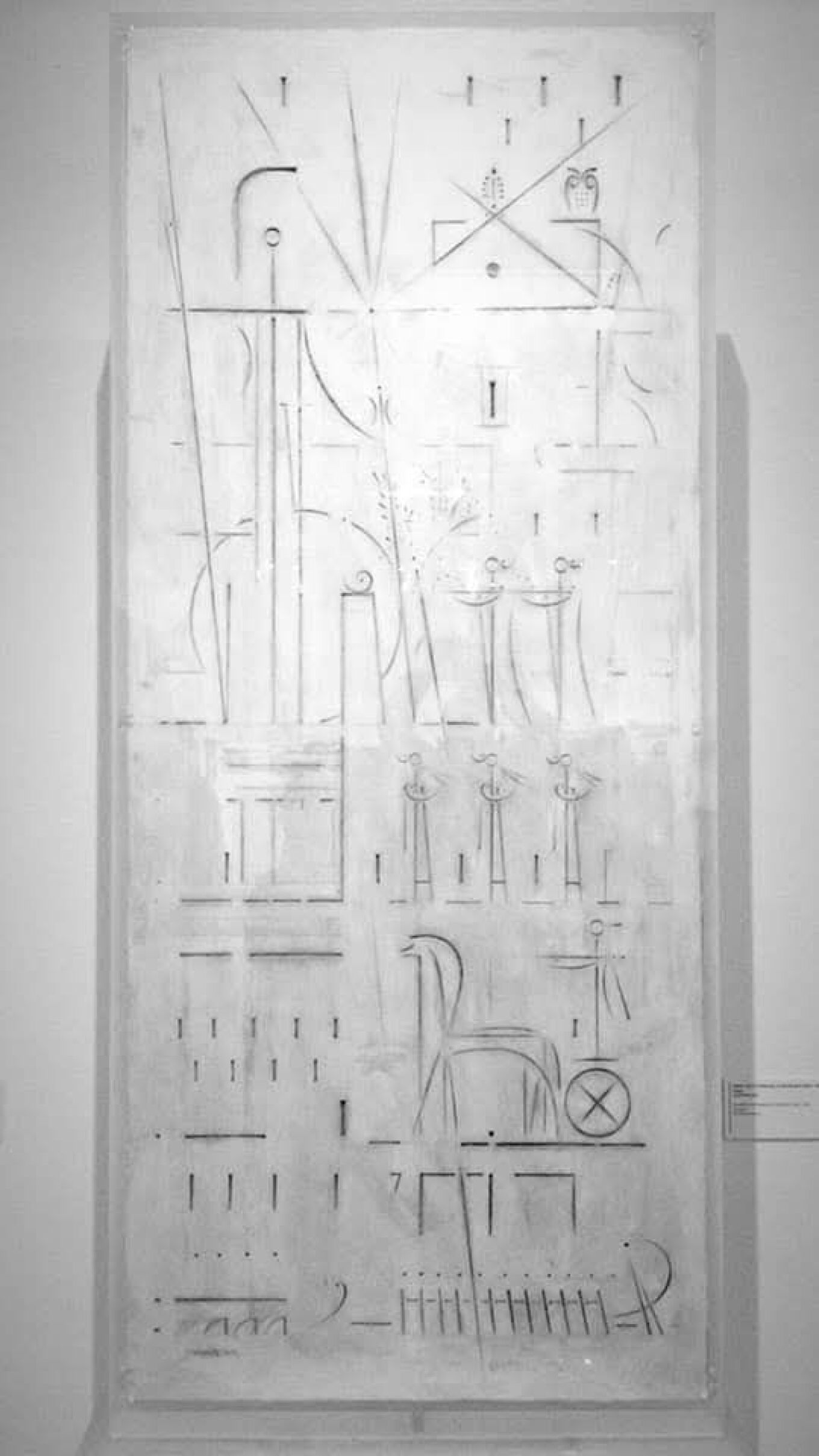
The final design was initially drafted at a 1:20 scale, then sculpted in plaster before being gradually engraved onto a total of 520 marble slabs measuring 150 by 80 cm. These were then carved and installed on both the front and rear façades of the building. Notably, the engraving was done in uneven line thickness, depending on the way sunlight would fall on the surfaces.
The motifs Moralis chose, although inspired by antiquity as requested, were not direct copies. Instead, they embodied precisely what the work itself symbolized: a harmonious fusion of past and present.
On the façade, he depicted the goddess Athena with Nike, a shield, the sun, an altar, a temple pediment, flute players symbolizing entertainment, and kanephoroi representing offerings to guests. He also included a chariot with its rider and a trireme symbolizing travel, along with two universally recognizable Athenian symbols: the olive tree and the owl.
“I first paid attention to the axis, so that the composition wouldn’t appear tilted, since the road slopes downward. Because the right side descends, I directed the movement of the entire composition toward the left. I also liked that Mount Hymettus could be seen in the background. Imagine that at the time there were no apartment buildings in the area. I remember once the moon rising behind Hymettus—the landscape was almost otherworldly,” Moralis had revealed.
Although there were initially strong concerns about the building’s massive scale, the final result went on to become a timeless landmark of Athens. Moralis’s truly groundbreaking creation also laid the foundations for the integration of architecture and art—a collaboration that would later be expressed in many other significant works.
Ask me anything
Explore related questions




