





In recent hours, we’ve seen significant volatility in crude oil prices, with Brent falling from extreme highs of $126 to about $111 today, April 30. These movements are mainly attributed to three factors: reduced demand due to excessively high prices, the release of strategic reserves, and the market’s assessment that the supply shock—although still substantial—may not develop into the worst-case scenario.
The initial oil rally was triggered by fears of a prolonged blockade of the Strait of Hormuz and a potential new military escalation between the U.S. and Iran. This was reinforced by a report from Axios that Washington is considering deploying the hypersonic missile system “Dark Eagle” to the Middle East for possible use against Iran. Brent surged above $126 as markets feared a major disruption to global oil supply.
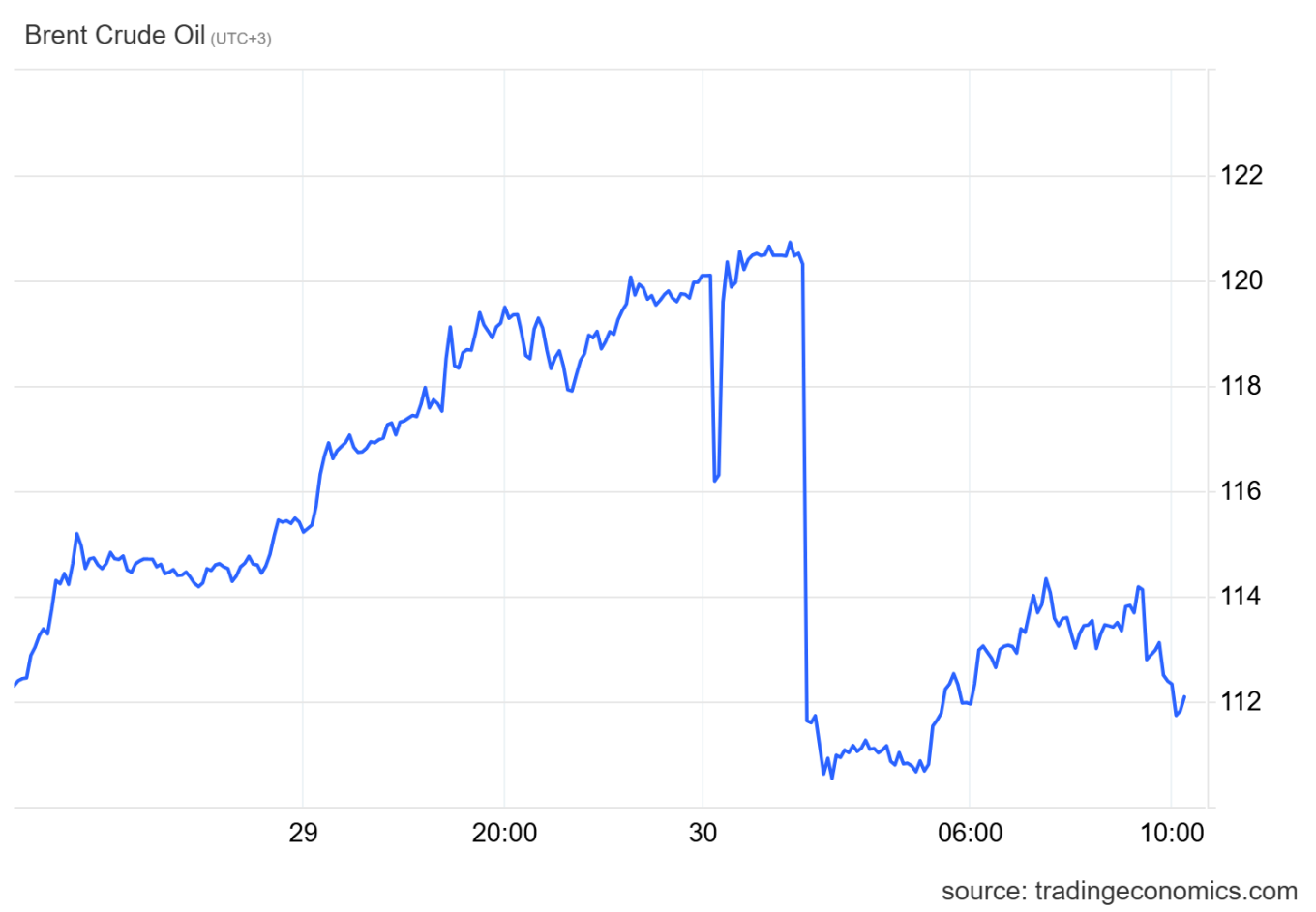
However, in the past few hours, the market has started to correct. According to Reuters, premiums in the physical oil market began to ease from extreme panic levels, as refineries in Asia cut production due to high prices, while major companies such as Sinopec and PetroChina released reserves and supplied additional cargoes to the market.
The same report notes that buyers from Asia and India turned to cheaper barrels from Russia, Canada, and Brazil, easing some of the pressure on Middle Eastern supply.
A key factor was also the so-called “demand destruction.” Morgan Stanley estimated that the price surge has already removed about 4.3 million barrels per day from demand, as industries, transport, and refineries cut fuel consumption.
At the same time, markets grew concerned that a prolonged price shock could lead to a slowdown or even a recession in the global economy. This, in turn, puts downward pressure on oil prices, as it reduces expectations for future energy demand.
Ask me anything
Explore related questions




