





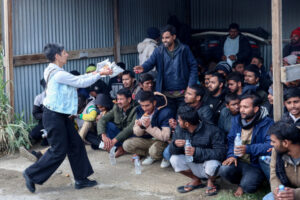
As of today (June 12, 2026), the European Union is entering a new era in the management of migration and asylum with the full implementation of the New Pact on Migration and Asylum. This is the most significant reform of the European migration framework in recent decades, which aims to address the weaknesses exposed by the major migration and refugee crises of recent years, creating a more effective, predictable, and commonly applicable system across all Member States.
The new framework combines the strengthening of the protection of the European Union’s external borders with faster asylum application procedures, more effective return mechanisms for those not entitled to international protection, and a permanent European solidarity mechanism for Member States facing the greatest migratory pressures. At the same time, it introduces uniform procedures for the screening, registration, and assessment of arrivals, with the aim of enhancing security, reduce secondary movements within the EU, and ensure equal rules of application across all Member States.
For frontline countries such as Greece, the new Pact represents a particularly significant institutional development, as for the first time it provides for specific support mechanisms at the European level through relocation, funding, and operational assistance. At the same time, the country is called upon to implement a new, stricter, and more organized system for managing migration flows, which affects both asylum procedures and return and border control policies.
Below are the key questions and answers regarding what will change in practice with the implementation of the New Pact on Migration and Asylum and what its most significant implications are for Greece and the European Union as a whole
– What are the key changes under the new Pact on Migration and Asylum?
The new Pact introduces stricter controls at external borders, faster asylum and return procedures, as well as a mandatory European solidarity mechanism to support frontline states, such as Greece. The new Pact was voted for only by New Democracy, which supported the new European framework by calling for stricter border controls, faster returns, and greater European support for frontline countries.
– What is screening and who does it apply to?
Screening is the mandatory initial check applied to everyone who enters the country illegally, regardless of whether they submit an asylum application. It includes identification procedures, health checks, and extensive security checks.
– How long does the screening process take?
The process is completed within 7 days at the border and within 3 days inland.
– What happens after screening is completed?
After the screening is completed, the third-country national is referred either to an asylum procedure, a return procedure, or a relocation procedure to another European Union member state.
– Who is subject to accelerated asylum procedures at the border, and what are the rules?
Accelerated asylum procedures at the border mainly apply to persons from countries with low asylum recognition rates or persons attempting to mislead the national authorities. These procedures must be completed within 12 weeks. During this period, the applicant is not considered to have formally entered the country, does not have access to the labor market, and is subject to detention or strict restrictions.
– What provisions are in place for those with a strong refugee profile?
Applicants with a high likelihood of being granted international protection are subject to the regular asylum procedure, enter the country legally, and have access to work, education, and other protection guarantees.
– What happens when an asylum application is rejected?
If an asylum application is rejected, a return decision is issued simultaneously, and the rejected applicant either departs voluntarily or is forcibly removed by the competent authorities.
– What is the main benefit for Greece from the new solidarity mechanism?
Greece receives institutionalized European support through relocations, funding, and operational assistance so that it does not have to face increased migratory pressures on its own.
– What changes regarding Greece’s obligations under the Dublin Regulation?
Through the agreement with key countries of secondary migration flows, such as Germany, France, Belgium, and the Netherlands, pending return cases will be cleared by the time the new Pact on Asylum and Migration takes effect. In this way, as of June 13, the country will eliminate the burden of old cases and shield itself against future migration pressures.
– What is planned for return hubs outside the European Union?
Return hubs are organized facilities outside the European Union to which third-country nationals whose asylum applications have been rejected or for whom a return decision has been issued may be transferred. Their aim is to manage returns more effectively and prevent illegal stay in Europe. The relevant legal framework is provided by the new EU Return Regulation and complements the new Pact on Asylum and Migration.
Greece is participating alongside Germany, the Netherlands, Austria, and Denmark in a joint European initiative to establish such centers. The goal of the five countries is to conclude the first agreements with third countries (Africa) by 2026, so that the new facilities can become operational by 2027.
– What is planned regarding safe countries of origin and the new Return Regulation?
Greece has already incorporated key provisions of the new European Return Regulation, with the aim of accelerating return procedures for persons not entitled to international protection. At the same time, the application of the concept of safe countries of origin—which includes Egypt, Pakistan, and Bangladesh—is being maintained and strengthened.
For nationals of these specific countries, asylum applications are examined through faster procedures, as it is presumed that there is no generalized risk of persecution or serious harm in these countries. If the application is rejected, return procedures are initiated immediately, in accordance with the new European framework.
Ask me anything
Explore related questions




