





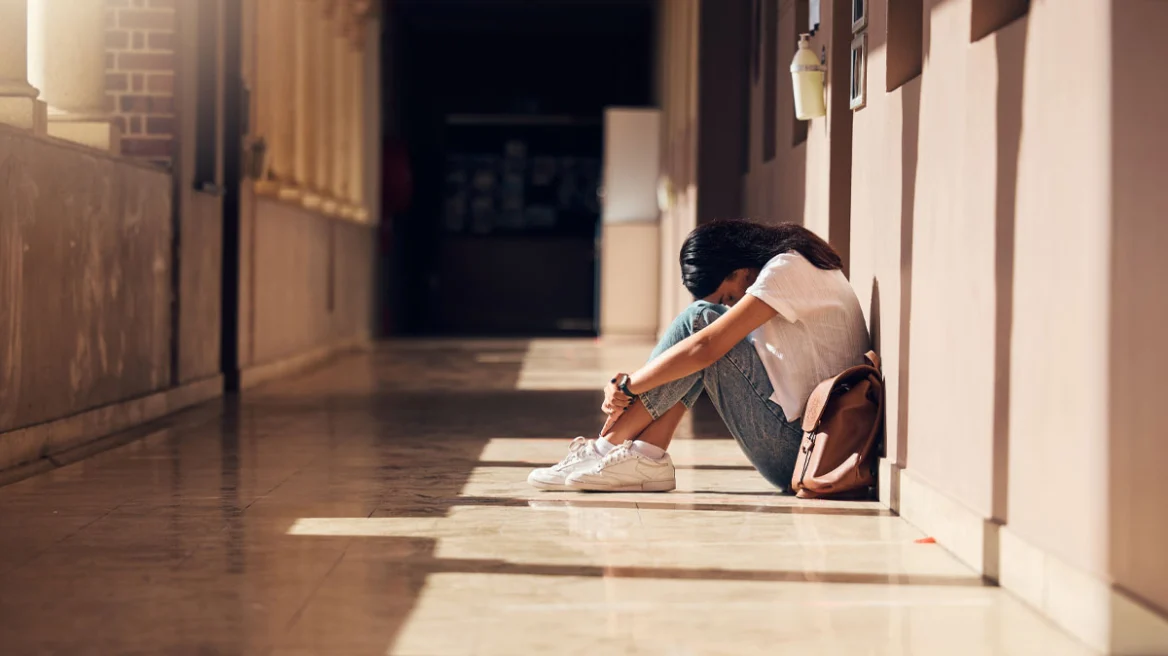
What happened early Tuesday afternoon last week in Ilioupoli? How is it possible that two 17-year-old girls who, according to their teacher’s testimony, appeared carefree and cheerful just the day before, decided to end their lives?
People who barely knew the two children cannot provide answers, but perhaps even those who knew them well may find it extremely difficult, if not impossible, to explain.
Child psychiatrists and mental health experts, however, observe that although rare, the double suicide in Ilioupoli is neither, nor should it be treated as, an isolated event, but rather “as part of an evolving epidemic of adolescent psychopathology.”
The Ilioupoli case is frightening. What path does a teenage girl follow before deciding that “this world is not for me,” and how did this journey ultimately pass beneath the radar of family and those around her? No one knows whether or what the immediate environment may have noticed, or whether they understood that the girls were experiencing such unbearable pressure.
In their final messages, however, the two girls blamed society while expressing love for their families. In one family, a significant loss — the death of the father — leads to the assessment that it may have worsened the girl’s mental state. Her friend felt such pressure that she had become convinced that nothing good awaited her in life. How does a girl only 17 years old reach such a dead end?
“Invisible” warning signs
The signs of a child’s or adolescent’s mental condition are not always obvious, but there are some that are often overlooked.
According to child psychologists, these include:
■ Changes in sleeping habits (sleeping much less or much more than usual).
■ The adolescent displays angry outbursts and explosions over seemingly insignificant matters.
■ Complaints of various body pains without any real medical cause.
■ Stopping activities they once loved or enjoyed.
■ Eating much less or much more than usual.
■ Declining school performance.
Did one child influence the other?
The joint decision the two girls made to die, as suggested by testimonies and evidence about how they behaved before climbing to the rooftop of the apartment building where one of them lived, has deepened the collective shock and, for many, the fear that anyone could find themselves in the position of their parents. Double suicide, though rare, does happen.
According to child psychiatrists, in such cases one child may influence the other; they identify with each other, and each projects their mental state onto the other. Society still prefers not to discuss mental health issues, as stigma remains strong. However, especially after the pandemic, Greece has recorded a significant increase in cases of anxiety, depression, and psychological distress among children and adolescents. Nearly one in four adolescents now shows symptoms of anxiety or depression, with girls exhibiting significantly higher rates of mental distress than boys.
Child psychiatrists speak of an evolving epidemic of adolescent psychopathology directly linked to the way life and societies are organized. “We live in times of absolute individualism; there is no framework for adolescents to belong to. Consider also the condition of today’s 45-year-olds: the parents of today’s adolescents emerged from economic crisis, work two or three jobs to survive, and there is no time left for family. Parents themselves are overwhelmed — and this creates a vicious cycle,” they say.
After the pandemic, Greece saw increased reports of panic attacks, eating disorders, self-harm, and sleep problems among minors. Since 2020, requests for psychological support for children and adolescents in child psychiatric facilities have increased significantly, though this is not always possible due to limited capacity and chronic understaffing.
They blame society, not their parents
In the Ilioupoli case, police investigating the evidence believe the two girls had planned what happened around noon last Tuesday. They did not “suddenly” go up to the rooftop; there may have been events that solidified their decision, and it was only a matter of time before it was carried out. In many cases, psychiatrists have observed, imitation plays a role. Psychiatrists also note that about a month ago another 17-year-old girl died by suicide after jumping from the Corinth Canal bridge, while authorities are also investigating the death of a 25-year-old woman who fell from a seventh-floor balcony in Piraeus on Friday.
The thoughts of the two girls in Ilioupoli were recorded in a note and a diary. According to experts, through their writings they directed their anger at society, not their parents. They expressed love for their families, apologized, but felt trapped in a dead end.
In response to the Ilioupoli case, the Hellenic Psychiatric Association and the Union of Child and Adolescent Psychiatrists — Child Psychiatric Society of Greece stressed the importance of prevention and called for immediate and coordinated cooperation among all involved parties: psychiatrists, child psychiatrists, psychologists, educators, parents, policymakers, and media representatives, since the way such incidents are presented can have a powerful and harmful effect.
“The current rapidly changing social and digital environment creates new challenges for adolescent mental health, such as isolation, cyberbullying, feelings of dead end and despair, which require systematic, interdisciplinary, and multi-level responses. At a later stage, we propose the launch of a meaningful national dialogue that will lead to strengthening psychological support in schools, training teachers to recognize warning signs, raising family awareness, strengthening youth mental health services, and establishing clear guidelines for the media inspired by international standards regarding the reporting of suicide cases. The mental health of children, adolescents, and adults is not an issue that concerns only specialists. It is a shared responsibility of society as a whole,” Greek psychiatrists and child psychiatrists note.
According to data from the Observatory of the Suicide Prevention Center “Klimaka,” there has been an increase in adolescent suicides in 2026 (ages 15-19): nine teenagers in this age group have taken their lives this year, compared with six last year, seven in 2024, nine in 2023, and seven in 2022. Suicide attempts are estimated to be 15–20 times more frequent.
Hard-to-detect signs
Can an adolescent hide their true mental state? The two girls in Ilioupoli were described as cheerful and well-liked children. Only a few classmates mentioned that lately they had seemed more withdrawn, but not to a degree that would have triggered alarm that something serious was wrong.
They had been childhood friends and functioned normally within the school community; the social environment had not perceived the extent of the pressure and despair they felt. Experts emphasize, however, that incidents like the Ilioupoli case should not be treated as isolated — and above all should not be ignored. They also stress that signs concerning a child’s or adolescent’s mental condition are not always obvious, as they can pass beneath parental or social radar.
COVID, isolation, and social media
According to OECD research, the COVID-19 pandemic has been a major factor worsening mental health, intensifying anxiety and isolation. Economic insecurity, as experienced within families, is another aggravating factor — one of the girls in Ilioupoli wrote that she would not do well on the Panhellenic exams and would end up in a job that would not provide enough money. How did a 17-year-old become so hopeless about money she had not even had the chance to earn? School examinations, meanwhile, remain a source of pressure and often lead adolescents to depression and self-harm, while bullying increases the risk of mental disorders.
Social media are also blamed for contributing to anxiety and depression among adolescents when used excessively, while sleep deprivation caused by mobile phone use is directly associated with depression. This realization has in fact led to age restrictions on social media platform use.
According to data from the World Health Organization (WHO), girls experience anxiety at higher rates and significantly higher rates of depression than boys, while self-harm is also more common among girls. At the same time, adolescent girls feel far more intense pressure from social media than boys do.
According to the WHO, mental disorders among European adolescents have increased by 33% over the past fifteen years. Furthermore, according to the findings of the OECD study published in March titled “Child, adolescent and youth mental health in the 21st century,” 15-year-old girls in Greece rank second in Europe, behind only their peers in Ireland, in terms of “problematic” social media use. The classification is based on nine symptom indicators, with adolescents having responded positively to at least six of them. In 2022, 22% of 15-year-old girls in Greece fell into the category of problematic users, compared with 17% in 2018.
Ask me anything
Explore related questions




