





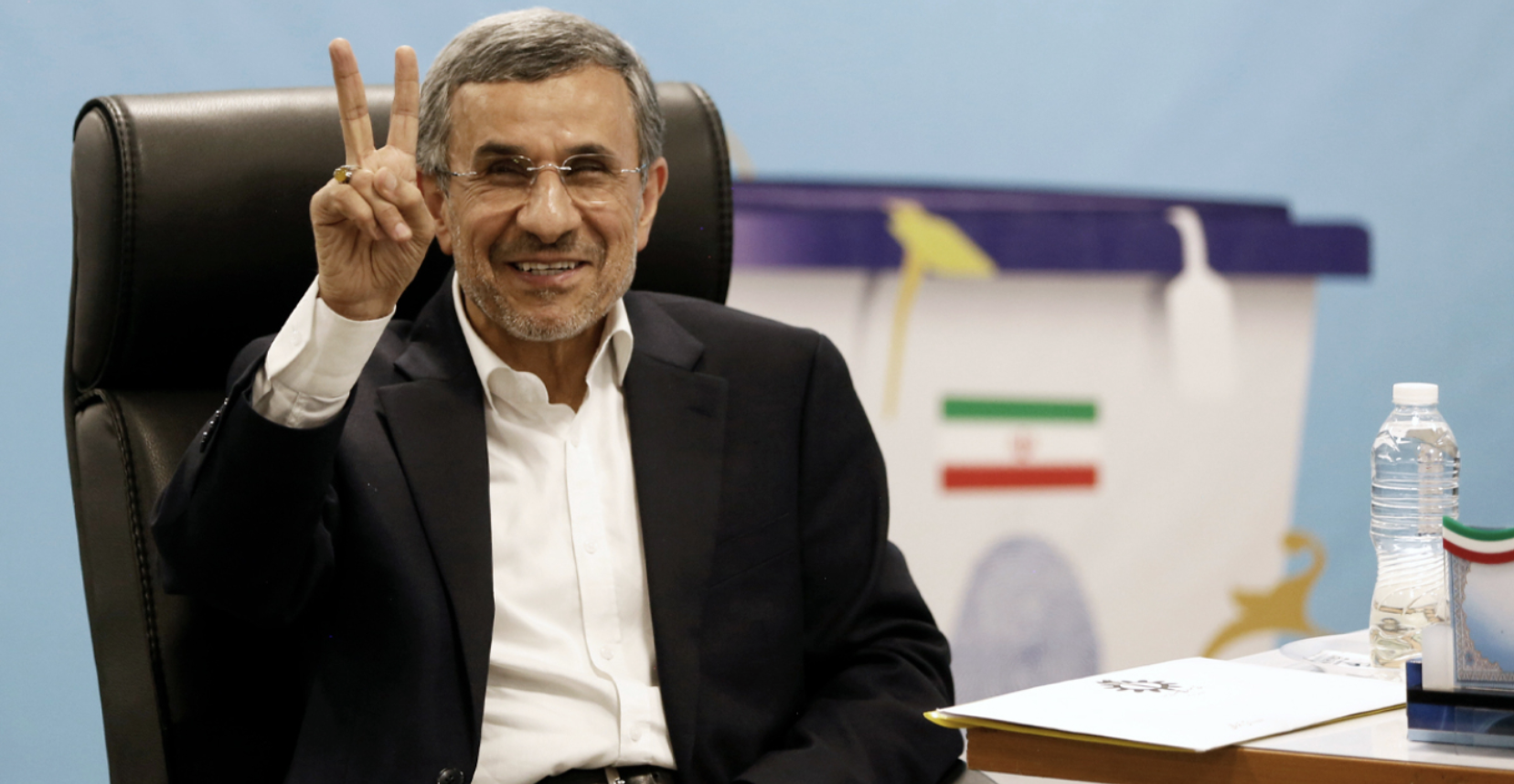
According to The New York Times, former Iranian president Mahmoud Ahmadinejad appears to have been the figure Donald Trump had in mind when, during the first days of the Middle East war, he stated that it would be better if “someone from within” Iran took over the country’s leadership.
However, the plan — reportedly devised by the Israelis and one that Ahmadinejad himself had been informed about — quickly went wrong, according to US officials.
The reason? An Israeli bombing raid on the first day of the war targeting his home in Tehran, which had allegedly been designed to free him from the house arrest imposed by the Iranian regime.
Ahmadinejad survived, “but after this near-death experience, he became disillusioned with the regime-change plan,” the New York Times writes. Since then, he has not appeared publicly, and his current location and condition remain unknown.
US officials said the attack — carried out by the Israeli Air Force — aimed to kill the guards monitoring him as part of a plan to free him from house arrest.
The strike caused little damage to his home, located at the end of a dead-end street. However, the security checkpoint at the entrance of the street was hit, and satellite imagery reportedly shows it was destroyed.
In the following days, state news agencies clarified that Ahmadinejad had survived, but that his “bodyguards” — in reality members of the Revolutionary Guards who both protected and confined him — had been killed.
An article in The Atlantic in March, citing anonymous associates, stated that the former president had been freed from government restrictions after the attack on his home, describing the operation as “essentially a prison break.”
Following that article, one of his associates confirmed to The New York Times that Ahmadinejad interpreted the strike as an attempt to free him. The same associate said the Americans viewed him as someone capable of leading Iran and managing “the country’s political, social, and military situation.”
The rationale behind the plan
The operation — unknown until now — was reportedly part of Israel’s broader plan to overthrow Iran’s theocratic government. In reality, however, it highlights how Trump and Israeli Prime Minister Benjamin Netanyahu entered the war not only underestimating how quickly they could achieve their goals, but also gambling to some extent on a risky leadership-change plan in Iran that even some US presidential aides considered unlikely.
Some American officials were reportedly especially skeptical about whether Ahmadinejad could realistically return to power.
During the early days of the war, US officials spoke about plans developed jointly with Israel to identify a pragmatist who could take control of the country. They claimed there was intelligence suggesting that some figures within the Iranian regime would be willing to cooperate with the United States, even if they could not exactly be described as “moderates.”
As The New York Times notes, this was also the period during which Trump was celebrating the success of a US operation involving Venezuelan leader Nicolás Maduro and the willingness of his temporary replacement to cooperate with the White House — a model Trump reportedly believed could be repeated elsewhere.
An unusual choice
As the New York Times observes, “to say that Mr. Ahmadinejad was an unusual choice would be a massive understatement.”
Although in recent years he had increasingly clashed with Iran’s clerical leadership and was under close surveillance by Iranian authorities, during his presidency (2005–2013) he became notorious for calls to “wipe Israel off the map.”
He was a strong supporter of Iran’s nuclear program, a fierce critic of the United States, and known for violently suppressing domestic opposition.
During his presidency, Ahmadinejad also made controversial statements such as claiming that “there are no homosexuals in Iran,” denied the Holocaust, and spoke at a Tehran conference titled “A World Without Zionism.”
He was also president during a period when Iran accelerated uranium enrichment that could potentially be used for a nuclear weapon if the program were militarized.
However, in recent years Ahmadinejad had accused Iran’s leadership of corruption. The Tehran regime barred him from several presidential elections, arrested some of his associates, and increasingly restricted his movements to his home in the Narmak district of eastern Tehran.
Although he never openly became anti-regime, authorities began treating him as a potentially destabilizing figure.
His remarks about Trump and his trips to the West
In a 2019 interview with The New York Times, Ahmadinejad praised Trump and advocated rapprochement between Iran and the United States.
“Mr. Trump is a man of action,” he said. “He is a businessman, and therefore he can calculate costs and benefits and make decisions. We tell him: let us calculate the long-term costs and benefits for our two nations and not be shortsighted.”
People close to Ahmadinejad have been accused of maintaining excessively close relations with the West or even spying for Israel, while his travels in recent years further fueled conspiracy theories.
In 2023, he traveled to Guatemala, and in 2024 and 2025 to Hungary — two countries with close ties to Israel.
During his visits to Hungary, Ahmadinejad spoke at a university associated with Viktor Orbán. He returned to Iran just days before the Israeli and US attack.
Since then, he has maintained a very low public profile, making only a few social media posts. His silence regarding the war with a country he had long described as Iran’s greatest enemy has drawn intense commentary on Iranian social media.
Ask me anything
Explore related questions




