





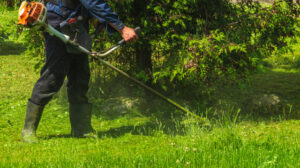
The deadline for cleaning plots of land is currently underway, as property owners have until June 15 to complete fire-prevention cleaning work and submit the relevant declaration to the National Registry via the platform akatharista.apps.gov.gr.
The obligation does not apply only to plots within urban plans but also to areas outside planning zones, provided there is a building on the property. Otherwise, fines ranging from €200 to €2,000 apply.
It concerns plots within city plans or settlement boundaries (even if there is no approved urban plan), as well as uncovered spaces within planned areas. It also includes plots within 100 meters of settlement or city limits (if not classified as forest land), and plots outside urban areas that contain a building (excluding farmland or forest/grassland areas).
It is noted that the space must remain clean until the end of the fire season on October 31.
After cleaning is completed, it must be declared electronically on the platform officially named the “National Registry for Preventive Fire Protection Measures for Properties” (https://akatharista.apps.gov.gr). The declaration can also be submitted via Citizen Service Centres (KEP) or the nearest Fire Service station (info line: 213-20.47.888).
The cleaning obligation applies not only to the owner, but also to the possessor, usufructuary, or tenant of the property. However, it is not clearly defined who ultimately bears legal responsibility in each case.
Penalties
Offenders face a €100 fine if they fail to submit a declaration. If they neither clean the plot nor submit a declaration, the fine increases to €500 (for non-declaration).
False declarations are a criminal offense, punishable by at least 6 months in prison and a €5,000 fine.
If a property is not cleaned, a fine imposed by the municipality or fire service applies, at €1 per square meter, with a minimum of €200 and a maximum of €2,000.
In addition, the municipality may carry out the cleaning ex officio and charge the owner for the cost.
New wildfire prevention practices
As part of strengthening preventive measures, the government is also promoting new practices already used in countries with extensive wildfire experience such as the United States, Australia, Portugal, and Spain.
One key tool under consideration is “prescribed burning,” meaning controlled burning of low vegetation in specific areas during March and April, aiming to reduce fuel loads before the fire season begins.
The measure is implemented with the cooperation of experts, foresters, and scientific institutions and is supported by organizations such as WWF, as well as universities including the Aristotle University of Thessaloniki and the National and Kapodistrian University of Athens.
The new bill also includes “controlled grazing,” allowing municipalities and regional authorities to lease land to livestock farmers so animals naturally reduce low vegetation that acts as fire fuel.
Cleaning obligations – key requirements
Required cleaning works include:
- Removal of dry vegetation and plant residues
- Pruning trees and thinning shrubs
- Collection and transport of cleaning materials
- Removal of flammable materials and waste
- Maintenance of low fuel load throughout the high-risk fire period
Inspections and penalties
According to the Joint Ministerial Decision (KYA), municipalities use the National Registry to support inspections, while the Fire Service conducts checks only following complaints during the fire season.
Sanctions include:
For failure to submit a declaration:
- €500 if no cleaning and no declaration
- €100 if cleaning was done but no declaration submitted
For failure to clean the property:
- €1 per square meter, minimum €200, maximum €2,000
Ex officio cleaning by the municipality with costs charged to the owner
Criminal penalties for false declarations (at least 6 months imprisonment and €5,000 fine)
Strengthening prevention and coordination
The aim is early preparation ahead of the fire season and a substantial reduction in wildfire risk.
Citizens and authorities are urged to actively cooperate to protect human life, property, and the natural environment.
Legislative changes
According to the Ministry of Climate Crisis and Civil Protection, through Articles 41, 43, and 44 of Law 5182/2026 (Government Gazette A’ 28) and the Joint Ministerial Decision, the legal framework on property cleaning and the national preventive fire protection registry has been updated and amended.
Key changes include:
- Possessors are now explicitly included among those required to submit declarations.
- The cleaning deadline and declaration date are unified at June 15 each year.
- Exemptions are introduced (e.g., cultivated gardens, agricultural land, grazing land, inaccessible areas).
- Provisions for biodiversity protection and waste management are added.
- Physical submission is allowed via KEP or Fire Services for vulnerable groups or technical inability.
- Municipality inspection teams are further defined.
- Penalty structure is revised (as described above).
- Penalties for false declarations are reduced (minimum 6 months prison and €5,000 fine instead of higher previous thresholds).
The Fire Service Regulation 20/2024 is also repealed.
Ask me anything
Explore related questions




