





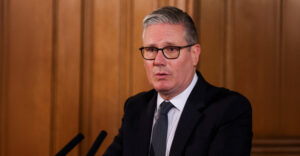
Speaking outside 10 Downing Street in a live address to the nation, Sir Keir Starmer reflected on his time in office and said that leading Labour back into government after 14 years in opposition had been the proudest moment of his career. He defended his record while acknowledging the political pressure that had built around his leadership and confirmed that the process of choosing his successor would now begin.
Starmer also set out the timetable for the contest to choose his successor. He said the process, overseen by Labour’s National Executive Committee, will open on July 9 and be completed before Parliament rises for its summer recess on July 16.
“A new Labour government, the first after 14 years. A new page in our country’s history opened after years of frustration and deadlock, offering the chance to change the lives of millions of people for the better. That is why I entered politics,” Starmer said.
“The path to that point was not easy. Six years ago, I took over a Labour Party that was politically, financially and morally bankrupt.
“I was told again and again that my party was finished, that we belonged to the past, and that winning a majority at a general election, let alone a landslide victory, was impossible.
“We proved those people wrong because we changed our party. We rooted out the poison of antisemitism, restored our credibility on the economy, defence and national security, and once again became a party that stood proudly with its country and under its national flag.
“That difficult work of change had one purpose only: not power for the sake of power, but the improvement of Britain. The creation of a fairer country, built on dignity and respect, where everyone is recognised, everyone has value, and where wealth and opportunity belong to all, not only to the privileged few,” he said.
His announcement followed days of intense pressure from Labour MPs, including cabinet ministers, after Andy Burnham, the former mayor of Greater Manchester, returned to the House of Commons by defeating Reform UK in the Makerfield by-election.
Starmer had been urged by many of his own MPs to set out a timetable for his departure, as anxiety grew inside Labour over the threat posed by Reform UK, the right-wing party led by Nigel Farage, ahead of the next general election.
Only days earlier, Starmer had insisted that he would fight any leadership contest. However, discussions with ministers and a weekend spent with his wife, Victoria Starmer, at Chequers, the prime minister’s official country residence, appear to have changed his position.
More than half a dozen cabinet ministers are understood to have privately told him that his premiership could no longer continue. Starmer and his closest aides began preparing drafts of a resignation speech on Saturday.
By announcing his own departure, Starmer could now trigger a contest among Labour MPs to decide who becomes the UK’s seventh prime minister in 10 years. Burnham is currently seen as the frontrunner after seeing off the Reform UK challenge in Makerfield.
There may also be no full contest if no rival candidate secures the 81 nominations needed to enter the race, or if potential challengers reach an agreement with Burnham. Possible contenders could include Wes Streeting, the health secretary.
Starmer is expected to remain in Downing Street until the leadership contest, or a direct handover of power, is complete. His successor will inherit a difficult economic situation in the UK and an unstable international environment.
Ask me anything
Explore related questions




