





Consumers today are surrounded by more information than ever about food safety, but not all of it is reliable. Social media claims, misleading marketing terms and rising concern over food fraud have made it harder to know what is genuinely safe, authentic and good value.
At the same time, food prices remain high, pushing many shoppers towards cheaper alternatives. That makes it even more important to understand labels, recognise warning signs and know which food myths are worth ignoring.
How reliable are food labels? Can consumers spot a suspicious product by themselves? Does cloudy olive oil mean better quality? Is crystallised honey a bad sign? And what is the real difference between “use by” and “best before”?
Speaking to protothema.gr, Dr Charalambos Proestos, Professor of Food Chemistry at the Department of Chemistry of the National and Kapodistrian University of Athens, explains the most important things consumers should know about food fraud, labels, olive oil, honey, food storage and the myths that still shape everyday shopping choices.
Food fraud: why consumers need to be alert
Food fraud is one of the biggest challenges in the food sector, because it affects not only product quality but also consumer trust.
According to Dr Proestos, food fraud usually involves the deliberate alteration or misleading presentation of a product for financial gain.
Recent examples include mixing extra virgin olive oil with cheaper vegetable oils, adding syrup to honey, or falsely declaring the geographical origin of a product.
The problem becomes even harder for consumers when products are sold loose, without standardised packaging.
“When we are talking about a packaged product, the consumer can at least rely on the label and assess how trustworthy it is,” he explains. “But when we are talking about a food sold loose, things become much more difficult.”
The challenge, he says, is that those breaking the rules are constantly looking for new ways to stay ahead of scientists and regulators.
“In food fraud, the person acting illegally always tries to be one step ahead of the scientist or the state, looking for new ways to deceive, just as happens with banned substances in doping,” Dr Proestos says. “Our work in the laboratory is to keep developing new techniques to detect these alterations.”
The label is your first safety tool
For consumers, the food label remains one of the most important tools for making safer and better-informed choices.
The problem is that many shoppers either do not read the information on the back of the packaging, or do not fully understand what it means.
“Because the ingredients and nutritional information are usually on the back of the package, most consumers do not read them. Even when they do, some do not know what they mean,” Dr Proestos says.
This is gradually changing, especially among younger consumers and people who are more interested in nutrition and food quality. More shoppers now look online to understand ingredients, additives, preservatives and nutritional values.
Still, some basic information is often overlooked. Consumers may forget to check cooking instructions, storage instructions, expiry dates, allergens or country of origin.
A useful label check should include:
• ingredients
• allergens
• nutritional declaration
• country of origin
• storage instructions
• cooking instructions
• expiry information
• producer or distributor details
Warning signs on food labels
A long list of ingredients does not automatically mean that a product is unsafe. But it should make consumers more careful, especially if the product contains many additives, chemical names or E numbers.
“When a consumer sees a product with around 30 or 35 ingredients, with various chemical names and various E numbers, they should suspect that this food may not be the best choice for everyday consumption,” Dr Proestos says.
Ingredients are listed in descending order, from the ingredient present in the largest amount to the one present in the smallest amount. This means the first few ingredients are especially important.
A product with many additives is not necessarily dangerous, since approved additives are regulated. But consumers should be cautious and avoid assuming that every heavily processed product is suitable for daily use.
Olive oil: what shoppers should check
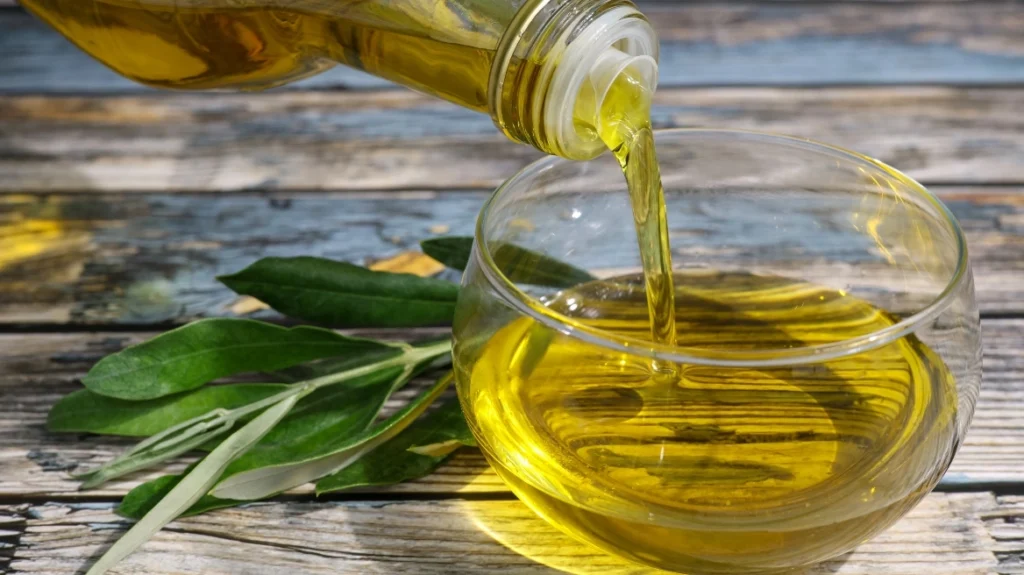
Olive oil is one of the products where authenticity and quality matter most, both because of its nutritional value and because of its price.
Dr Proestos explains that several indicators determine the quality of olive oil, including acidity, origin, peroxide value, oxidation indicators such as K232, K270 and ΔK, fatty acid composition and phenolic compounds.
For the average consumer, however, some details are easier to understand than others.
The first thing many shoppers can check is acidity. For an olive oil to be classified as extra virgin, its free acidity must not exceed 0.8%. However, acidity alone does not define quality. Other chemical and sensory criteria are also important.
Consumers should also look at:
• whether the product is extra virgin olive oil or another category of olive oil
• its declared origin
• whether it is labelled as cold extracted
• the producer or bottler
• the price in relation to the category
• whether the packaging is sealed and properly labelled
Dr Proestos also stresses that pomace oil is a different category from virgin and extra virgin olive oil. It should not be confused with them.
“Traditional”, “natural” and “handmade” are not guarantees
Many products use attractive words such as “traditional”, “natural”, “handmade” or “village-style”. These terms may sound reassuring, but they are not the same as official quality certification.
“The terms traditional, natural and handmade can mislead consumers more, because something handmade does not necessarily mean it is better,” Dr Proestos says.
The more meaningful labels are official schemes such as PDO and PGI.
PDO means Protected Designation of Origin. PGI means Protected Geographical Indication. These schemes protect the authenticity and name of specific products linked to a particular place and production method.
By contrast, terms such as “traditional”, “homemade”, “village-style” or similar descriptions are often marketing terms. They may appeal to consumers, but they are not official guarantees of safety, authenticity or superior quality.
Common food myths consumers should stop believing
Despite wider access to information, several food myths remain common. Some come from older habits, others from misleading online claims.
Dr Proestos explains which assumptions consumers should treat with caution.
Myth 1: the more expensive product is always better
A higher price does not automatically mean better quality.
Price can be influenced by brand name, packaging, advertising, distribution costs or marketing, not necessarily by the true quality or nutritional value of the product.
A cheaper product may be a perfectly good choice. But an unusually low price, especially in a high-value product such as olive oil or honey, should encourage consumers to look more carefully at the label and source.
Myth 2: organic products are always more nutritious
Organic products are produced using different agricultural practices. That does not automatically mean they are always significantly richer in nutrients than conventional products.
Their value is mainly linked to the production method and the rules followed in cultivation or farming. Consumers should not assume that the word “organic” alone guarantees greater nutritional value in every case.
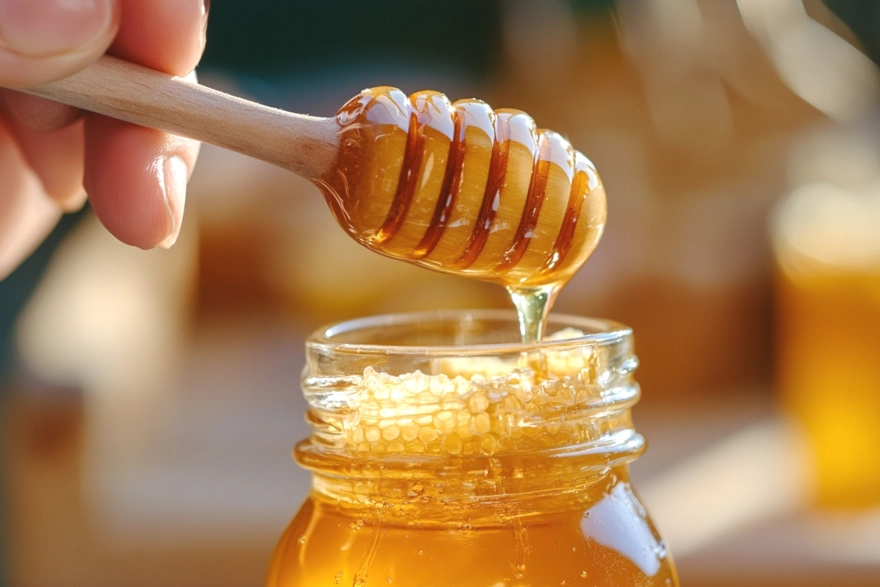
Myth 3: crystallised honey is adulterated
Crystallisation in honey does not mean the product is fake or adulterated.
In fact, crystallisation is a natural process. Some types of honey crystallise more easily than others, depending on their composition.
“The honey that crystallises does not mean it is adulterated. On the contrary, it is natural,” Dr Proestos says.
Myth 4: cloudy olive oil is always better
Cloudiness in olive oil does not automatically mean higher quality.
Some consumers associate cloudy olive oil with freshness or authenticity, but appearance alone is not enough to judge quality. The true assessment of olive oil depends on chemical and sensory criteria, not just how it looks in the bottle.
Myth 5: bitter fresh olive oil means pesticides
Fresh olive oil can have a bitter taste because of natural compounds called polyphenols.
“Some people say, we have fresh oil and it is bitter, could it have pesticides? No. Fresh oil contains a compound, a polyphenol, which gives this bitterness to fresh olive oil,” Dr Proestos explains.
Bitterness and pungency in good olive oil can be linked to beneficial natural compounds, although consumers should still rely on proper labelling and trusted producers.
Myth 6: if food looks and smells fine, it is safe
This is one of the most dangerous assumptions.
A food can look and smell normal but still contain pathogenic microorganisms. Appearance and smell are not always reliable indicators of safety.
This is why storage instructions, hygiene, expiry dates and correct handling matter so much.
“Use by” and “best before” – the difference matters
Expiry dates are one of the most common sources of confusion.
Dr Proestos explains that there is an important difference between “use by” and “best before”.
“Use by” is about safety. If a food carries this indication, it should be consumed by that date. After that, there may be a safety risk.
“Best before” is about quality. A product may lose aroma, texture, flavour or freshness after that date, but it does not automatically become dangerous.
For example, cocoa may carry a “best before” date. If consumed after that date, it may have lost some of its aroma or flavour, but that does not necessarily mean it is unsafe.
The key rule is simple: take “use by” dates seriously, especially on perishable foods, and treat “best before” dates as a quality guide.
Food safety at home: what consumers often forget
Even a high-quality food can become unsafe if it is handled badly at home.
Dr Proestos stresses that hygiene matters at every stage. Dirty hands, utensils, cutting boards or kitchen surfaces can contaminate food.
Consumers should:
• wash hands before handling food
• keep raw and cooked foods separate
• clean utensils and work surfaces properly
• refrigerate perishable foods quickly
• keep the cold chain intact when carrying food home
• follow cooking and storage instructions
• avoid leaving sensitive foods at room temperature for too long
A product can be safe when purchased, but unsafe by the time it is eaten if it has been poorly stored or contaminated in the kitchen.
Alternative proteins and future foods
Food safety discussions are also expanding to new types of food, including alternative proteins.
As the global population grows and access to animal protein becomes more expensive or difficult in some regions, researchers are studying new sources of protein, including legumes, spirulina and insect protein.
Dr Proestos says university laboratories are already working on these areas.
This does not necessarily mean that consumers will be expected to eat whole insects. In some cases, alternative proteins may be used in flours or extracts. What matters most is clear labelling, so consumers know exactly what a product contains.
Consumers should be informed if a flour or food product contains protein from specific approved insects or other alternative sources.
Cultivated meat and new technologies
Another area of research is cultivated, or laboratory-grown, meat.
Dr Proestos notes that such technologies are already being developed in some countries, but the European Union has strict regulatory controls. That means these products cannot simply enter the European market without assessment and approval.
The important point for consumers is choice and transparency.
“The consumer always has the choice in their hands, as long as they know clearly,” he says. “The law also requires this: the label must be clear and inform the consumer about what they are buying.”
What consumers should do before buying food
Dr Proestos gives a set of practical rules that can help shoppers make safer choices.
Always read the label
Check the ingredients, allergens, nutritional declaration, country of origin and storage instructions.
Do not shop only by price
A very cheap product may be a good purchase, but if the price seems unusually low for that category, it is worth being more careful.
Buy from trusted producers and shops
Choose producers, suppliers and stores that follow hygiene rules and have a reliable track record.
Be careful with loose products
Products sold without standard packaging can be harder to assess. In these cases, trust in the producer or seller becomes especially important.
Protect the cold chain
Take chilled and frozen foods home quickly and put them in the fridge or freezer as soon as possible.
Learn the difference between “use by” and “best before”
“Use by” is about safety. “Best before” is about quality.
Keep your kitchen clean
Food can become contaminated at home through dirty hands, utensils, surfaces or poor storage.
Report suspicious products
If something seems suspicious, consumers should report it to the relevant authorities, such as EFET, Greece’s food safety authority.
How science protects consumers
Modern food chemistry plays a crucial role in detecting fraud and protecting public health.
Scientists now use advanced analytical techniques to verify authenticity, origin, freshness and compliance with labelling rules. These include gas and liquid chromatography, infrared spectroscopy and chemometric methods, meaning advanced statistical analysis of laboratory data.
Such methods can help confirm the geographical and botanical origin of products such as olive oil and honey. They can also detect whether what appears on the label matches what is actually inside the product.
According to Dr Proestos, one of the most important priorities today is traceability across the entire production chain.
That means knowing who produced a product, where it came from, whether it is imported or domestic, and how it reached the shelf.
Scientific research does not replace official controls by bodies such as EFET or the General Chemical State Laboratory. Instead, it provides tools that can help authorities detect fraud more effectively and protect consumers.
For shoppers, the message is clear: do not rely only on price, appearance or marketing language. Read the label, understand the basic terms, buy from trustworthy sources and treat food safety as something that continues at home, long after the product leaves the shelf.
Ask me anything
Explore related questions




