





The news that a single owner is selling five ultra-luxury listed apartment buildings in the heart of Chelsea, London, would be remarkable in itself, considering that the properties are worth close to €220 million.
What makes the story even more intriguing—particularly for Greeks—is that the owners of these real estate treasures are Greek. The portfolio belongs to the family of Dimitrios-Nikolaos-Alexandros Panagopoulos, his German wife Sandra-Ursula Panagopoulou-Burkhardt, and their two children, Nikola and Sofia.
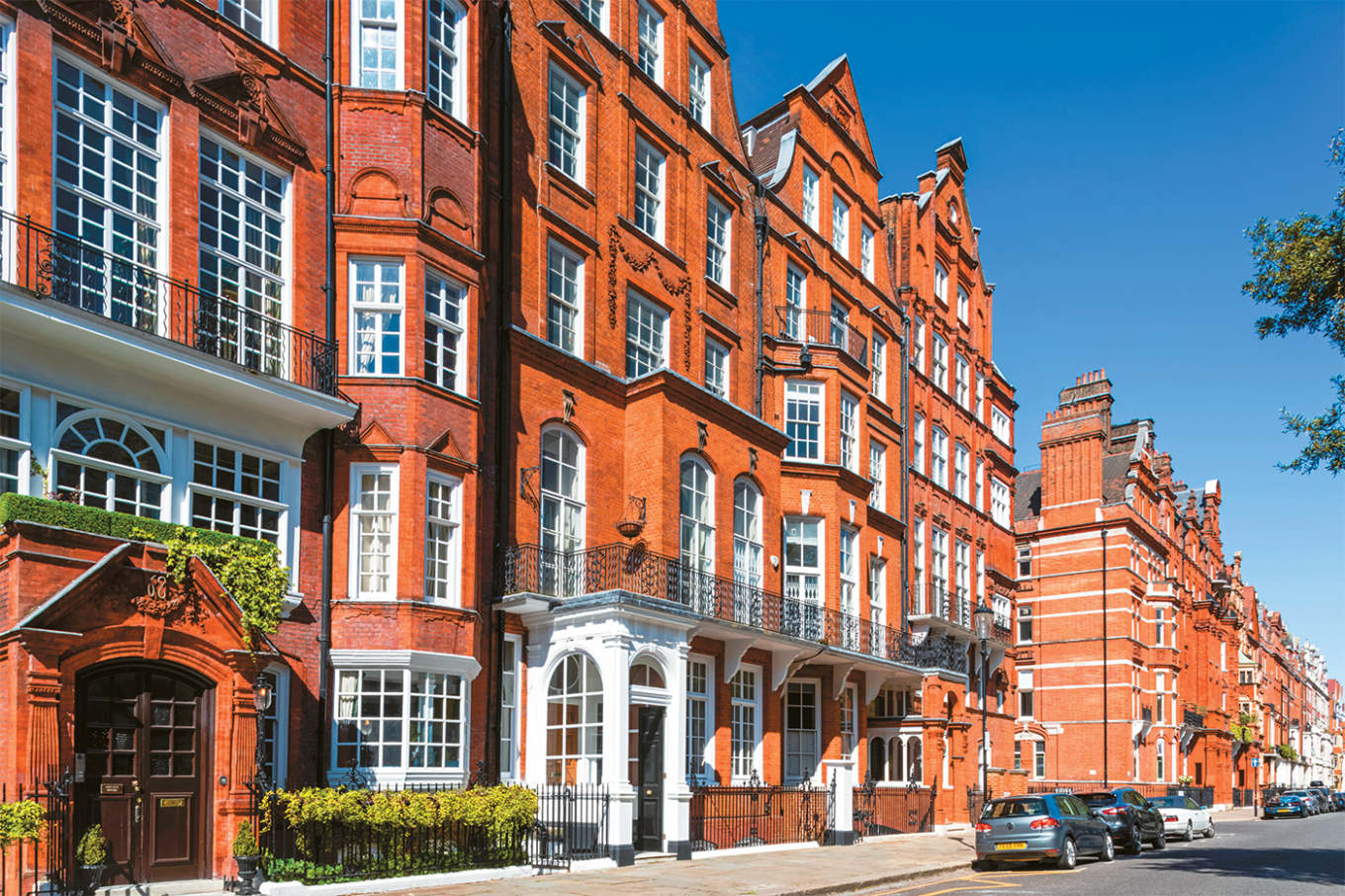
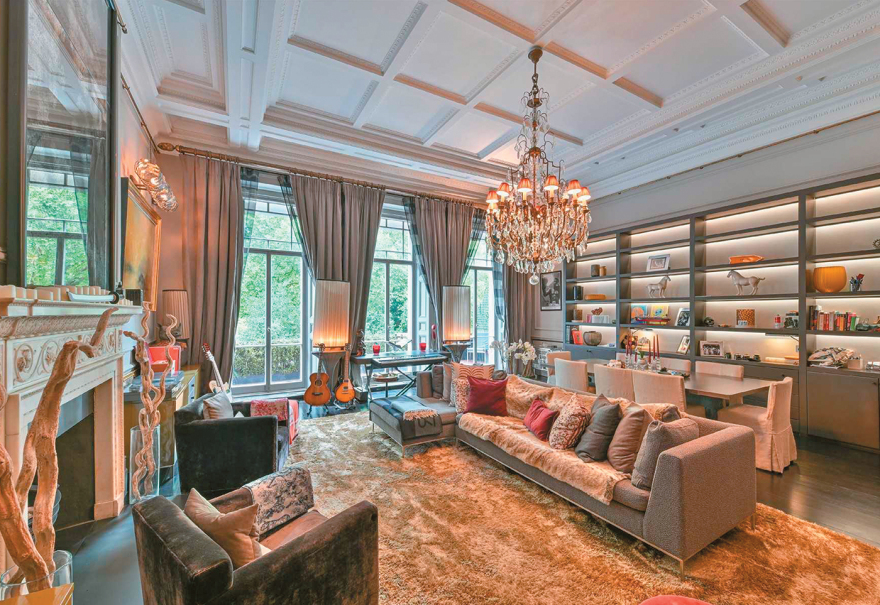
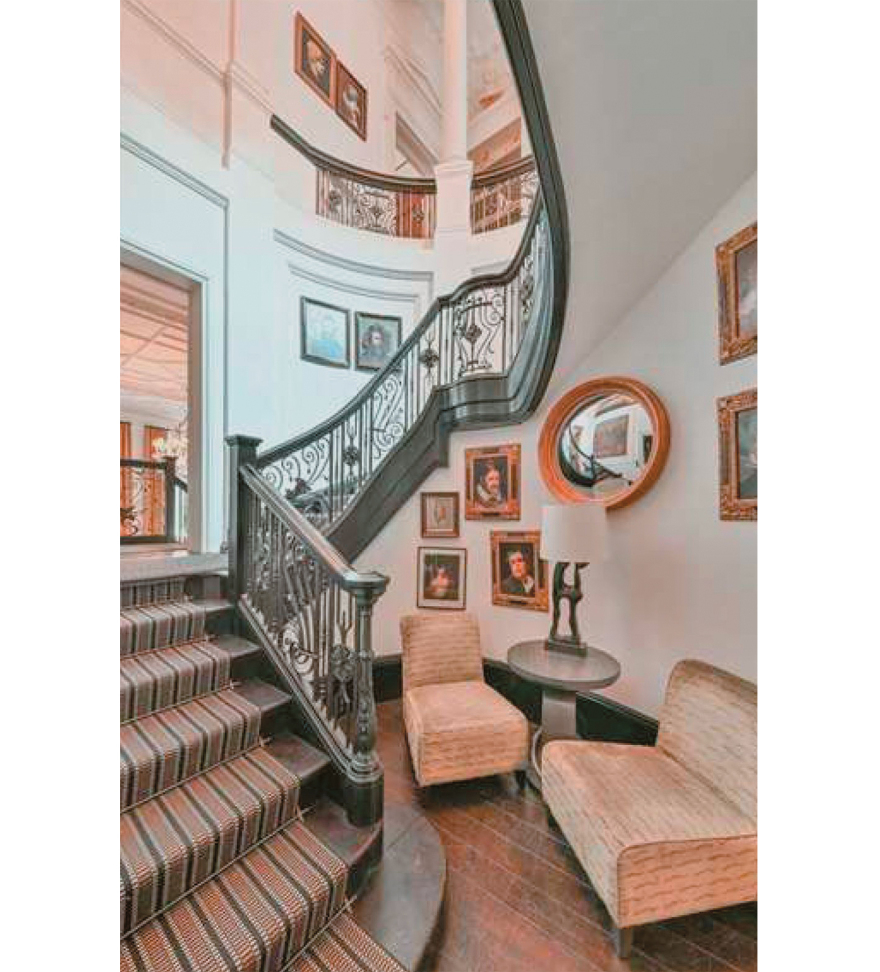
The portfolio consists of five apartment buildings, all listed heritage properties dating back around 150 years. Together they comprise 32 apartments which, despite having undergone extensive renovations and full modernisation, have remarkably preserved the unique patina and aristocratic elegance characteristic of classic British architecture.
In addition to the 32 luxury apartments, the estate includes four former stables—mews houses—located behind the apartment buildings, which have been transformed into luxurious townhouses befitting their prestigious surroundings.
And it is precisely the location that makes all the difference: Cadogan Square, Chelsea, Knightsbridge, London—one of the most exclusive real estate locations in the British capital, if not the world. Rental income from these 36 properties amounts to approximately £6.13 million annually.
According to reliable information obtained by THEMA, independent property valuers have set the asking price for the portfolio at £187 million (€219.5 million).
A hidden identity
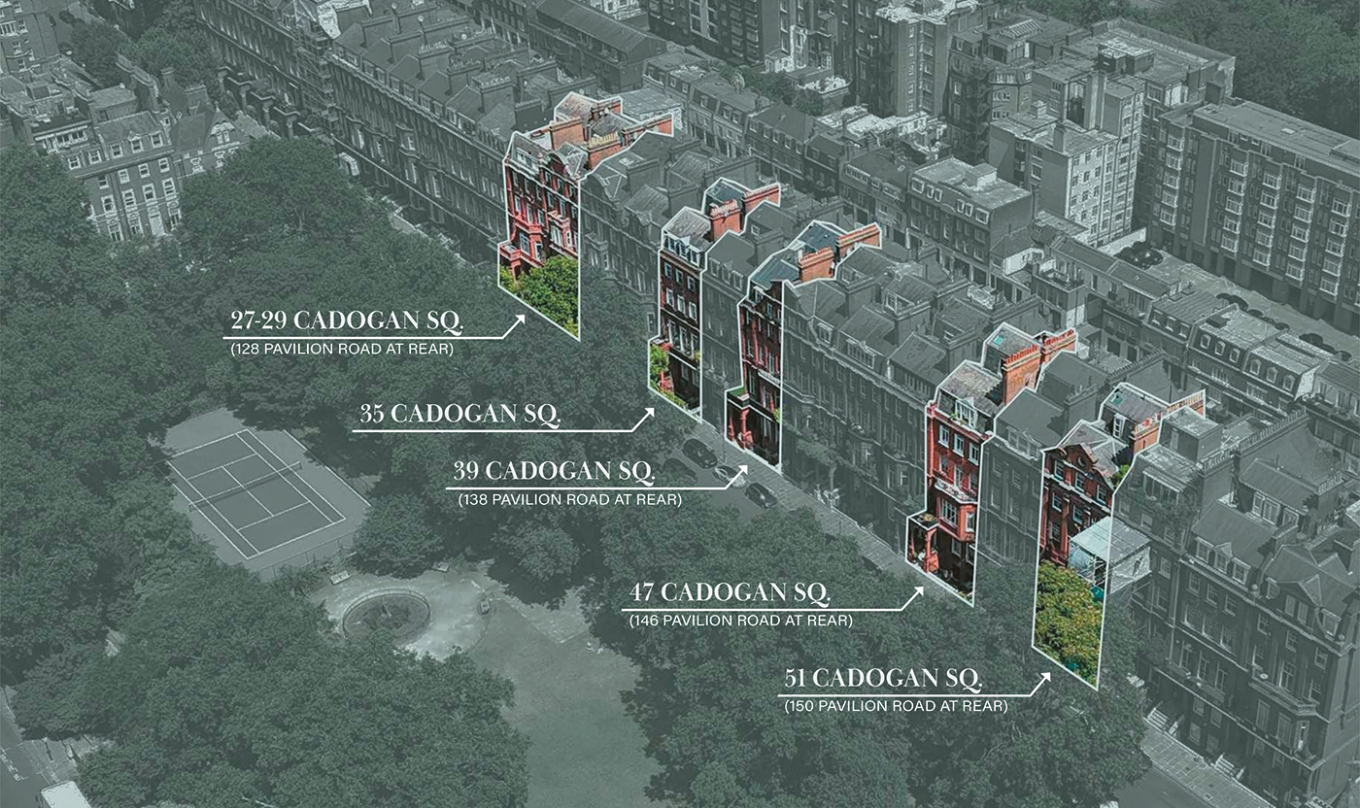
The five apartment buildings, located just metres apart around the perimeter of Cadogan Square, make up what is marketed as the Cadogan Square Collection. Perhaps the greatest mystery is how these 32 apartments and four mews houses came into the possession of Mr Panagopoulos.
Even more extraordinary than the astronomical value of the properties is the fact that Panagopoulos—a Greek citizen listed in British public records as an architect, born in November 1955—managed to remain virtually invisible throughout his life.
Aside from a legal dispute in 2020 with the Cadogan family—the historic landowners of the area—Panagopoulos rarely appeared in public records. That dispute ended in his favour and has since become an important legal precedent regarding ownership and use of shared spaces. It was also one of the very few occasions on which the name Dimitrios Panagopoulos entered the public domain, either in Britain or elsewhere.
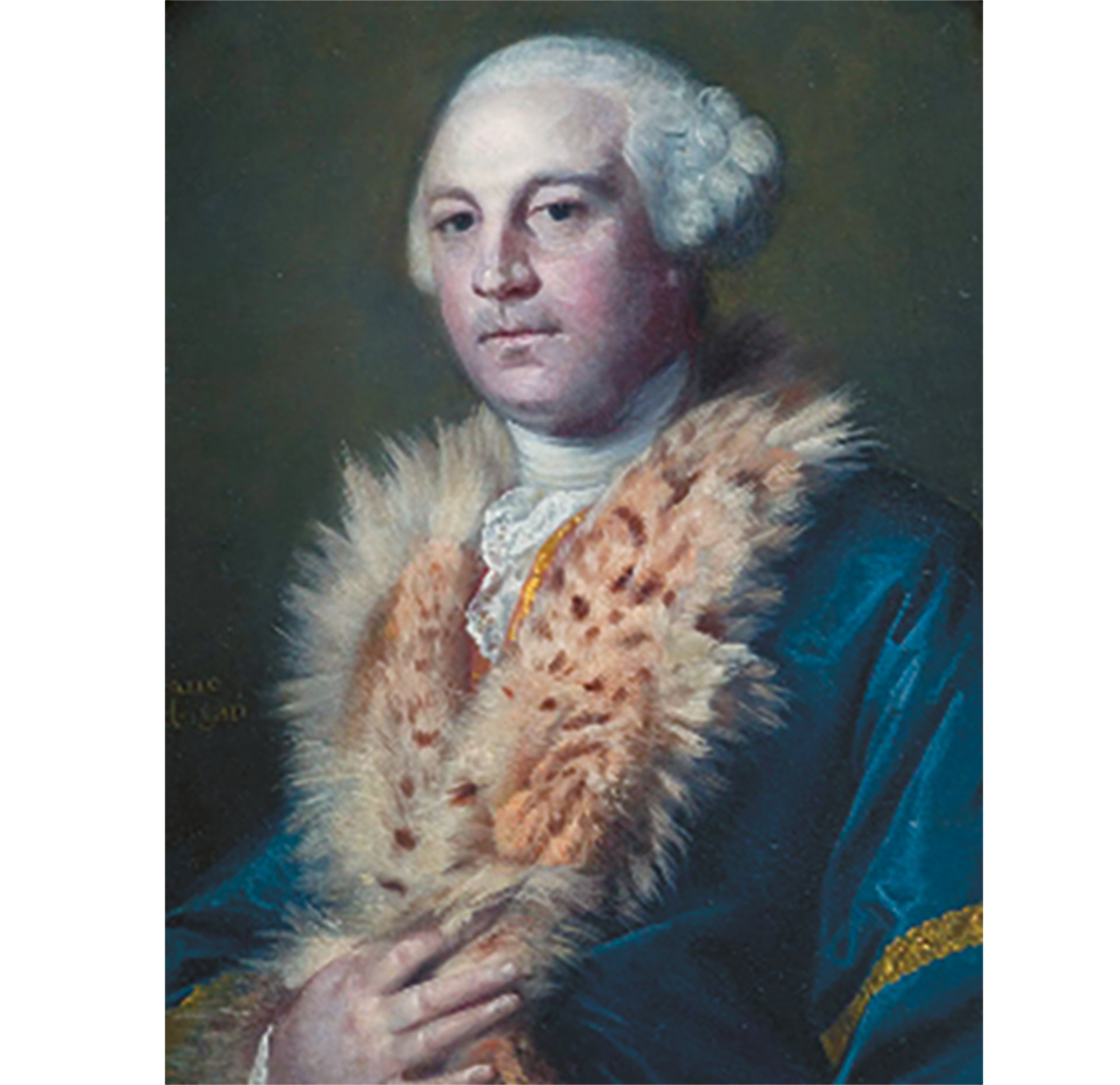
Earl Cadogan (1769–1834), the 1st Baron Cadogan, headed one of Britain’s wealthiest aristocratic families.

The current titleholder is Edward Cadogan, 9th Earl Cadogan, who oversees a London property empire worth more than £6 billion.
According to estate agents involved in marketing the Cadogan Square Collection, Dimitrios Panagopoulos died suddenly. His widow, Sandra, has chosen to sell the Victorian architectural jewel box she inherited.
Public records show that Mr Panagopoulos, often together with his wife, established numerous companies, both offshore and domestic. Most have since been dissolved, and in nearly every case he resigned as chairman or managing director, typically being succeeded by his wife.
She is also linked, directly or indirectly, to charitable organisations bearing names such as Gorgias and Myrovlytis, although she has maintained a similarly low public profile.
For now, the sale of the family’s almost mythical property empire appears to be the only opportunity for more details about the Panagopoulos family to emerge. According to available information, Panagopoulos gradually assembled the collection through acquisitions in Cadogan Square beginning in the early 1990s.
When Chelsea was still a village
Cadogan Square is often described as the heart of Chelsea. Part of the prestigious Knightsbridge district, the entire Cadogan Estate takes its name from its original landowner, Lord Cadogan.
His descendants continue to play a leading role in preserving both the area’s architectural heritage and the distinctive prestige that has surrounded Cadogan Square since the late nineteenth century.
The Cadogan family still owns around 376,000 square metres of property across Chelsea, including parts of Knightsbridge and Belgravia—arguably one of London’s most prestigious and expensive neighbourhoods.
Three centuries ago, however, Chelsea was little more than a village, dotted with a handful of grand country houses surrounded by meadows and orchards.
Between 1877 and 1890, the area underwent extensive redevelopment, largely driven by George Henry Cadogan, the 5th Earl Cadogan. He envisioned rows of distinctive red-brick apartment buildings facing the gardens of Cadogan Square.
Victorian luxury
These five-storey apartment buildings were originally intended for Britain’s growing middle class—the newly wealthy entrepreneurs of the Industrial Revolution.
Lord Cadogan correctly anticipated the profound social transformation taking place as Britain’s industrial economy elevated the middle class while gradually diminishing the dominance of the traditional landed aristocracy.
The spacious new apartments, overlooking Cadogan Square and fitted with what were then state-of-the-art amenities, quickly became highly desirable.
Interestingly, although the buildings appear visually harmonious, no two are identical. Much like their original residents, they projected status while maintaining individuality.
This architectural variety was achieved by combining different interpretations of Victorian design. Decorative terracotta panels, elaborate detailing and large windows reflected the creative experimentation of prominent London architects such as William Young, J.J. Stevenson, and J.T. Robinson during the final decades of the nineteenth century.
The resulting red-brick buildings became celebrated examples of styles later known as Queen Anne Revival and Pont Street Dutch.
Preservation and heritage
The Cadogan family showed exceptional dedication to preserving the neighbourhood bearing their name. The 5th Earl ensured that his ambitious development followed a strict urban planning philosophy, combining luxury residential buildings with generous green spaces.
These carefully designed residential enclaves were intended to shield residents from the noise and commercial bustle of the city—even though London in the 1880s was still decades away from becoming the sprawling metropolis it is today.
In 1931, the gardens of Cadogan Square became part of London’s wider protected green space network, while the surrounding buildings received listed status in 1971.
Strict planning controls have since prohibited further development at the expense of parks and open spaces while severely limiting permitted land uses.
The area’s exclusive residential character has preserved both its historic atmosphere and its commercial value. Today, Cadogan Square ranks among Britain’s most expensive residential markets, where the average apartment sells for approximately €3.8–4 million.
The properties comprising the Cadogan Square Collection have been listed since 1971. Apartments in the area sell for an average of €3.8–4 million.
The Panagopoulos portfolio
The twin apartment building at 27–29 Cadogan Square is the largest property in the Cadogan Square Collection. Approaching the square from the north, near Hyde Park roughly three kilometres away, it is the first building visitors encounter.
Even by the area’s exceptional standards, the building stands out because of its size. It spans 1,432 square metres across five floors, with split-level layouts that include raised ground floors and lower-ground levels.
The property contains seven apartments and one mews house, accessed via Pavilion Road at the rear.
A bridge on the second floor links the building’s two wings, housing apartments ranging from one to four bedrooms.
Most units are currently occupied. Recently renovated, they successfully blend Victorian architectural heritage with contemporary luxury, reflecting the timeless appeal of understated elegance.
Residents are also within walking distance of Prime Central London, including Sloane Street’s luxury boutiques such as Cartier, Hermès, Dior, and Louis Vuitton.
According to estate agency Eson2, which is marketing the Cadogan Square Collection, this property alone could generate approximately €1.7 million annually in rental income.
Based on the portfolio’s total asking price of £187 million, the 27–29 Cadogan Square building is estimated to be worth around £75 million (€88 million).
The five Cadogan Square buildings owned by Dimitris Panagopoulos.
From stables to luxury homes
Ironically, Cadogan was originally conceived to satisfy the needs of Britain’s emerging middle class.
In the era of horse-drawn transport, mews houses served as stables and carriage houses located behind the main residences for practical, hygienic and aesthetic reasons.
Today, these former stables rank among London’s most sought-after residential properties. Extensively transformed, they have become fashionable luxury townhouses and valuable assets within the capital’s prime property market.
Not every Cadogan Square building includes a mews house or lift. Number 35, for example, is smaller than the twin building and contains three two-bedroom apartments alongside four larger units with one, three and four bedrooms.
Estate agents note that the property also offers opportunities for further expansion through approved internal reconfiguration.
Planning permission has already been secured for both redevelopment and the installation of an external lift, further increasing its appeal.
Rental income is estimated at more than €1.3 million annually, while the expected sale price is unlikely to fall below €35 million, despite being the smallest building in the collection at 851.36 square metres.
A real estate goldmine
The remaining three Victorian buildings in the Panagopoulos collection sit between these two in terms of size and value.
Each differs in the number of apartments, the presence of a mews house and lift facilities, yet all share the unmistakable aristocratic charm of historic London.
Number 39 Cadogan Square, facing the main entrance to the gardens, includes six apartments and one mews house across 1,000 square metres. Weekly rental income is estimated at approximately €24,500, exceeding €1.2 million annually. Existing planning permission also allows for expansion of the living space, potentially increasing the property’s value further.
The fourth property, 47 Cadogan Square, spans 948 square metres and comprises six apartments and one mews house. A major refurbishment completed three years ago significantly upgraded the interior layout, with expected annual rental income of around €1.45 million.
Finally, 51 Cadogan Square covers 1,200 square metres and includes seven apartments plus one mews house. Weekly rental income is estimated at €28,000–30,000, or roughly €1.5 million per year. Having secured planning approval earlier this year, the building is currently undergoing extensive redevelopment, expected to substantially increase its value upon completion.
Photo: Getty Images / Ideal Image
Ask me anything
Explore related questions




