





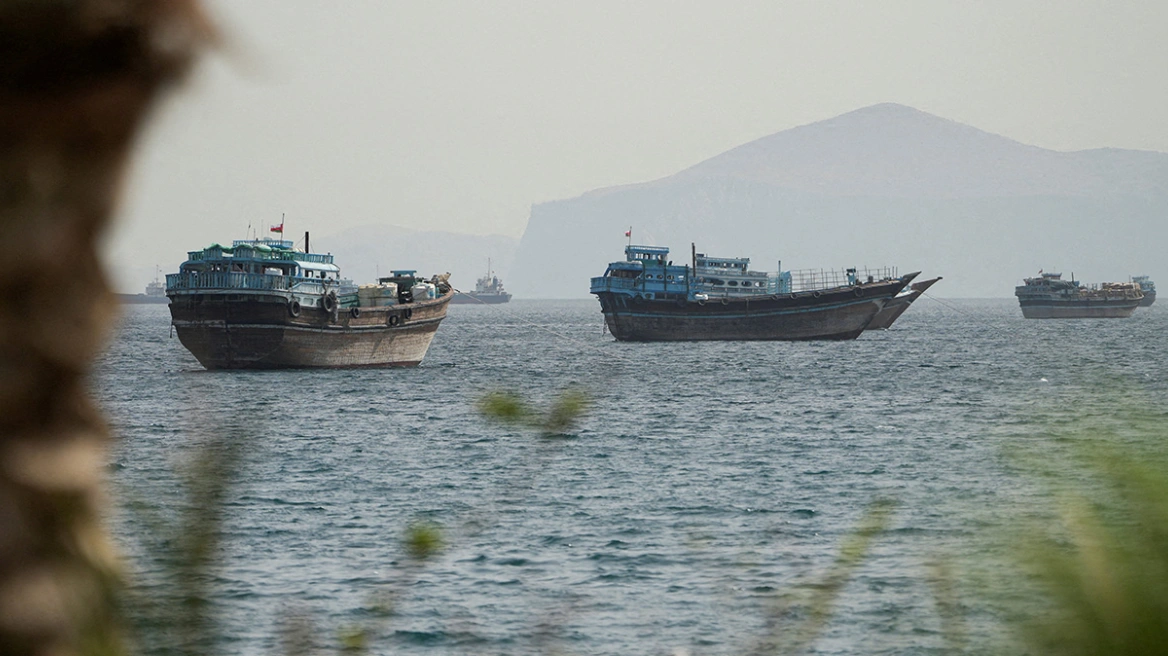
The now-familiar pattern of U.S. attacks against targets in Iran followed by retaliatory actions from Tehran against neighboring countries and ships in the Strait of Hormuz continued on Monday.
Both sides are escalating their strikes against significant targets belonging to the other, while the diplomatic efforts that had previously secured a ceasefire are now merely observing developments, unable to intervene.
This does not, however, mean that hopes for a diplomatic resolution have completely disappeared. A senior Iranian official told Reuters that mediators had delivered a proposal to Tehran aimed at de-escalating the conflict with the United States. The proposal calls for a 10-day ceasefire to provide sufficient time to restart negotiations and revive the interim agreement reached last month.
On Monday, U.S. Central Command (CENTCOM) carried out a series of strikes targeting what it described as “Iranian military command centers, naval assets, missile and drone launch sites, and air defense systems.” CENTCOM also maintained that maritime traffic through the Strait of Hormuz continues despite Iran’s unilateral declaration that the strait has been closed.
Two Tankers Struck, One Reportedly Greek
Following the pattern established in recent days, Iran attacked ships it considers to be violating its prohibition on transit, effectively disabling them with missile strikes.
Late Monday, a hydrocarbon tanker was struck by “an unidentified projectile” in waters off Oman, according to the United Kingdom Maritime Trade Operations (UKMTO), the British maritime security organization operating under the Ministry of Defence.
In addition, a Greek tanker was reportedly struck in the same manner.
In a statement, Iran’s Islamic Revolutionary Guard Corps (IRGC) said:
“A massive fire broke out and two oil tankers that violated the rules and attempted to deceive [authorities] and pass through the dangerous southern route of the Strait of Hormuz, under pressure and inducement from the child-killing American military, came to a halt after explosions occurred aboard them. Rescue units are currently working to evacuate the crews of these two vessels from the area.”
The statement continued:
“The Navy of the Revolutionary Guards reiterates its warning to shipping companies regarding the need to safeguard the safety of their crews and vessels, not to rely on misleading information issued by the American military, and to avoid dangerous and operationally unsafe routes.
“Naturally, as long as American provocations in the region continue, the Strait of Hormuz will remain closed, and not a single drop of oil or natural gas nor any shipment of chemical fertilizers will be exported from the region.”
Iranian Attacks
An important development was the announcement by the Iranian military that it had targeted a U.S. base in Kuwait with missiles in retaliation for the latest U.S. strikes, according to the official IRNA news agency.
Iranian media specified that the targets were “HIMARS missile systems” at Arifjan Base in Kuwait, according to a statement carried by the agency.
In a parallel development, the Revolutionary Guards announced that they had also targeted U.S. facilities in Bahrain and Kuwait.
Specifically, they claimed to have struck two air defense systems and an early-warning radar installation at two U.S. positions in Bahrain, as well as missile-defense radar systems and satellite communications equipment in Kuwait. They added that, following these attacks, “the enemy should prepare for waves of drone and missile attacks that will be even more determined and powerful.”
Meanwhile, an explosive-laden drone was shot down near Al Harir Air Base, where U.S. forces are stationed in Iraq’s autonomous Kurdistan region, according to Reuters, citing security sources.
In Jordan, air raid sirens sounded in the capital, Amman, which has been targeted by Iranian attacks since hostilities between the United States and Iran resumed.
According to Jordan’s Petra News Agency, citing a source in the Jordanian Armed Forces General Command, air defenses intercepted three missiles launched from Iran, and no casualties or damage were reported.
Earlier, the Revolutionary Guards announced that they had targeted U.S. military aircraft in Aqaba, Jordan, claiming they had caused “serious damage to several of them.”
Oil Prices Ease
Oil prices recorded a modest pullback on Monday as investors weighed, on one hand, expectations of renewed diplomatic contacts between the United States and Iran and, on the other, renewed concerns over the security of global energy supplies following the Houthis’ announcement of a naval blockade of Saudi Arabia.
According to Reuters, although prices initially surged to their highest levels in a month, profit-taking later dominated trading as markets assessed the latest developments in the Middle East.
Brent crude fell by 19 cents (approximately 0.2%) to $87.93 per barrel, after earlier reaching $91.42, its highest level since June 11.
U.S. West Texas Intermediate (WTI) crude declined 38 cents (0.5%) to $82.12 per barrel, after previously climbing to $85.39, its highest level since June 12.
At the opening of markets on Tuesday, Brent eased slightly to $88.87 per barrel (-0.4%), while WTI prices remained unchanged.
Ask me anything
Explore related questions




