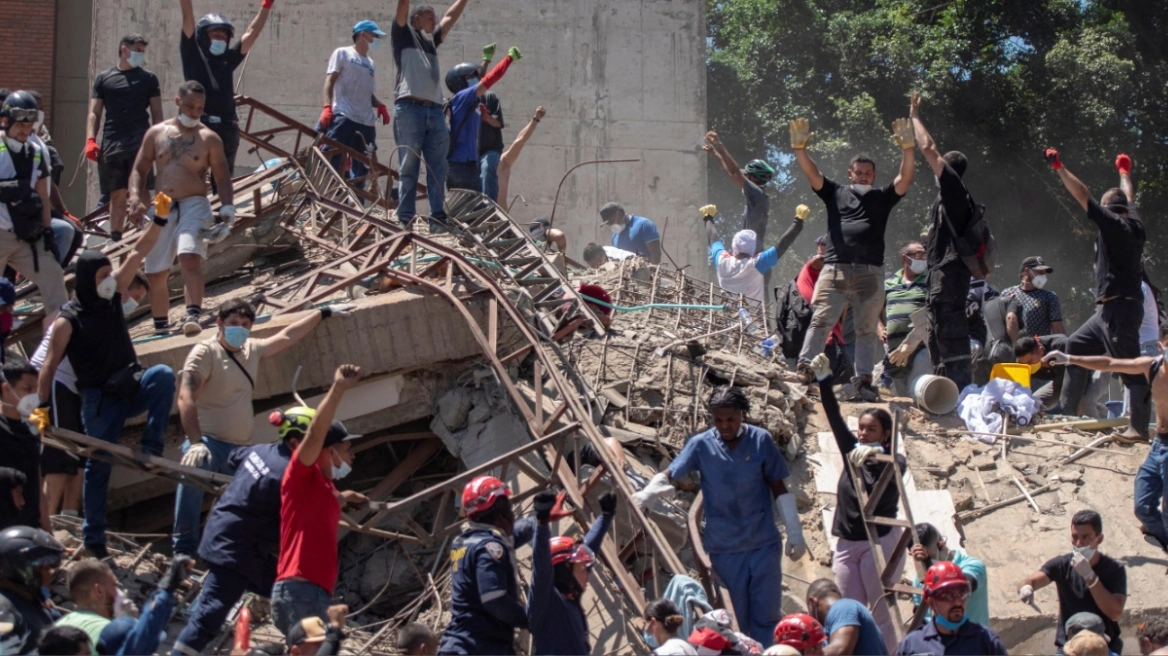
The death toll from the devastating magnitude 7.4 earthquake that struck western Colombia continues to rise, with at least 132 people confirmed dead and 570 injured, as rescue teams continue searching for survivors trapped beneath collapsed buildings.
The city of Pereira has suffered the worst losses, with 60 fatalities, while five major cities have been placed on red alert and seven airports remain closed.
Death Toll Climbs to 132, with 570 Injured
The latest figures released by the Colombian Association of Capital Cities place the number of dead at 132 and the number of injured at 570, as authorities continue gathering information from the hardest-hit regions.
Pereira has so far suffered the highest number of casualties, with 60 deaths reported.
According to the latest available data:
86 buildings have collapsed nationwide.
Five cities—Pereira, Cali, Quibdó, Manizales, and Armenia—are under red alert.
The situation remains fluid as search-and-rescue operations continue in collapsed buildings, amid fears that more people remain trapped beneath the rubble.
Pereira Mayor Mauricio Salazar described the situation from the outset as “critical,” reporting numerous injured people and individuals trapped under collapsed structures.
The governor of the department of Risaralda, Juan Diego Patiño, also reported “serious damage to several buildings,” describing the scenes in Pereira as “truly shocking, with injured people and collapsed building facades.”
🔴 A esta hora, autoridades trabajan de la mano con la comunidad para realizar labores de rescate y búsqueda de sobrevivientes luego del colapso de un edificio en el centro de Pereira este lunes 10 de agosto.
Search-and-rescue operations are continuing around the clock, with rescuers, firefighters, and military personnel working at sites where buildings have collapsed.
Among the facilities that sustained serious damage were the pediatric and neonatal units of a hospital in Cali, prompting a major emergency response.
The government has declared a national state of disaster and deployed military forces to the affected regions, making the rescue of people trapped beneath the debris its highest priority.
Authorities have recorded damage to more than 1,500 homes, while an earlier official assessment reported that at least 61 buildings had collapsed completely.
One of the most dramatic rescue operations took place in Pereira, where 16 people became trapped inside the cabins of an aerial cable car system when the earthquake struck.
The passengers remained suspended in the air for approximately six hours before rescue crews successfully evacuated them at around 1:30 p.m. local time.
The Pereira cable car system has been shut down indefinitely pending comprehensive safety inspections.
Aerial cable cars are a widely used form of public transportation in Colombia, especially in mountainous cities, where they connect hillside neighborhoods with urban centers.
A similar incident occurred in Manizales, located in Colombia’s mountainous coffee-growing region, where passengers also had to be evacuated from cable cars and service was suspended because of structural damage.
🇨🇴 A building literally crumbles as huge chunks of concrete fall near people running out of it in Colombia during the 7.4-magnitude earthquake. pic.twitter.com/ln1t5dHkcU
The earthquake has also caused major disruptions to transportation.
Seven airports—in Cali, Pereira, Manizales, Quibdó, Armenia, Cartago, and Buenaventura—have suspended flight operations while their facilities undergo structural inspections.
The temporary closures are also complicating efforts to transport emergency personnel and humanitarian aid to some of the hardest-hit areas.
In Cali, dozens of buildings have either collapsed or suffered severe structural damage, and reports of people trapped inside buildings began emerging within hours of the earthquake.
“We started praying. Some people were crying, but thank God we’re okay,” said Ana Milena Grijalba, who, like many residents, sought refuge in a park after the quake.
Epicenter and a Quake Felt as Far as Bogotá
The magnitude 7.4 earthquake struck on Monday morning, with its epicenter located near San José del Palmar in the western Colombian department of Chocó, approximately 240 kilometers (150 miles) west of Bogotá.
The area is considered one of Colombia’s least developed regions, and difficulties with transportation and communications have delayed a full assessment of the damage.
The earthquake originated at a depth of more than 100 kilometers (62 miles) and was felt across a vast area.
In the capital, Bogotá, emergency alarms were activated, and thousands of residents evacuated buildings as a precaution and gathered in the streets.
Mayor Carlos Galán said the city had suffered mainly surface cracks rather than widespread destruction.
The earthquake was also felt in Ecuador, Panama, and Venezuela.
“You Are Not Alone,” Says Colombia’s New President
The earthquake represents the first major crisis for Abelardo de la Espriella, who was sworn in as President of Colombia only last Friday.
The newly inaugurated president announced that he had personally assumed command of the emergency response and would travel to the hardest-hit regions.
“I have personally taken charge of the emergency response in San José del Palmar. I have ordered the establishment of a Unified Operations Center to coordinate the response to the damage and assist those affected. I have requested a detailed assessment of the situation and the most urgent needs,” he said.
De la Espriella added that he would personally travel to Pereira “to stand alongside those affected and to verify the government’s response.”
“You are not alone. The state is here and it is taking action,” he stressed.
NEW footage is circulating from a magnitude 7.4 earthquake that struck Colombia's Pacific region today.
The epicenter was near San José del Palmar in Chocó department, at a depth of around 96 km.
It was felt strongly across much of Colombia—including Bogotá, Medellín, and… pic.twitter.com/X03limcIts
“We Have Neither Electricity Nor Mobile Phone Service”
Accounts from the affected areas convey the intensity of the earthquake and the difficulties residents are facing.
“There is neither electricity nor a mobile phone network,” said 66-year-old Martha Estrada from the so-called “coffee region.”
“It was strong, very strong… things fell inside the house,” she added.
In Pereira, 50-year-old Jaime Zuluaga described numerous buildings with structural damage or destroyed facades, while residents avoided returning to their homes for fear of further powerful tremors.
Why the Earthquake Caused Damage Despite Its Great Depth
Greek seismologist Gerassimos Papadopoulos pointed out that the earthquake’s considerable focal depth—approximately 100 to 115 kilometers—could theoretically have limited the severity of its effects at the surface.
“A major 7.4 earthquake in Colombia. Although the epicenter is on land, the effects may be relatively limited because of the considerable depth of the source,” he wrote in the first hours after the earthquake.
The Colombian earthquake occurred just over a month after two devastating magnitude 7.2 and 7.5 earthquakes struck neighboring Venezuela on June 24, killing more than 6,000 people.
Scientists, however, emphasize that these were different geotectonic phenomena.
In western South America, a major role is played by the subduction of the Nazca Plate beneath the South American Plate, while the Venezuelan earthquakes were associated with the interaction between the South American and Caribbean plates.
In addition, the Venezuelan earthquakes occurred at a much shallower depth—less than 20 kilometers—in contrast to the Colombian earthquake, which occurred at a depth of more than 100 kilometers.
International Mobilization and $15.5 Million in U.S. Aid
Meanwhile, international efforts to support Colombia are intensifying.
The United States announced $15.5 million in aid, intended, among other things, for tents and temporary shelters, food, measures to protect affected people, and damage assessments.
U.S. Secretary of State Marco Rubio said the Trump administration was “closely monitoring” developments and was ready to support the Colombian people. He also urged American citizens in the country to follow updates from the U.S. Embassy in Bogotá.
Mexican President Claudia Sheinbaum also announced that her country was ready to provide “any assistance necessary,” while Israel offered to help following the recent restoration of diplomatic relations with Colombia.
Other countries in the region have also offered assistance.
OMG, this is terrifying. Footage showing the shaking from the M7.2 earthquake that hit Colombia earlier.
The ministry extended its sincere condolences to the victims’ families and relatives, while expressing its solidarity with the injured and everyone affected by the disaster.
“Our thoughts are with the injured, with everyone affected, and with the rescue teams working tirelessly on the ground,” it said in a statement.
Rescue operations are continuing, with authorities warning that the death toll may change as emergency crews gain access to damaged areas and search through the rubble.