






The 258-page manifesto after 44% in Saxony-Anhalt, and the changes the party wants to impose – Eyes on the next elections and 2029
The AfD’s sweeping win in Saxony-Anhalt, where it took 44% of the vote, brings the party closer than ever before to taking power in a German state. Although it fell three seats short of an absolute majority, the result opens up a crucial debate, not only about possible governing partnerships but also about what the AfD would attempt to implement if it did manage to govern.
The anti-immigration, pro-Russian AfD now faces two main scenarios: either seeking a partner to form a government, or attempting to govern as a minority administration.
Either option, however, could significantly limit the implementation of its programme, since Germany’s mainstream parties have for years refused any cooperation with it, maintaining what is known as the “firewall” against the far right.
One possible route could be the left-wing populist BSW, which on Monday criticised this policy of isolation and shares some of the AfD’s criticisms of German policy on migration and Ukraine.
At the same time, AfD figures in Saxony-Anhalt are trying to reach out to the more right-wing faction of the Christian Democrats (CDU). Chancellor Friedrich Merz, however, has categorically ruled out any cooperation with the party.
Talks over possible alliances are considered crucial, since Germany’s federal system gives its 16 states significant powers in areas such as education, culture, policing and public broadcasting.
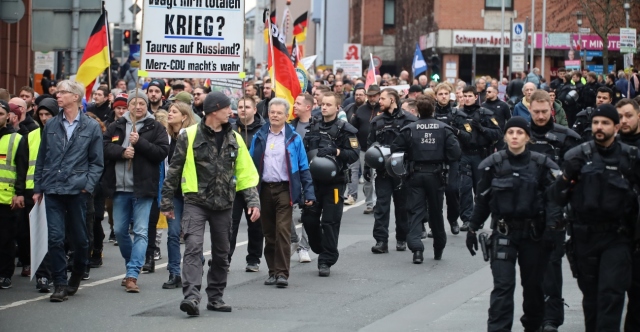
Saxony-Anhalt as a “model” for the whole of Germany
The AfD has made no secret of the fact that it sees a possible period in government in Saxony-Anhalt as a blueprint for what it would like to implement later at national level.
The party’s candidate for state premier, Ulrich Siegmund, told CNN during the campaign that he hopes an AfD victory will mark the beginning of the end for some of what he called the “insane” policies of the federal government.
Before it can attempt to implement its programme, however, the party will have to grapple with both Saxony-Anhalt’s budget deficit and the difficulties involved in the transition from opposition to government.
The 258-page manifesto sets out a radical political agenda, with proposals ranging from migration to education and culture.
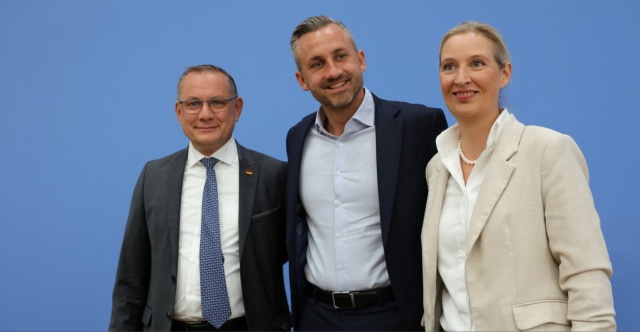
“Re-migration” and mass deportations
At the heart of the programme is a radical overhaul of migration policy.
The AfD is calling for the immediate deportation of irregular migrants, an expansion of detention facilities for those awaiting deportation, and the return to their countries of origin of citizens of non-German ethnic origin, as part of what the party calls a policy of “re-migration”.
It argues that Saxony-Anhalt has “exhausted” its capacity to take in refugees, not only in terms of security but also of “identity”.
“Anyone required to leave the country must, under our government, be held in detention until their deportation,” Siegmund has said.
The manifesto also includes a proposal for a “re-migration drive” targeting Ukrainians, arguing that they should return home since “large parts of Ukraine are considered safe”.
Johannes Kiess, deputy director of the Else Frenkel-Brunswik Institute for the Study of Democracy at Leipzig University, points out that migration is one of the areas in which a state has limited room for manoeuvre because of federal law.
As he put it, any attempt to implement these policies could cause “major legal uncertainty and chaos”.
The AfD has also repeatedly called for an end to German support for Ukraine and the restoration of closer ties with Russia, putting it on a direct collision course with the federal government and the other major parties.
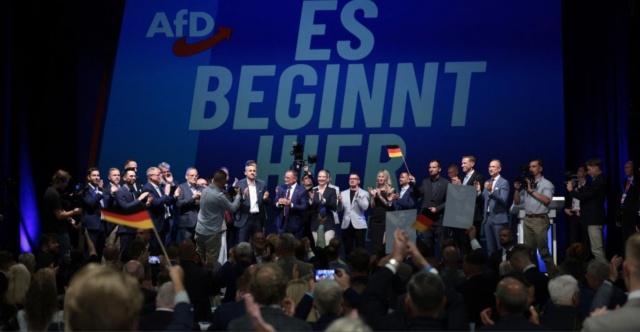
Education: “More Bismarck, less Hitler”
Education is another central plank of the programme.
Siegmund has pledged to overhaul the school curriculum in Saxony-Anhalt and “de-ideologise” schools, promoting “traditional” German values and banning, among other things, the Pride flag.
AfD figures also want greater emphasis placed on teaching the periods of German history before the First and Second World Wars, and less on the country’s Nazi past.
The party’s regional spokesman for culture, Hans-Thomas Tillschneider, summed up this philosophy with the phrase: “More Bismarck, less Hitler.”
He has said that the AfD is pursuing “an entirely new and different education policy“, arguing that the “political indoctrination” of children is not a job for schools.
Separate classes for refugee children and children with disabilities
The proposals on how schools should be run are particularly controversial.
The programme envisages separate classes for refugee children, taught by other refugees, with the educational process designed to convey the message that their stay in Germany is temporary.
The AfD also proposes separate education for children with disabilities.
A “patriotic cultural policy” and “anti-German art”
On culture, the party promises a “new, patriotic cultural policy”, with a greater role for the state in promoting German national identity.
The AfD wants to cut state funding for works it describes as “anti-German art”.
Explaining what he meant by the term, Tillschneider argued that “anti-German art is German art that doesn’t want to be German”, citing as an example a production in which a work by a classical German composer had been reworked through the lens of “feminist deconstruction”.
Under the programme, artists and cultural organisations seeking state funding would have to pledge not to disparage Germany and its culture.
The Bauhaus also in the crosshairs
Particular mention is made of the Bauhaus, Germany’s famous school of art and architecture.
The AfD believes the previous state government placed excessive cultural emphasis on the Bauhaus as part of its agenda for “modern thinking”, arguing that the movement is not sufficiently German in character.
Critics of the party point out that this kind of rhetoric echoes the attacks the Nazis once made on modern art.
Culture Minister Wolfram Weimer has said that “the AfD is attacking the Bauhaus using the same words the Nazis used 100 years ago”, arguing that this is why democratic forces on both the conservative and left-wing sides are reacting.
Kiess, for his part, estimated that Saxony-Anhalt would quickly become “poorer, both materially and culturally”, if the AfD’s policies were implemented.
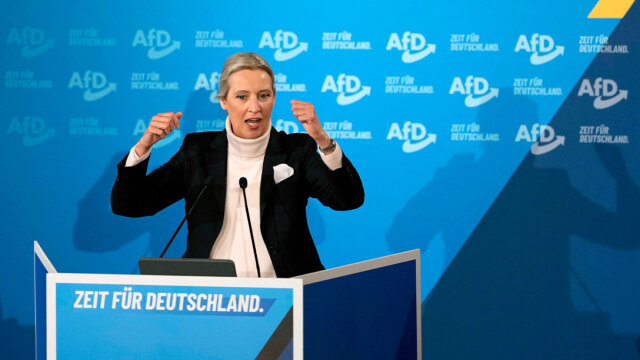
Can the “firewall” hold?
After the AfD’s 44%, one of the biggest questions in Germany now is whether the so-called “firewall” that has kept mainstream parties from cooperating with the far right can be maintained.
It has been suggested that this very strategy may have helped strengthen the AfD, since it has kept the party away from the wear and tear, and the political accountability, that come with holding power. At the same time, it often pushes mainstream parties into forming unwieldy governing coalitions, in which it is difficult to reach agreement on core policies.
Despite this debate, Friedrich Merz’s CDU and the other major parties insist that the “firewall” will remain in place.
“If this result isn’t a mandate to govern, then what is?” Siegmund asked at a press conference on Monday.
He added that the AfD’s aim is to secure a stable majority in the coming days and weeks, either with the full backing of a parliamentary group or with the support of individual MPs.
Eyes on the next elections and on 2029
Developments in Saxony-Anhalt could also influence the other regional elections due to take place in Germany in September.
In the north-eastern state of Mecklenburg-Vorpommern, the AfD is leading with around 35% according to the latest Infratest dimap poll.
Another strong election result could also have wider implications ahead of the next federal elections, expected in 2029.
The AfD was founded only in 2013, yet current polling suggests that if federal elections were held now, it could emerge as the largest party.
Ask me anything
Explore related questions




