





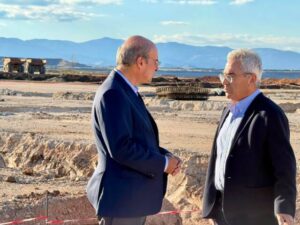
Greece’s Deputy Prime Minister Kostis Hatzidakis has described the data centre to be built in Kozani by the Public Power Corporation (PPC) and Amazon as a landmark investment for the whole country, saying it puts the northern Greek city at the forefront of global technology spending.
Speaking during a visit to the region of Western Macedonia on Wednesday, Hatzidakis said the project would transform an area long synonymous with coal-fired power.
“The investment PPC has agreed with Amazon is, at this moment, at the cutting edge of investment worldwide,” he said. “It matters not only for PPC but for the country as a whole. A place that supplied Greece with electricity for decades can now host frontline infrastructure for the cloud and artificial intelligence.”
Under the agreement, the facility will be developed at the former Agios Dimitrios lignite power station, with Amazon Web Services leasing it for 15 years and PPC investing about €1.2bn in the first phase.
Hatzidakis said hundreds of workers would be employed during construction. Once the first 300MW phase is running, the centre will employ between 400 and 500 people, mostly specialist scientists. If it reaches its potential capacity of up to 1,000MW, the workforce would rise to 1,500.
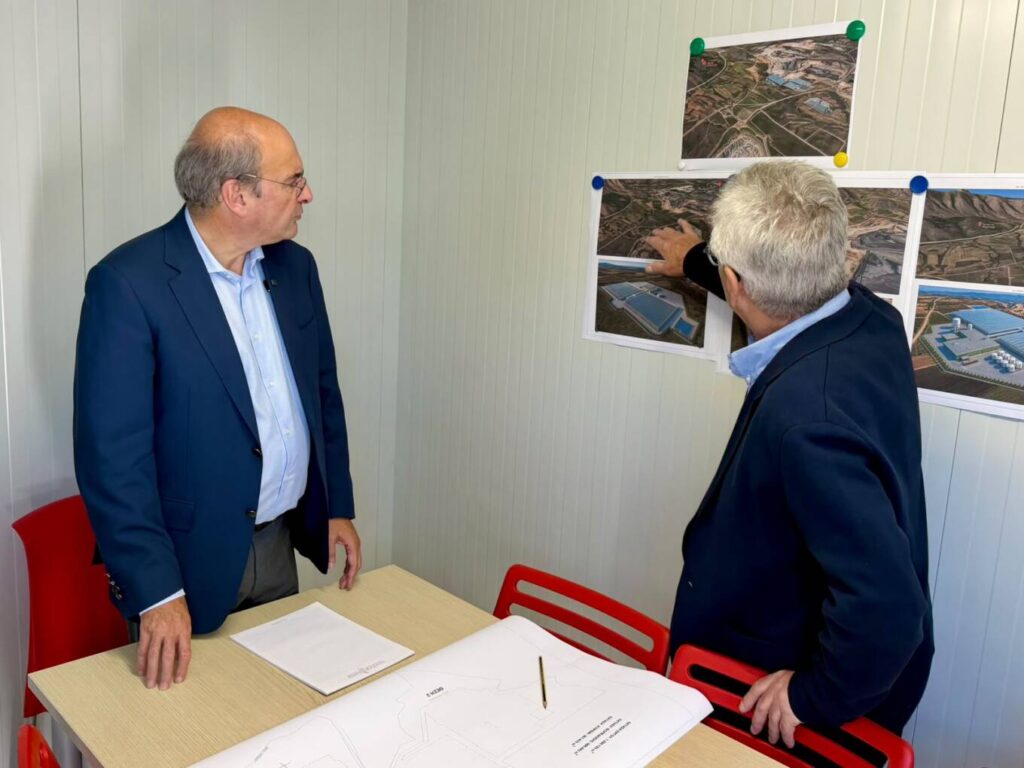
“I am personally very pleased about this investment, because in 2019, as Environment and Energy Minister, I inherited a PPC that was on the brink of collapse,” he said. “Today we are talking about a completely different company, one that can support Western Macedonia’s energy transition in a very positive way and is already helping Greece move quickly towards the future.”
He said the data centre formed part of a much wider PPC investment plan for the region, covering new renewable energy projects, energy storage, pumped-storage hydropower, green hydrogen and a new combined heat and power plant to supply district heating in Kardia. Once completed, the plan is expected to create more than 5,000 jobs.
Earlier in the day, Hatzidakis toured the construction site of Wonderplant, a company expanding its potato-growing operations in the area. He called it the largest agricultural investment currently under way in Greece, adding that it showed the government was moving “from plans and budgets to delivery”. The project is due for completion in the first months of 2028.
He also said the company was interested in a far larger venture, covering an area 15 times the size, on land owned by PPC. Potato farming has long been associated with Kozani and nearby Ptolemaida, and Hatzidakis said modern methods would bring yields in line with those of the Netherlands. “We are talking about a different pace and a different image for the region,” he said. “The vision is now becoming tangible work. We are not giving up. We are pressing ahead with specific timetables and specific projects, which we owe to the people of Western Macedonia.”
In the afternoon, Hatzidakis opened the 34th Western Macedonia Trade, Crafts and Agricultural Fair at the regional exhibition centre in Koila, near Kozani. The event is being held for the first time in 10 years, which he said signalled a fresh start for a region shifting from an economy built on lignite towards one based on clean energy, new technologies, manufacturing, agrifood, innovation and digital infrastructure.
He listed several completed projects, including the E65 motorway and the energy upgrade of Kozani’s municipal swimming pool. The pool in nearby Florina, which he visited earlier in the day, will open for the first time after years of setbacks, thanks to work funded by the Just Development Transition Programme, the scheme supporting the region’s move away from coal.
Other schemes now getting under way include the €62m Nestorio Dam and a €27m holistic cancer treatment centre at Bodosakeio Hospital in Ptolemaida. The modernisation of the Vigla-Pisoderi ski centre has recently gone out to tender.
Work is also progressing on the Ptolemaida to Florina road. Funding has been secured for the stretch between Ptolemaida and Xino Nero, which Hatzidakis said would be put out to tender without delay once the last outstanding environmental permits are issued.
“That is the central challenge of the transition,” he said. “Not simply to replace one activity with another, but to create many different pillars of growth, so that Western Macedonia gains a more resilient, competitive and outward-looking economy. The government has a duty to support the move towards this new and hopeful reality actively and energetically.”
Ask me anything
Explore related questions




