






“Listen, Hara, I held the key to the front door for 50 years, and I’m not exaggerating, 50 years. There was never any peace at this centre. There was always something. When you think that what I was doing was illegal, illegal enough to land me in prison from the very first day, you can understand that I never had any peace. I don’t know if you understand that now. I mean, the donation, the donation and surrogacy I was doing, those two things, I could have been done for trafficking, right up until it was legalised. I could have gone to prison. Do you know what trafficking is?”
The remarks are attributed to the gynaecologist who headed a private assisted reproduction clinic in Chania, in Crete. They were recorded during a conversation with someone he knew on 1 June 2023, at 9.17pm, approximately two months before a police operation uncovered an extraordinary case.
A transcript of the conversation appears in a report reviewing intercepted communications and has been incorporated into the case file. The remarks carry particular significance because the doctor himself is heard using the terms “donation”, “surrogacy” and “trafficking”, while describing activities that, in his own words, were “illegal, illegal enough to land me in prison”.
That recorded admission provides a starting point for a case that enters its most critical phase on 14 October.
Thirty-three defendants are expected to appear before the Three-Member Criminal Court of Appeal of Crete, facing a series of serious charges, depending on their alleged involvement. These include directing, establishing and participating in a criminal organisation, human trafficking, felony fraud, unlawful involvement in the adoption of minors, illegal buying and selling of genetic material, forgery and money laundering.
“The start of the trial is a crucial moment for couples who have endured immense suffering and seen their lives turned upside down. We are talking about lives that have been destroyed and people who are waiting to be heard and to learn the truth,” Liana Togantzi, a lawyer representing 33 couples who have taken legal action, told Proto Thema.
Alleged deception
At the heart of the indictment is the alleged deception of people who turned to the clinic for fertility treatment. According to the judicial document, patients were allegedly told that medical procedures had been carried out when, in fact, they had not taken place. In some cases, women were reportedly falsely assured that an embryo transfer had been performed, while also being given unnecessary medication.
The indictment also describes scheduled egg retrieval appointments during which women were allegedly placed under anaesthesia regardless of whether the agreed procedure was actually going to be carried out.
Even when no eggs had been retrieved, when the eggs were unsuitable for fertilisation or when no embryo had developed, couples were allegedly told that treatment had progressed normally. Similar allegations concern cryopreservation. When patients requested embryo storage, they were reportedly informed that embryos had been created and were being kept in the centre’s cryopreservation bank, although, according to the indictment, in some instances those embryos did not exist.
There are similar accounts involving eggs and sperm. Patients paid to store genetic material they believed had been frozen, even though, according to the judicial authorities, the material may never have existed.
The alleged victims therefore faced more than the possibility that their fertility treatment had failed. They were left questioning whether the procedures they had paid for had ever taken place and whether the material they believed was safely stored had ever existed. Even more serious are the allegations concerning the removal and distribution of genetic material without consent.
According to the indictment, between 2011 and 2023, defendants allegedly removed eggs from women undergoing egg retrieval as part of their own fertility treatment and distributed them for use in other patients’ IVF procedures, falsely presenting the eggs as donations.
A similar practice was allegedly carried out involving men who had provided sperm for their own attempts to have children.
A preliminary investigation report dated 5 June 2024, cited in the indictment, states that none of the identified victims had consented to the donation or distribution of their genetic material to other people, nor had they provided it for that purpose. None had received compensation, and none was registered as a donor at another clinic.
Instead, they were patients who had entrusted their genetic material to the Chania clinic for their own treatment and had completed the relevant questionnaire concerning surplus reproductive material. The indictment links these alleged practices to fraud involving particularly large sums or constituting a felony.
In the fraud cases where financial losses have been calculated, the alleged victims are said to have paid at least €926,753 to the doctors and the clinic.
In some cases, the precise financial loss remains unknown. A further €254,801 was reportedly spent on medical treatment and medication allegedly administered unnecessarily.
Together, these sums bring the financial burden identified so far to at least €1,181,554. The movement of money forms another crucial part of the investigation. According to the judicial document, almost all witnesses testified that they did not receive receipts from those collecting payments in order to secure a lower price.
Where the required tax documents were issued, the amounts recorded were allegedly fictitious and did not reflect the sums actually paid. The lack of a complete paper trail now makes it difficult to determine the full extent of the financial losses, explaining why the amounts cited in the indictment are presented as minimum figures.
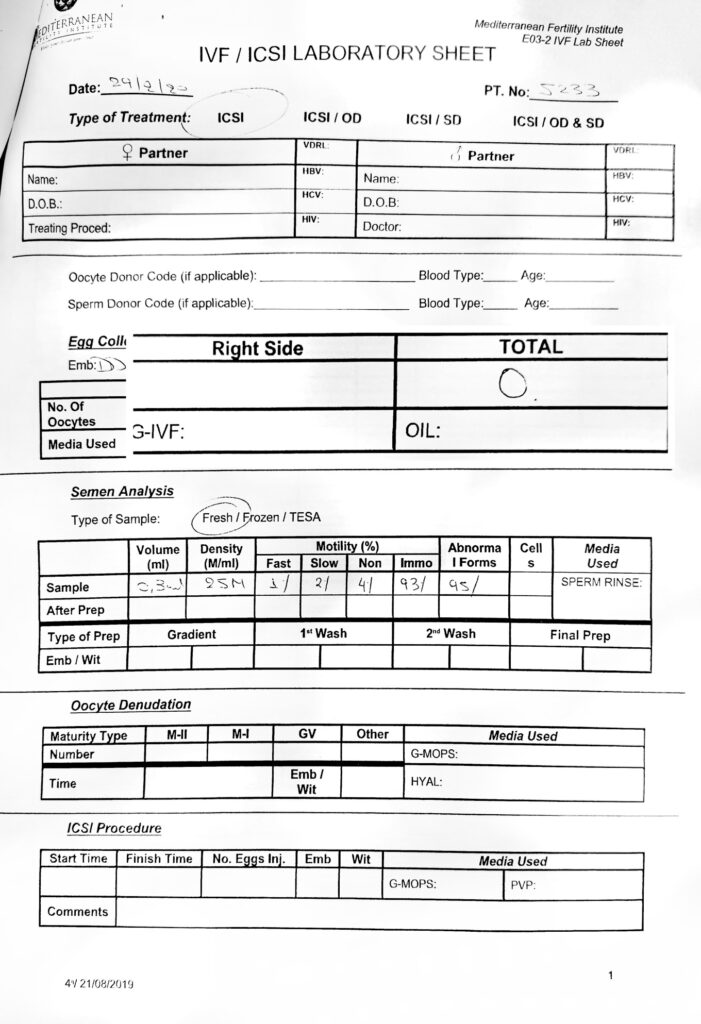
A clinic document entitled “Clinic Services Analysis – Price List” provides a useful comparison. It listed the cost of IVF treatment using a natural cycle at €800 up to the egg retrieval stage, with an additional €300 charged for embryo transfer, bringing the total for that procedure to €1,100.
Comparing this price list with the sums witnesses say they paid, the receipts issued or withheld, and the medical procedures allegedly never performed will be one of the central issues examined during the trial.
Because of the large number of defendants, lawyers, witnesses and alleged victims, the proceedings are scheduled to take place at the Mediterranean Agronomic Institute of Chania, under heightened security measures.
Couples from Australia
The Chania clinic had also developed an international clientele. According to the charges, the alleged network appears to have tailored its operations to different categories of clients, ranging from heterosexual couples experiencing infertility to single men and male same-sex couples who lacked legal access to surrogacy in their home countries.
The international scale of the case became apparent in dramatic circumstances immediately after the arrests in August 2023. At the time, approximately 150 Australian couples were reportedly undergoing treatment or making arrangements with the clinic to have a child.
More than 100 families were estimated to have been affected by its closure. Some had already paid substantial sums, others had embryos or genetic material stored in the clinic’s cryopreservation bank, while others were awaiting the birth of children being carried by surrogate mothers.
In the first days after the scandal emerged, newborn babies remained at Chania Hospital pending the completion of checks. Cooperation between Greek prosecutors, the Australian embassy and health authorities, together with DNA testing, was required before some parents could take their babies home.
The sight of couples travelling from the other side of the world and waiting for a prosecutor’s authorisation to see a newborn they believed was their child highlighted the human cost of the scandal. According to the charges, however, there were also cases in which prospective parents knew that legal obstacles would have to be circumvented.
This is where a parallel operation allegedly came into play, involving sham civil partnerships, marriages of convenience, forged or inaccurate documents and court applications designed to give the process an appearance of legality.
Sham civil partnerships
One of the most revealing cases described in the investigation concerns a same-sex couple from Italy. During her sworn testimony, a female employee said that another woman, allegedly involved in the operation, approached her in spring 2023.
She told the employee that a man from Italy was looking for a surrogate mother but was excluded from the process under Italian law. The employee was offered €8,000 to enter into a sham civil partnership with him. Facing financial difficulties, she agreed and, according to her testimony, attended a notary’s office she had been directed to visit. There, she met her supposed future partner for the first time, along with his actual partner. A similar arrangement is described involving a sham civil partnership with a single Norwegian man.
The underlying method was straightforward. A woman would be presented as the man’s wife or partner, creating the conditions necessary to obtain a court ruling authorising a surrogacy arrangement. Once the process was complete, the civil partnership would be dissolved and custody of the child would be transferred by mutual agreement to the man or the actual intended parents.
According to the charges, payments for finding a woman willing to act as a fictitious wife or partner ranged from €8,000 to €20,000.
Preparations for pregnancy, including medication, medical examinations, embryo collection and embryo transfer, allegedly began in some cases even before the required court authorisation had been granted.
Case files also reportedly contained fictitious rental agreements for properties in different parts of Greece, intended to establish the territorial jurisdiction of particular courts, as well as inaccurate medical certificates. The same system was allegedly used to help people living in countries where surrogacy was prohibited have children.
After birth, babies could be presented as adopted in their parents’ country of permanent residence, allowing legal restrictions to be bypassed. In this way, a medical procedure performed in Chania was allegedly linked to notarial documents, court rulings and civil registration records in more than one country.
The price of having a child
The case file sets out a detailed financial operation.
A surrogacy programme reportedly cost between €70,000 and €100,000 in most cases, excluding monthly payments to the surrogate mother. In certain exceptional cases, the price allegedly reached €120,000.
According to the case file, approximately 70% of that amount could represent net illicit financial gain for the clinic and members of the alleged criminal organisation.
The agreed fee was generally divided into three substantial instalments: approximately €30,000 at the start of the programme, another €30,000 at the first ultrasound when the embryo’s heartbeat could be heard, and a third payment of around €30,000 at delivery.
Expenses up to the birth were estimated at between €29,000 and €30,000, excluding medication, legal fees ranging from €1,000 to €5,000, and payments to agents responsible for identifying and recruiting women.
The financial disparity between the amount paid by intended parents and the sums allocated to the women carrying their babies is particularly striking.
The documents refer to monthly payments of between €583 and €750 for some surrogate mothers and €1,000 for others, depending on the agent who had recruited them into the programme.
Following delivery, a lump-sum payment of €10,000 was provided for a singleton pregnancy, or €18,000 for a multiple pregnancy.
The investigation also describes an agent who allegedly exploited women’s vulnerable circumstances by attempting to secure an agreement for €10,000 and, if unsuccessful, offering a total of €15,000.
Intermediaries were paid separately.
Their fees ranged from €3,000 to €4,000 for securing a surrogate mother, while other one-off payments reached €5,000.
They also received monthly payments for supervising each surrogate mother from the submission of the court application until the birth.
According to prosecutors, the desire to have a child had been turned into a price list.
One portion went to the clinic, another to intermediaries, another to lawyers and documentation, and a considerably smaller amount to the woman carrying the pregnancy.
According to information obtained about the investigation, illicit profits from the entire operation may have reached €42 million.
Women allegedly held under control
Keeping this operation running required a continuous supply of egg donors and surrogate mothers.
According to the indictment, between 2018 and 2023, members of the alleged organisation recruited women, brought them to Greece, housed them in controlled accommodation and exploited their vulnerable economic and social circumstances.
The network of female recruitment agents extended from Crete and Thessaloniki to countries in the Balkans and Eastern Europe.
The women were given medication and underwent egg retrieval procedures to build up supplies of genetic material, or had embryos transferred and carried pregnancies on behalf of the clinic’s clients.
In some cases, investigators found that women had been separated from their families, deprived of their travel documents and placed under constant supervision.
Fourteen properties in Chania were allegedly used to provide temporary accommodation for surrogate mothers.
During the police operation, officers located 30 foreign women who were either egg donors or pregnant as part of surrogacy arrangements.
They were interviewed in the presence of a Greek police psychologist.
The human trafficking charges are based specifically on this alleged exploitation: recruiting, transporting, harbouring and receiving women through coercion or deception, and taking advantage of their vulnerable circumstances to obtain eggs or surrogacy services for illegal financial gain.
Sham IVF treatments
A second major group of alleged victims consists of couples who turned to the clinic believing they were undergoing genuine IVF treatment.
The initial police investigation identified at least 182 cases involving the exploitation of women for egg retrieval and surrogacy, as well as more than 400 cases of alleged deception through fictitious assisted reproduction procedures.
As investigators examined handwritten and electronic records, the figures increased.
A subsequent case file identified 274 women who were allegedly defrauded on 529 separate occasions.
These figures illustrate the scale of the practices described in the indictment: fictitious embryo transfers, non-existent cryopreservation, unnecessary medical treatment and repeated charges.
For many couples, this may be the most devastating aspect of the case.
They did not simply lose money, but also time and opportunities to have children that can no longer be recovered.
Even more serious are the findings concerning the distribution of genetic material. Handwritten records identified 173 egg donors who underwent 333 egg retrieval procedures, with their eggs distributed to at least 1,226 recipients. Only 63 of those donors were registered in the National Donor Registry by the time of the police operation.
According to the investigation, the clinic charged between €1,300 and €7,000 for eggs used in individual medical procedures. The total proceeds from the 1,226 distributions were estimated at between approximately €1.59 million and €8.58 million.
The most extreme case concerns a young foreign woman, now aged 26, who allegedly underwent 12 egg retrieval procedures over the six-year period from 2018 to 2023. According to the indictment, her genetic material was distributed to 63 different recipients. In other cases, the same donor appears to have been used 31 or 40 times.
These findings raise questions extending beyond breaches of assisted reproduction regulations. They also create serious concerns about traceability, as it remains unclear how many children were born using genetic material from the same third-party donor and whether all births were registered in the relevant electronic database.
The case file also includes 75 instances involving 11 victims in which eggs and sperm were allegedly distributed illegally without the knowledge of donors or recipients.
This lies at the heart of the anguish experienced by people who still do not know whether their genetic material was used to treat other patients, whether children to whom they are biologically related may exist, or whether the material implanted in them came from the source they had been told.
Criminal activities
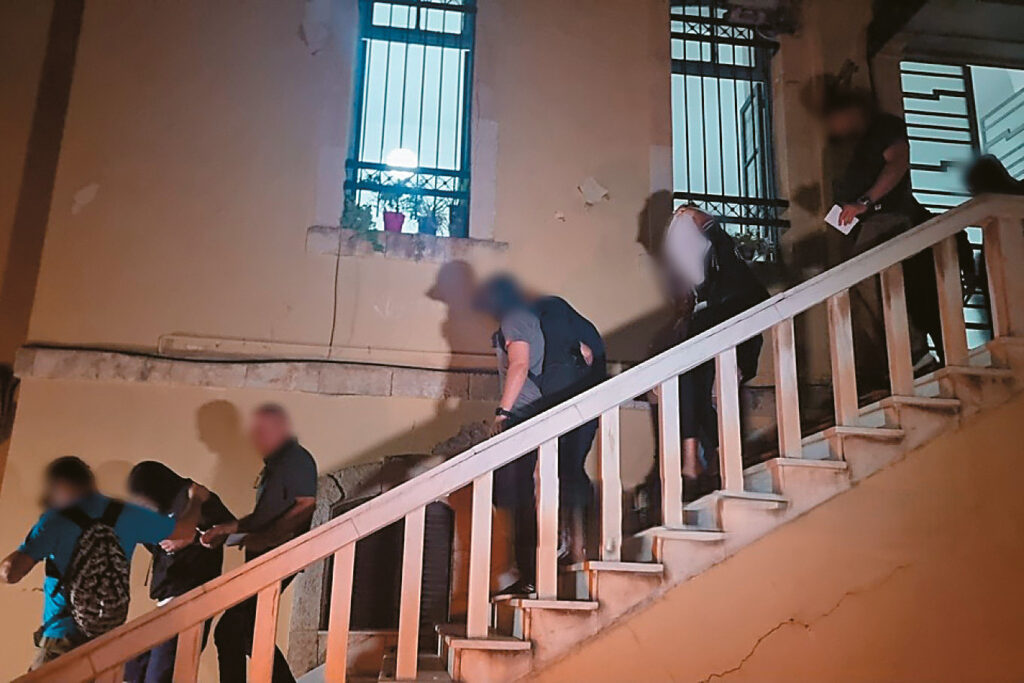
The case came to light on 8 August 2023 following a large-scale police operation across Crete, Athens and Thessaloniki.
Units specialising in organised crime, security, human trafficking and digital evidence participated, with assistance from Greece’s Financial and Economic Crime Unit, SDOE.
Investigators seized medical records, court rulings, civil partnership agreements, private contracts, digital files, handwritten appointment books and €90,475 in cash, which police attributed to criminal activity.
From the very first day, authorities began receiving calls from couples seeking answers about their own fertility treatment.
At the same time, police officers contacted patients to inform them of investigative findings relevant to their cases.
Some asked about embryos they believed were in frozen storage. Others wanted information about eggs or sperm they had entrusted to the clinic.
Some wanted to know whether babies born through surrogacy were biologically their own.
DNA tests, prosecutorial orders and the need to safeguard genetic material became part of an urgent operation with international implications.
The payments and alleged profits
The figures recorded in the case file illustrate the financial scale of the operation.
| Amount | Details |
|---|---|
| €1,100 | Total listed cost of IVF treatment using a natural cycle |
| €8,000–€20,000 | Alleged fee for finding a fictitious wife or partner |
| Up to €120,000 | Reported cost of a surrogacy programme |
| €30,000 | Estimated expenses up to the birth |
| €10,000 or €18,000 | Lump-sum payment provided after delivery for a singleton or multiple pregnancy respectively |
| €3,000–€4,000 | Payments to intermediaries |
| €1,300–€7,000 | Fees charged by the clinic for eggs used in individual medical procedures |
The investigation also identified 173 egg donors who underwent 333 egg retrieval procedures, with their eggs distributed to at least 1,226 recipients. Only 63 of those donors were registered in the National Donor Registry before the police operation.
Based on the fees charged for the eggs used in these procedures, the total financial proceeds from the 1,226 distributions were estimated at approximately €1.59 million to €8.58 million.
Photo: Shutterstock
Ask me anything
Explore related questions




