

×
GreekEnglish

×
  • Politics
  • Diaspora
  • World
  • Lifestyle
  • Travel
  • Culture
  • Sports
  • Cooking
Monday
15
Dec 2025
weather symbol
Athens 10°C
  • Home
  • Politics
  • Economy
  • World
  • Diaspora
  • Lifestyle
  • Travel
  • Culture
  • Sports
  • Mediterranean Cooking
  • Weather
Contact follow Protothema:
Powered by Cloudevo
> Culture

Intriguing new theory might explain the fate of Easter Island’s civilization

However, researchers aren't ready to rewrite history just yet

Newsroom August 16 03:09

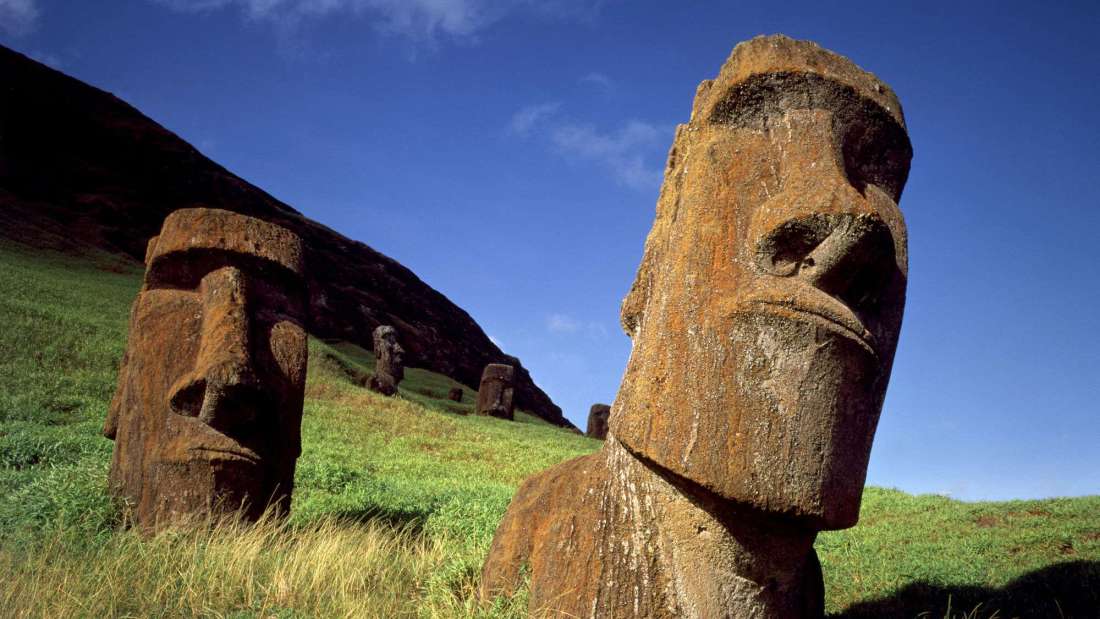
Standing up to 33 feet high and weighing 81 tons, the huge moai statues of Easter Island (Rapa Nui) are the most recognizable artifacts of a thriving civilization that peaked at the middle of the last millennium. For hundreds of years, Polynesian peoples lived on the small island 2300 miles west of Chile and developed a complex culture. By the 1700s, when Europeans first arrived, much of the society was decimated.

For years, scientists thought they knew why—but fresh archaeological evidence has provided an alternative theory.

The Journal of Pacific Archaeology published a paper this week contradicting the commonly held belief that, in the 1600s, Rapa Nui’s inhabitants descended into a Lord of the Flies–like era of infighting and violence as a result of dwindling resources. According to new research, the island’s population may not have devolved into barbarism. Instead, they were collaborating on toolmaking.

University of Queensland archaeologist Dale Simpson, Jr. theorized that the raw materials used in the carving tools would reveal clues about the dynamics of the community. He and his colleagues collected 17 tools found near the moai, including axe-like toki. Using a mass spectrometer to analyze the chemical composition of the tools and samples from stone quarries on the island, Simpson and his colleagues found that most of the toki came from a single quarry.

Simpson believes this is evidence that Rapa Nui’s people had not fallen into violent conflict, but were instead sharing resources—or at least allowing one another access to a favorite quarry for tool production. If the islanders were split into factions, it’s unlikely that whoever was controlling the quarry would permit rivals to make use of it.

If accurate, it would join other recent theories that are drawing a revised picture of Rapa Nui’s civilization. Explorers once described a surplus of spear-like objects presumably used for combat, but modern researchers examining the tools (called mata’a) in 2015 found that their surfaces were too blunt to pierce skin and were probably used for tilling soil.

>Related articles

How “Albanian” was Georgios Kastriotis or Skanderbeg, what does the domed tomb at the Hilandar Monastery on Mount Athos hide?

Larnaca named European Capital of Culture for 2030

Marianna Latsis visits the Apostolic Diakonia of the Church of Greece – Welcomed by Metropolitan Agathangelos of Phanar

While Simpson’s take on the newly discovered carving tools is an intriguing theory, researchers aren’t ready to rewrite history just yet. Other scholars, including study co-author Jo Anne Van Tilburg, point out that raw materials for the tools could have been seized by force or some form of coercion.

More research will be needed to see if Simpson’s new theory holds up. If it does, it would present a new wrinkle in the storied history of Rapa Nui.

Source: mentalfloss

Ask me anything

Explore related questions

#archaeology#art#civilization#culture#Easter islands#history#theory
> More Culture

Follow en.protothema.gr on Google News and be the first to know all the news

See all the latest News from Greece and the World, the moment they happen, at en.protothema.gr

> Latest Stories

How “Albanian” was Georgios Kastriotis or Skanderbeg, what does the domed tomb at the Hilandar Monastery on Mount Athos hide?

December 14, 2025

See all the farmers’ demands to the government: They do not want OPEKEPE’s control to be transferred to AADE

December 14, 2025

Mitsotakis to farmers: Dialogue cannot take place with ultimatums – Roadblocks undermine your struggle – We are examining a new support package

December 14, 2025

Shooting in Sydney: Gunfire by two unknown individuals at a Jewish celebration on a beach, reports of casualties (videos)

December 14, 2025

Shops are open today, the market is open during festive hours

December 14, 2025

Sunday Sports Broadcasts: Where to watch the tests of the Super League’s Big Four

December 14, 2025

Moments of terror at Brown University after the shootings: Police evacuated students who had hidden

December 14, 2025

The redevelopment of Ellinikon prioritizes the extension of the Metro toward Glyfada – New extensions to follow

December 14, 2025
All News

> Lifestyle

Aristotle Onassis: The last and loneliest Christmas of the man who wanted it all

He spent the holidays alone at his Glyfada villa, with the memory of his son Alexander “wandering” through the rooms of the villa

December 13, 2025

Emily in Paris: fashion stories and style created by the popular TV series

December 12, 2025

Christos Nikolopoulos: “Paschalis Terzis sang a new song for me — we will hear it soon”

December 11, 2025

Lily Collins commented on Kyriakos Mitsotakis on Jimmy Fallon, after he had previously said that he watches Emily in Paris

December 11, 2025

Man who attacked Ariana Grande thrown out of Lady Gaga concert

December 10, 2025
Homepage
PERSONAL DATA PROTECTION POLICY COOKIES POLICY TERM OF USE
Powered by Cloudevo
Copyright © 2025 Πρώτο Θέμα



