





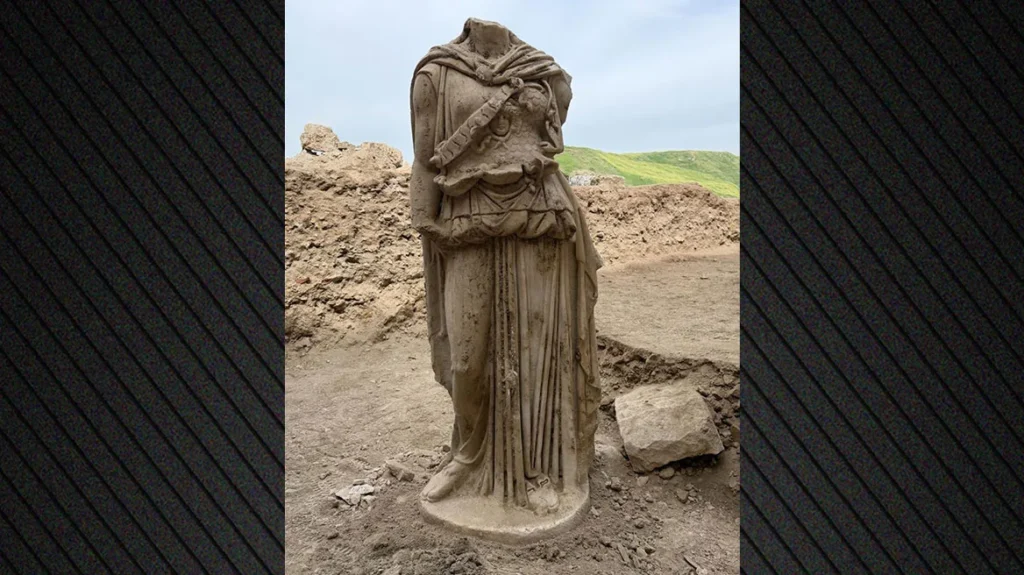
An impressive discovery was made by archaeologists in the ancient city of Laodicea, in Denizli, Turkey, as they uncovered a headless marble statue of the goddess Athena, approximately two meters tall.
According to a statement by Turkey’s Ministry of Culture and Tourism, the statue was discovered during excavation and restoration works being carried out in the ancient city, specifically in the stage building of the Western Theater. This building once served as a setting for Homer’s epics and functioned as a center of cultural expression, reflecting the classical style of the Augustan era.
The statue of Athena was found headless among debris, with its head facing downward, at the outer wall of the Western Theater’s stage building, known as the “postskene.” The head of the statue has not yet been located. Archaeologists were particularly struck by the fact that it is made of white marble.
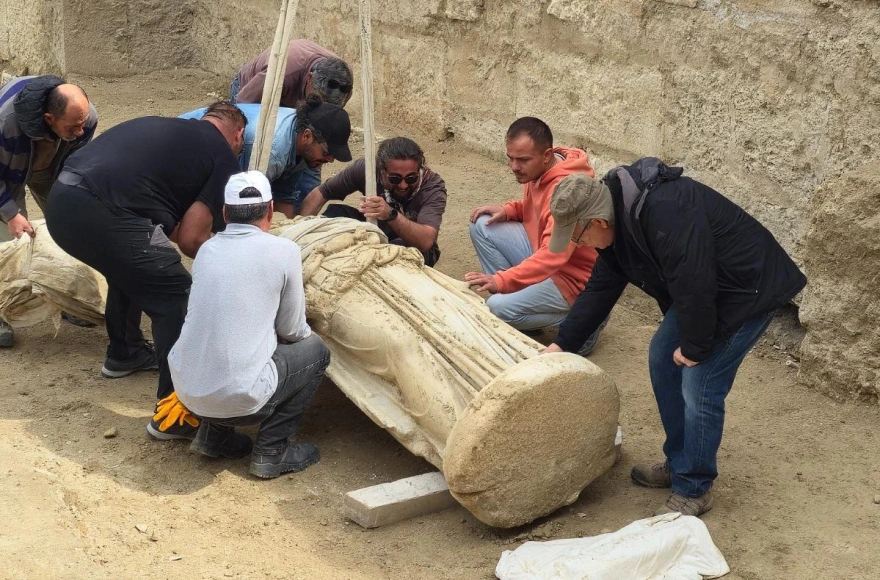
The building was decorated with statues depicting Homer’s epics
The stage building of the Western Theater, dating back to the 2nd century BC, features 16 columns on each level in a three-story architectural arrangement. Between these columns stood statues depicting gods and goddesses, as well as scenes related to rulers and Homer’s epics. Sculptures illustrating scenes such as the land of the Laestrygonians encountered by Odysseus on his journey back to Ithaca, the cave of the giant Polyphemus, and the sea monster Scylla, indicate that the building was used not only for theatrical performances but also for conveying cultural narratives. During work carried out between 2024 and 2025, numerous statues related to these stories were discovered.
Unique typology and high artistic detail
The statue of Athena, depicted standing on a round base, stands out for the detailed rendering of the aegis, including the fine sleeveless garment, the cloak around the neck, and the head of Medusa with snakes on the chest.
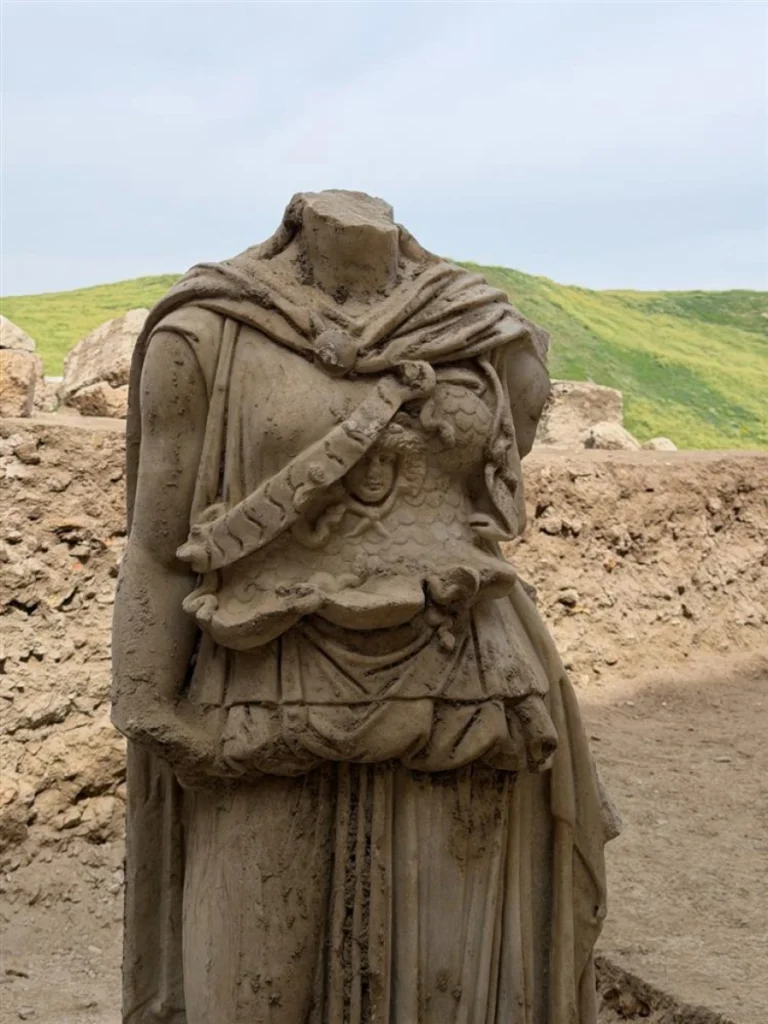
The folds of the clothing and the natural treatment of the fabric highlight its high artistic quality, while the unique design around the neck enhances the importance of the piece.
Although the back of the statue was left unfinished due to its placement between columns, it is believed to be the work of a skilled sculptor.
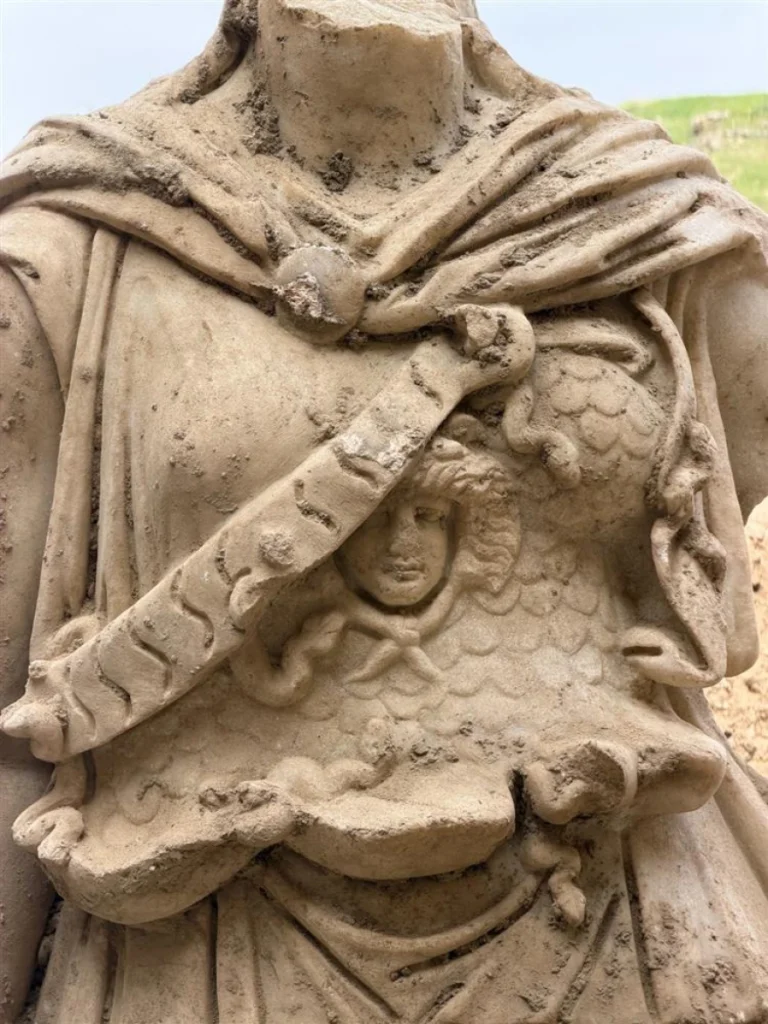
From an artistic perspective, the statue reflects the period of Emperor Augustus (27 BC – 14 AD). In Laodicea, an important center of textile production in antiquity, the goddess is primarily associated with weaving rather than her warlike aspect. Inscriptions also confirm the organization of festivals in her honor.
The Minister of Culture and Tourism, Mehmet Nuri Ersoy, commented on the discovery on social media:
“We have made another significant discovery in Laodicea! A new find has come to light in the ancient city…
The work we are carrying out at the Western Theater of Laodicea continues to reveal traces of the past. In the stage building, we discovered a white marble statue of Athena, approximately 2 meters in length.
This building, which served as a setting for Homer’s epics, proves that it was a center of cultural expression in antiquity, while the work, reflecting the classical style of the Augustan period, draws attention with its high artistic quality.”
Ask me anything
Explore related questions




