

×
GreekEnglish

×
  • Politics
  • Diaspora
  • World
  • Lifestyle
  • Travel
  • Culture
  • Sports
  • Cooking
Sunday
07
Dec 2025
weather symbol
Athens 15°C
  • Home
  • Politics
  • Economy
  • World
  • Diaspora
  • Lifestyle
  • Travel
  • Culture
  • Sports
  • Mediterranean Cooking
  • Weather
Contact follow Protothema:
Powered by Cloudevo
> Travel

Ancient Greeks and their Environment

By clearing, burning, terracing, coppicing, grazing, browsing, hunting and constructing, people in the classical period modified their natural environment

Newsroom March 8 01:12

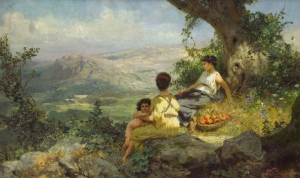
The ancient Greek landscape included both city and country. The basic political unit of the Greek world was the polis that included an urban centre (asty) and its surrounding land (chora), often incorporating additional towns and villages. The Greek word polis is usually translated into English as “city-state”. But, whereas we usually think of cities only as urban centres, the Greek concept was that of the city plus its surrounding land as an integrated whole.

The individual in ancient Greece could use the land in a number of other ways. The shepherd could lead flocks from one patch of unused or unclaimed land to the next, following seasonal patterns of migration. Local potters could make use of clay beds to produce pottery and roof tiles; builders could use the same source to construct mudbrick houses. Moreover, the gathering and collecting of a variety of vegetation could supplement local diet, as could the hunting of hares and wild boar and fishing for a wide variety of sea creatures.

But even with the variety of exploitative strategies, nature was always unfair. The geography and the climate preferred some regions to others and provided limited economic opportunities for each city-state. It seems that people in classical Greece had exploited the environment and used its natural resources or even abused some of them such as forests and game species. Overall, however, the practices they employed were not devastating but rather moderate resulting in a heterogeneous landscape. They did not exceed the limits of Mediterranean ecosystems to resilience. As a result, these ecosystems did not collapse but were able to self-regenerate and recover. By clearing, burning, terracing, coppicing, grazing, browsing, hunting and constructing, people in the classical period modified their natural environment and established an agro-silva-pastoral equilibrium which apparently helped them to live in harmony with nature and create cultural artefacts as well as viable human societies.


>Related articles

The 29 wonders of the Greek “Indiana Jones” – Antiquities returning to Greece

The Asclepieion of Kos: The Garden of Hippocrates blooms 2,500 years later (photos)

New York: 29 Greek antiquities seized & repatriated (photos)


source

Ask me anything

Explore related questions

#ancient greece#classical greece
> More Travel

Follow en.protothema.gr on Google News and be the first to know all the news

See all the latest News from Greece and the World, the moment they happen, at en.protothema.gr

> Latest Stories

Family confrontation – Andreas Psicharis sues his father’s widow for 19 works of art of immense value

December 7, 2025

The story of Greece’s trolleybuses: From the first routes to the the last

December 7, 2025

“We are really very close to a peace agreement for Ukraine,” says Trump’s special envoy

December 7, 2025

Dismantling of trolleybus cables begins in Piraeus — Watch the video

December 7, 2025

Armed police raid at Heathrow: Train services suspended, arrests and tear gas reported

December 7, 2025

Mitsotakis: “Farmers will receive every euro they are entitled to — Solutions come through dialogue, not roadblocks”

December 7, 2025

Improved weather today — where local showers are expected

December 7, 2025

The livestock farmer who tearfully bid farewell to his 450 sheep collapses; Hospitalized in Giannitsa with stroke symptoms

December 7, 2025
All News

> Greece

Family confrontation – Andreas Psicharis sues his father’s widow for 19 works of art of immense value

Three years after the death of Stavros Psicharis, his son Andreas claims the multi-million euro collection found in the publisher's house in Kolonaki with works by Picasso, Dalí, Delacroix, Munch and others, claiming that he bought it himself and handed it over to his father for safekeeping. His father's widow Christina Tsutsoura denies that it belongs to him and claims it was her husband's

December 7, 2025

The story of Greece’s trolleybuses: From the first routes to the the last

December 7, 2025

Dismantling of trolleybus cables begins in Piraeus — Watch the video

December 7, 2025

Improved weather today — where local showers are expected

December 7, 2025

The livestock farmer who tearfully bid farewell to his 450 sheep collapses; Hospitalized in Giannitsa with stroke symptoms

December 7, 2025
Homepage
PERSONAL DATA PROTECTION POLICY COOKIES POLICY TERM OF USE
Powered by Cloudevo
Copyright © 2025 Πρώτο Θέμα



