

×
GreekEnglish

×
  • Politics
  • Diaspora
  • World
  • Lifestyle
  • Travel
  • Culture
  • Sports
  • Cooking
Sunday
07
Dec 2025
weather symbol
Athens 14°C
  • Home
  • Politics
  • Economy
  • World
  • Diaspora
  • Lifestyle
  • Travel
  • Culture
  • Sports
  • Mediterranean Cooking
  • Weather
Contact follow Protothema:
Powered by Cloudevo
> Culture

How Poetry won Independence for Greece – WSJ

Two hundred years ago, the Greek revolution against Ottoman rule became a European cause thanks to the support of writers and artists

Newsroom April 12 10:24

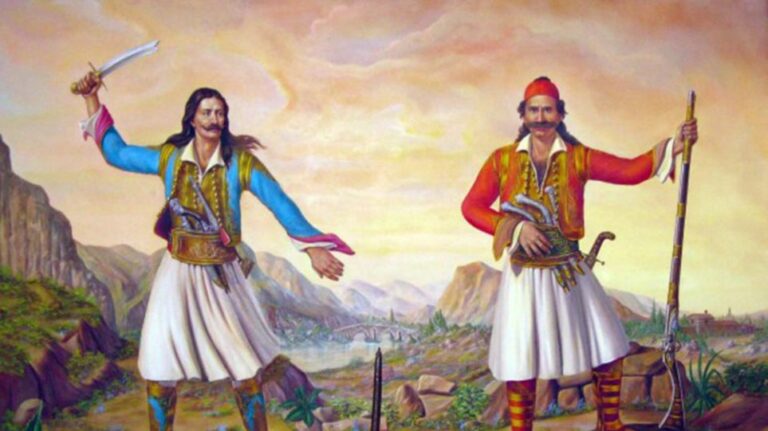
“All art is propaganda,” wrote George Orwell. This year Greece celebrates the bicentennial of its War of Independence against the Ottoman Empire, won with the help of some of the most powerful propaganda ever written. During a virtual conference on the east Mediterranean last November, New Jersey senator Robert Menendez quoted some of it: “The mountains look on Marathon—/And Marathon looks on the sea;/And musing there an hour alone,/I dream’d that Greece might still be free.”

Lord Byron wrote these lines in his poem “The Isles of Greece” just before the outbreak of the Greek Revolution. Revered today as a Greek national hero, Byron saw in the modern Greeks the flicker of ancient genius fallen on desperate times, and he wasn’t the only one. Percy Shelley and his wife, Mary Wollstonecraft Shelley, author of “Frankenstein,” were also famously Philhellenes. In Pisa they took Greek lessons from Alexandros Mavrokordatos, a Constantinopolitan Greek who would become the first president of independent Greece in 1822. The literary result of this relationship was Shelley’s verse play “Hellas,” written to help finance the Greek cause, which portrayed the Greeks as re-emerging from antiquity: “The world’s great age begins anew,/The golden years return.”

Educated Europeans and Americans saw “something of their own at stake because they’ve been brought up on Homer and Herodotus and Marathon and Salamis,” said Roderick Beaton, professor emeritus of Byzantine and Modern Greek literature at King’s College London. “It’s not humanitarian, it’s not altruistic…it’s actually the belief that the Hellenic heritage is common to all civilized people and therefore…it’s your own civilization that is threatened by the common enemy.” Small wonder, perhaps, that many hundreds of Europeans paid their way to fight for the Greek cause.

See Also:

Lost ‘golden city’ of Egypt, 3,000 years old, discovered (photos)

Beijing Topples New York To Become The Billionaire Capital (infographic)

>Related articles

History has treated her unfairly”: The 400-year mystery surrounding Shakespeare’s wife and son

Papastavrou: The ministerial meeting of the Greece, Cyprus, Israel and the USA group in Washington in April

European Commission handbook depicts the East Aegean islands and the Dodecanese as Turkish

But it is Byron whose reputation was entirely tied up with Greece. He had traveled there a decade before the revolution and written the first two cantos of his long poem “Childe Harold’s Pilgrimage,” in which his hero calls the Greeks to rebellion: “Hereditary bondsmen! Know ye not/Who would be free themselves must strike the blow?” “Childe Harold” became a publishing sensation in 1812, selling out 10 editions in three years—a record unmatched in English poetry—and propelling Byron to rock star status.

When Byron landed in Messolongi in 1823 to devote his life and fortune to the Greek cause, his arrival “directed the attention of all Europe to the affairs of Greece,” wrote his contemporary and historian of the Greek War of Independence, George Finlay. Upon his death from fever a mere four months later, “wherever the English language was known, an electric shock was felt”.

Read more: WSJ

Ask me anything

Explore related questions

#1821#1821 Independence War#200 years of Greek independence#art#culture#greece#history#lord byron#Ottoman Empire#Philhellenes#poetry#world
> More Culture

Follow en.protothema.gr on Google News and be the first to know all the news

See all the latest News from Greece and the World, the moment they happen, at en.protothema.gr

> Latest Stories

Family confrontation – Andreas Psicharis sues his father’s widow for 19 works of art of immense value

December 7, 2025

The story of Greece’s trolleybuses: From the first routes to the the last

December 7, 2025

“We are really very close to a peace agreement for Ukraine,” says Trump’s special envoy

December 7, 2025

Dismantling of trolleybus cables begins in Piraeus — Watch the video

December 7, 2025

Armed police raid at Heathrow: Train services suspended, arrests and tear gas reported

December 7, 2025

Mitsotakis: “Farmers will receive every euro they are entitled to — Solutions come through dialogue, not roadblocks”

December 7, 2025

Improved weather today — where local showers are expected

December 7, 2025

The livestock farmer who tearfully bid farewell to his 450 sheep collapses; Hospitalized in Giannitsa with stroke symptoms

December 7, 2025
All News

> Greece

Family confrontation – Andreas Psicharis sues his father’s widow for 19 works of art of immense value

Three years after the death of Stavros Psicharis, his son Andreas claims the multi-million euro collection found in the publisher's house in Kolonaki with works by Picasso, Dalí, Delacroix, Munch and others, claiming that he bought it himself and handed it over to his father for safekeeping. His father's widow Christina Tsutsoura denies that it belongs to him and claims it was her husband's

December 7, 2025

The story of Greece’s trolleybuses: From the first routes to the the last

December 7, 2025

Dismantling of trolleybus cables begins in Piraeus — Watch the video

December 7, 2025

Improved weather today — where local showers are expected

December 7, 2025

The livestock farmer who tearfully bid farewell to his 450 sheep collapses; Hospitalized in Giannitsa with stroke symptoms

December 7, 2025
Homepage
PERSONAL DATA PROTECTION POLICY COOKIES POLICY TERM OF USE
Powered by Cloudevo
Copyright © 2025 Πρώτο Θέμα



