

×
GreekEnglish

×
  • Politics
  • Diaspora
  • World
  • Lifestyle
  • Travel
  • Culture
  • Sports
  • Cooking
Monday
15
Dec 2025
weather symbol
Athens 10°C
  • Home
  • Politics
  • Economy
  • World
  • Diaspora
  • Lifestyle
  • Travel
  • Culture
  • Sports
  • Mediterranean Cooking
  • Weather
Contact follow Protothema:
Powered by Cloudevo
> Culture

The Philistines were likely of Greek origin, according to new DNA evidence

According to scientists there was a European-related gene flow that took place during the transition from the Bronze to the Iron Age

Newsroom October 15 11:01

The Ancient Egyptians are thought to have been descendants of the Ancient Cretans. The Palestinians have claimed the same. Scientists are searching for the truth, but the evidence is growing towards this theory.

In the case of the Philistines, however, the tribe that was accused more than any other in the Hebrew texts, the investigation provided tangible evidence that they were not only related to the Ancient Greeks, but may have been their descendants.

According to DNA found in a large mass grave of Philistines, the tribe was proven not to be indigenous, but they had migrated to the area of ​​today’s Middle East in 1,200 BC, from southern Europe and probably the Aegean, as at that time, the Greeks were powerful and crossed the Mediterranean with their ships.

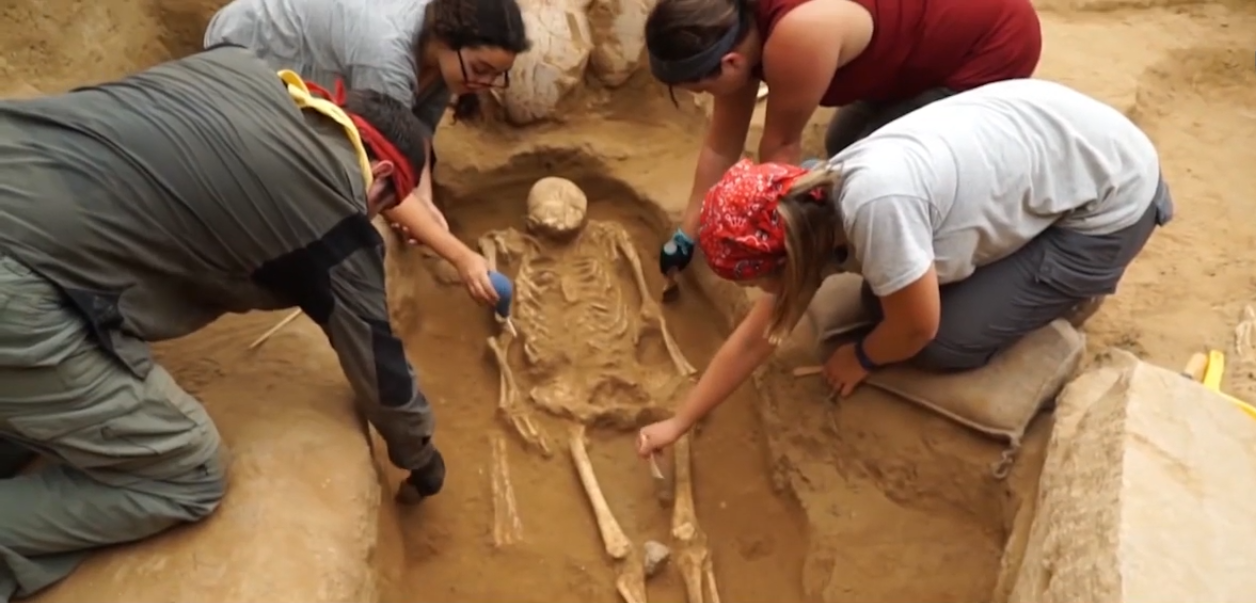
The genetic findings came from skeletons discovered by archaeologists in Israel in 2016, including the bones of newborns buried under Philistine homes.

The Philistines were one of the great enemies of the Israelites, as they are always referred to as criminals in the Bible, with the giant Goliath being a prime example.

“Our study showed for the first time that the Philistines migrated to this area in the 12th century BC”, said Daniel Master, director of the Leon Levy mission to Ashkelon, a coastal city where the first Philistine cemetery was found.

“We did not prove it by presenting a similar style of ceramics, we did not show it by looking at texts, we showed it by looking at the DNA of the people themselves”, added the head of the scientific team.

See Also:

Never underestimate the intelligence of trees

“We can see in Ashkelon new DNA coming from this migratory population that is really changing the whole region”, he said, in an effort to highlight the significance of the discovery.

The Ashkelon team sent more than 100 skeletal specimens to the German Max Planck Institute for the Science of Anthropological History. The DNA was found in ten people, especially in the bones of the inner ear.

>Related articles

How “Albanian” was Georgios Kastriotis or Skanderbeg, what does the domed tomb at the Hilandar Monastery on Mount Athos hide?

See all the farmers’ demands to the government: They do not want OPEKEPE’s control to be transferred to AADE

Mitsotakis to farmers: Dialogue cannot take place with ultimatums – Roadblocks undermine your struggle – We are examining a new support package

The findings, published Wednesday in the journal Science Advances, showed three stages: before migration, after migration, and after a thinning of the genetic imprint in the local population, a few hundred years later.

“Although genetic modeling suggests southern Europe as a region of origin, there are some limitations to the 3,000-year-old DNA test”, said Michael Feldman, an archaeologist who worked on the study at Max Planck.

“This ancestral element comes from Europe or more specifically from southern Europe. The ancestors of the Philistines must have traveled to the Mediterranean and arrived in Ashkelon sometime between the end of the Bronze Age and the beginning of the Iron Age”, Feldman said. “We could say a lot more if we had more data, for example we could pinpoint the source of this migration,” he added.

Ask me anything

Explore related questions

#aegean sea#archaeology#culture#discovery#dna#europe#greece#Greeks#israel#Max Planck Institute#mediterranean#Middle East#Philistines#world
> More Culture

Follow en.protothema.gr on Google News and be the first to know all the news

See all the latest News from Greece and the World, the moment they happen, at en.protothema.gr

> Latest Stories

How “Albanian” was Georgios Kastriotis or Skanderbeg, what does the domed tomb at the Hilandar Monastery on Mount Athos hide?

December 14, 2025

See all the farmers’ demands to the government: They do not want OPEKEPE’s control to be transferred to AADE

December 14, 2025

Mitsotakis to farmers: Dialogue cannot take place with ultimatums – Roadblocks undermine your struggle – We are examining a new support package

December 14, 2025

Shooting in Sydney: Gunfire by two unknown individuals at a Jewish celebration on a beach, reports of casualties (videos)

December 14, 2025

Shops are open today, the market is open during festive hours

December 14, 2025

Sunday Sports Broadcasts: Where to watch the tests of the Super League’s Big Four

December 14, 2025

Moments of terror at Brown University after the shootings: Police evacuated students who had hidden

December 14, 2025

The redevelopment of Ellinikon prioritizes the extension of the Metro toward Glyfada – New extensions to follow

December 14, 2025
All News

> Politics

Mitsotakis to farmers: Dialogue cannot take place with ultimatums – Roadblocks undermine your struggle – We are examining a new support package

He says he is surprised by the farmers’ “no” – “Whoever rejects the principles of democracy assumes a great burden toward society” – Reiterates that the government’s door remains open for a meeting

December 14, 2025

What the leadership of the ESM means for Greece: The country’s major creditor and the messages for the Greek economy

December 13, 2025

Zoe’s extreme parliamentary reality show: The repeated calls to 100, the sexist attacks, and the “to the very end”

December 13, 2025

Mitsotakis meets the UN Secretary-General’s Personal Envoy for Cyprus

December 12, 2025

Liakouli on tensions with Konstantopoulou: Parliament staff leave the committee in tears

December 12, 2025
Homepage
PERSONAL DATA PROTECTION POLICY COOKIES POLICY TERM OF USE
Powered by Cloudevo
Copyright © 2025 Πρώτο Θέμα



