

×
GreekEnglish

×
  • Politics
  • Diaspora
  • World
  • Lifestyle
  • Travel
  • Culture
  • Sports
  • Cooking
Friday
30
Jan 2026
weather symbol
Athens 14°C
  • Home
  • Politics
  • Economy
  • World
  • Diaspora
  • Lifestyle
  • Travel
  • Culture
  • Sports
  • Mediterranean Cooking
  • Weather
Contact follow Protothema:
Powered by Cloudevo
> Culture

Is the Assyrian Nimrud Lens the oldest telescope in the world?

“This piece of rock crystal has been carefully ground and polished, and undoubtedly has optical properties”

Newsroom August 4 01:00

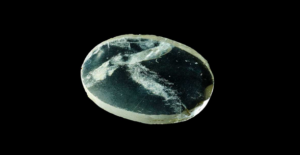
The Nimrud lens is a 3,000-year-old piece of rock crystal unearthed by Sir John Layard in 1850 at the Assyrian palace of Nimrud, in modern-day Iraq. Since its discovery over a century ago, scientists and historians have debated its use, with one prominent Italian professor claiming the lens was used by the ancient Assyrians as part of a telescope. This was used to explain how the Assyrians knew so much about astronomy.

The Nimrud lens (also called the Layard lens), which has been dated to between 750 and 710 BC, is made from natural rock crystal and is a slightly oval in shape. It was roughly ground, perhaps on a lapidary wheel. It has a focal point about 11 centimeters (4.33 in) from the flat side, and a focal length of about 12 cm (4.72 in).

See Also:

>Related articles

Luigi Manzione does not face the death penalty for the murder of UnitedHealthcare CEO

Minneapolis: The 37-year-old man killed by ICE had fought with agents of the same agency 11 days earlier

Abramovich denies his connection to Deutsche Bank investigations: ‘He is not a suspect’ says his spokesman

Hagia Sophia desecration: Hundreds of children shout “Allahu Akbar” (video)

These dimensions would make the Nimrud lens equivalent to a 3× magnifying glass. Combined with another lens, it could achieve much greater magnification. The surface of the lens was created with twelve cavities that were opened during grinding. These would have contained naptha or some other fluid trapped in the raw crystal. The lens is said to be able to focus sunlight, although the focus is far from perfect.

Read more: Ancient Origins

Ask me anything

Explore related questions

#archaeology#Assyrians#culture#history#Nimrud Lens#science#technology#telescope#world
> More Culture

Follow en.protothema.gr on Google News and be the first to know all the news

See all the latest News from Greece and the World, the moment they happen, at en.protothema.gr

> Latest Stories

Syria: ‘Closed security zone’ declared in Al Hall camp, where relatives of Islamic State members live

January 30, 2026

Mitsotakis: Tax cuts mean wage increases – We said it, we did it!

January 30, 2026

Luigi Manzione does not face the death penalty for the murder of UnitedHealthcare CEO

January 30, 2026

Stock Exchange: Monthly rise of 9.15% and 7th consecutive weekly rise

January 30, 2026

How one white wine became a global phenomenon

January 30, 2026

Minneapolis: The 37-year-old man killed by ICE had fought with agents of the same agency 11 days earlier

January 30, 2026

Criminal liability for pollution of the marine environment

January 30, 2026

Athens, with Kids: 33 Activities They’ll Actually Love

January 30, 2026
All News

> Culture

European Parliament: “Yes” to AI protection for artists and media in the EU

Legal Affairs Committee members call for protection for online copyright holders - They propose that creators should give their consent and be compensated for the use of their work

January 28, 2026

In Megalopolis, Arcadia, the world’s oldest known wooden tools – see photos

January 27, 2026

Greek antiquities held by the company of Robin Symes are being repatriated

January 25, 2026

The Shackled Men of Phaleron: This is what the space that will host the major archaeological find will look like – Photos

January 24, 2026

The dirty side of Pompeii: baths filled with sweat and urine, according to a new study

January 23, 2026
Homepage
PERSONAL DATA PROTECTION POLICY COOKIES POLICY TERM OF USE
Powered by Cloudevo
Copyright © 2026 Πρώτο Θέμα



