





In 1054, the people of Earth were treated to an uncommon sight.
A strange light exploded and lit up the sky. For no fewer than 23 days the explosion—caused by a star running out of fuel and blowing up—was visible in the sky. For several hundred nights after the event the supernova remained visible in the sky. Stargazers around the world commented on the extraordinary celestial event, but Europe fell strangely silent. As far as contemporary historians were concerned, it never happened. Some have speculated that it was deliberately erased from history for religious reasons. But perhaps some hint of the censored event slipped through the cracks. A team of scholars claim to have discovered evidence of the mysterious event hidden in the symbols on a limited-edition gold coin.
The supernova event known as SN 1054 made proverbial headlines around the world. The first naked-eye sighting during the daytime was recorded on July 4, 1054, in East Asia. By mid-August the brightness of the explosion began to sharply decline, with the last nighttime sighting recorded on April 6, 1056. Astronomers in China, Korean, and Japan commented on the star and scholars have connected Native American paintings from Arizona, an Anasazi petroglyph from New Mexico, and Aboriginal oral traditions to the event.
But in Europe, most agree, the archival evidence is negligible. The celebrated astrologer Ibn Butlan, who was in Constantinople during the explosion, only reported it once he had left his well-compensated position and returned to Cairo. Part of the reason for Europe’s silence on this event, scholars have speculated, was the theological problems that astrology and the star represents. Europe was not always silent on astrological events—SN 1006 was recorded in numerous documents—but clearly there was something different about this potential portent.
Perhaps the solution lies in the complicated political and religious situation of the time. July 1054 was a busy time for European Christians. The church was torn apart by the Great Schism between Eastern and Western Churches (what are, today, known as the Roman Catholic and Eastern Orthodox Churches). The schism, which was centuries in the making, is usually dated to July 16, 1054, when three papal legates excommunicated the Eastern Patriarch Michael Cerularius. The timing of the excommunication corresponds to the period when the supernova would have been most visible in the morning sky.
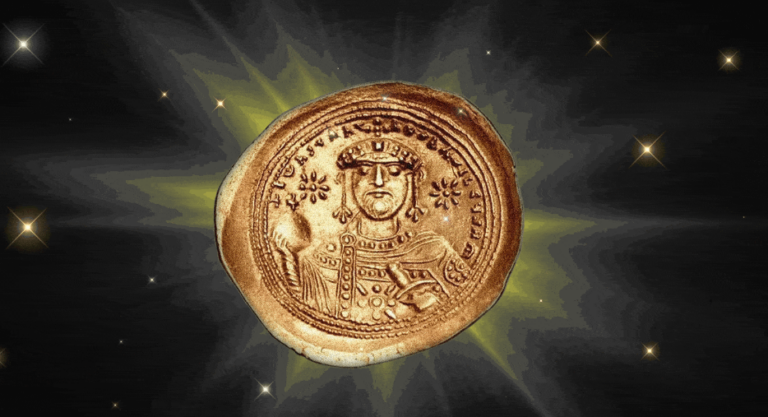
In a recently published article in the European Journal of Science and Theology, and reported on by Livescience, an international team of scholars examined a set of small coins minted during the reign of the Byzantine Emperor Constantine IX. Most of the coins show the head of the emperor accompanied by a single bright star, but one set shows him flanked by two. The emperor’s head they argue, represents the sun. The eastern star is a reference to Venus (or the Morning Star) and the second star is a cipher for the supernova. Going further, they suggest that subsequent minting of this two-starred limited-edition coin may actually show the star’s light waning over time.
Read more: The Daily Beast
Ask me anything
Explore related questions




