





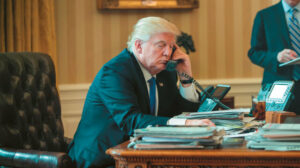
The political landscape in Washington, reshaped after Donald Trump‘s re-election as US President, has been closely monitored by the Greek government. Following a period of close ties with the American political establishment, Greece now faces the task of adjusting its strategy and developing new channels of communication with Trump.
Greek Prime Minister Kyriakos Mitsotakis, whose political profile aligns more naturally with Vice President Kamala Harris, will nevertheless need to cooperate with Trump, who was the first American president Mitsotakis engaged with after taking office in 2019. During Trump’s term, significant progress was made in U.S.-Greece defense relations, leading to an upgraded defense cooperation agreement that took on a strategic character.
Channels of Communication
Given this context, Athens is closely watching the formation of Trump’s new administration. Trump’s decision to appoint his trusted campaign manager, Susie Wiles, as a key figure indicates his preference for working with people he personally trusts, avoiding pressure from the Republican establishment. Wiles, who has extensive domestic experience but limited international exposure, is seen as a unifying figure with strong connections on Capitol Hill, having worked alongside prominent Republican politicians.
Mitsotakis, who is expected to meet Trump along with several other European leaders, believes that U.S.-Greece relations are deep enough to remain stable. Greece is regarded as an “anchor of stability” in the Southeastern Mediterranean. While Trump may have a different perspective on NATO, the broader U.S. establishment continues to follow key strategic guidelines.
An official source emphasizes that Greece’s points of contact extend beyond the White House, covering a wide range of American institutions. Given that the Republicans now control both the Senate and the House of Representatives, Greece’s outreach must adapt accordingly.
On the Greek side, Deputy Foreign Minister Alexandra Papadopoulou serves as a key communication link, having previously held a productive three-year tenure at the Greek Embassy in Washington. She established good relations with numerous figures, including those within the Republican camp. Following her return to Greece, her role was taken over by the active Katerina Nasika, who moved from her previous post in Moscow.
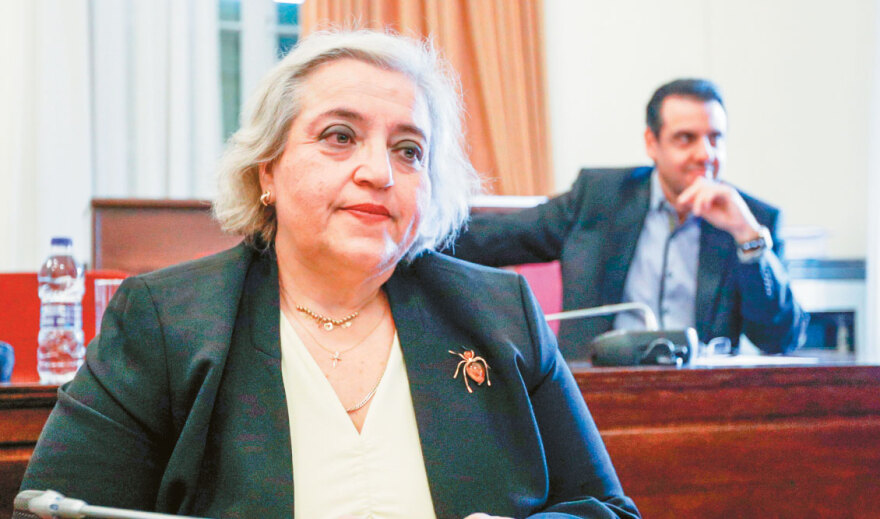
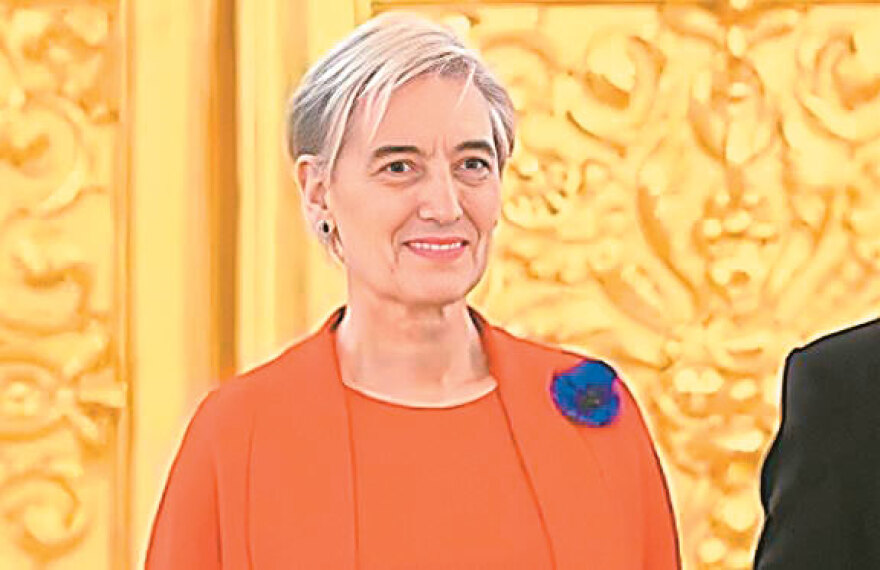
Old-School Diplomat, Ms. Nasika has also developed a solid network of contacts in Washington, and she “saw” Trump’s victory on the horizon, based on the key-state contacts she had made in recent weeks. Once the dust settles and Trump’s new team is formed, she will also play a critical role in strengthening bilateral ties.
Pompeo and Others
Of course, it’s clear that diplomacy is not the only avenue for Greek-American relations. Greek Prime Minister Kyriakos Mitsotakis himself has often been involved, with a close personal relationship with former Secretary of State Mike Pompeo.

Pompeo was heavily speculated to be a candidate for the U.S. Department of Defense, and he was recently in Athens on the same day Mitsotakis visited the Konstantinos Karamanlis Foundation alongside former prime ministers Karamanlis and Samaras.
However, it should be noted that just 24 hours ago, Donald Trump himself quickly stated that Pompeo would not be taking a position in the new administration, thanking him for their collaboration.
The two men had a private dinner at “Cookoovaya” on Hatzigianni Mexi Street, where they had detailed discussions. According to information from Thema, Pompeo saw the U.S. election as a close race, although the outcome seemed to disprove his prediction. He had already appeared at rallies supporting Trump, despite a temporary break in their relationship following the Capitol events. Pompeo has a close personal relationship with Mitsotakis, and they had met a few weeks ago in New York. It’s also worth noting that Pompeo’s wife, Susan, is an Orthodox Christian, and the Pompeos had stayed at the Mitsotakis family home in Akrotiri, Chania, several years ago, when Pompeo visited the Souda base.
Reince Priebus and Others
Furthermore, a stable contact within the Republican camp is Reince Priebus, Trump’s former chief of staff at the White House. Priebus, who also has Greek roots, returned to Trump’s circle after a long separation. He ended up fundraising for the American president and maintains close contact with him and his family.
In the broader picture, there will be reshuffles in the diplomatic staff around Trump, both at the State Department and in the National Security Advisor’s office. The candidates being considered by the Trump campaign are primarily four. One of these positions is expected to be filled by Rick Grenell, the controversial former U.S. ambassador to Germany who left in 2020 after a conflict with the country’s political personnel and later briefly served as acting National Security Advisor before being appointed special envoy for Kosovo and Serbia.
Grenell is familiar with Europe and the Balkans, but he is known for his sharp views. Another potential candidate is Robert O’Brien, who served as Trump’s National Security Advisor from 2019, succeeding John Bolton. If Trump decides to appoint a senator to the role of Secretary of State, Florida Senator Marco Rubio seems a strong possibility.
Rubio, along with Bob Menendez, was the sponsor of the 2021 U.S.-Greece Defense and Interparliamentary Partnership Act, which, among other things, paved the way for the acquisition of F-35s. Another candidate is the relatively unknown former Tennessee Senator Bill Hagerty.
The Senators
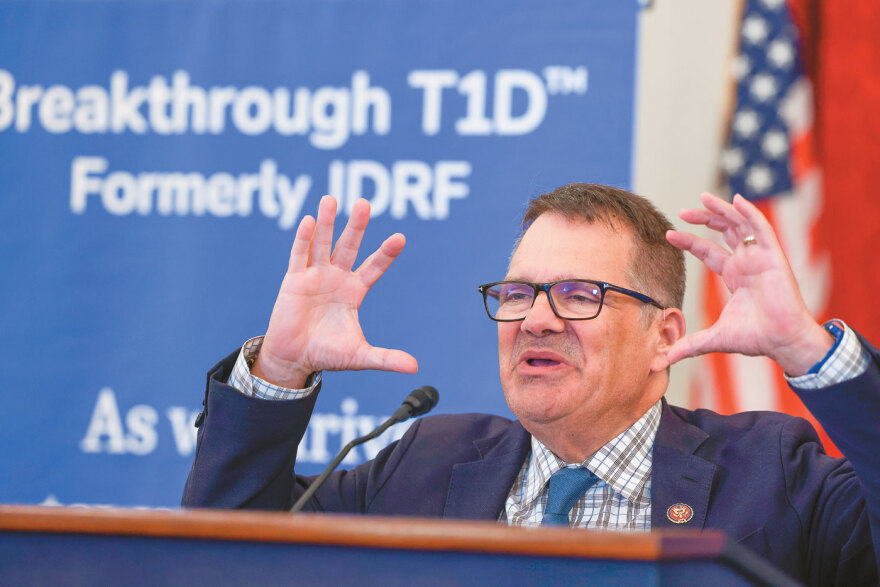
On the other hand, Greece maintains a strong channel of communication with people on Capitol Hill. A steadfast supporter is Gus Bilirakis, a Representative from Florida with roots from Kalymnos. Another strong Trump supporter is Nicole Malliotakis, the representative from New York, who is actively involved in advocating for Greek positions. Among the Democrats, Chris Pappas from New Hampshire and Dina Titus from Nevada have kept their positions. New entries in the Greek lobby on Capitol Hill include Maggie Hassan, who was elected as a Democrat in New Hampshire and hails from Grebne, and Republican Mike Haridopoulos, who was elected in Florida’s 8th District.
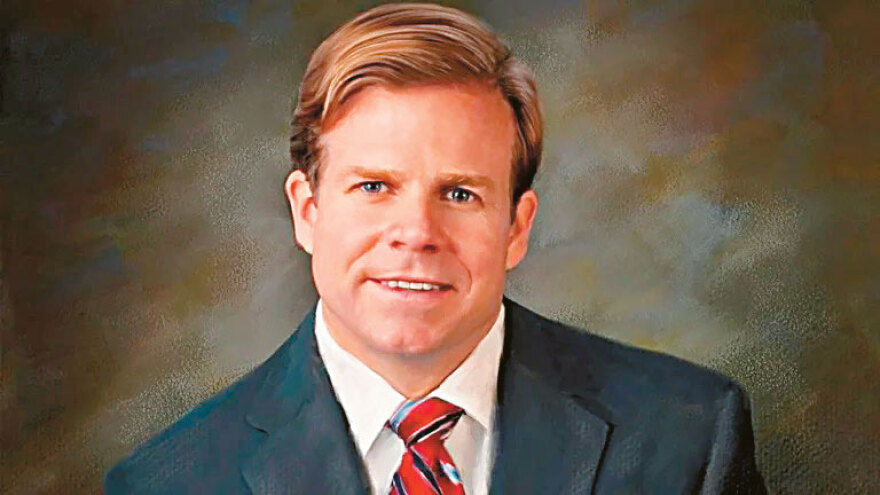
It is worth noting that several weeks ago, Prime Minister Mitsotakis hosted Republican Senators at his home who serve on key committees for national interests, with Foreign Minister Nikos Dendias and U.S. Ambassador George Tsunis by his side. The group hosted at the Akrotiri residence included Kansas Senator Jerry Moran, Susan Collins from Maine, John Boozman from Arkansas, John Cornyn from Texas, and John Hoeven from North Dakota.

The Ambassador and the Archbishop
In this entire equation, a critical choice for U.S. diplomacy will be the selection of the new U.S. Ambassador to Greece. Mr. Tsunis, who is a presidential appointee and a close personal friend of outgoing President Joe Biden, is completing a three-year term in Greece, which has passed without tensions and with significant behind-the-scenes activity, particularly for strengthening Greek-American economic relations.
This tightening of relations followed the elevation of Greece’s geopolitical role, especially with energy initiatives, a process that was set in motion during the tenure of the previous Ambassador, Geoffrey Pyatt. The Greek government is awaiting the U.S. signal for Tsunis’s successor, and the prevailing belief is that it will again come from the ranks of diplomacy.
Finally, an important factor in this equation involves the Greek Orthodox Archdiocese of America, which has been involved in numerous behind-the-scenes scenarios in recent times. Archbishop Elpidophoros prayed at both the Republican and Democratic conventions, though it is said that he maintains warmer relations with the Republicans.
However, this doesn’t seem to mean much for the government, which will prefer to use the “political route” for its contacts. According to well-informed sources, the once-close relationship between Prime Minister Mitsotakis and Archbishop Elpidophoros has been formal for some time now. It hadn’t gone unnoticed that when Archbishop Elpidophoros came to Athens months ago for the conference of the Archons of the Patriarchate, both the Prime Minister and Patriarch Bartholomew were absent, and there was no meeting with Mitsotakis.
Ask me anything
Explore related questions




