





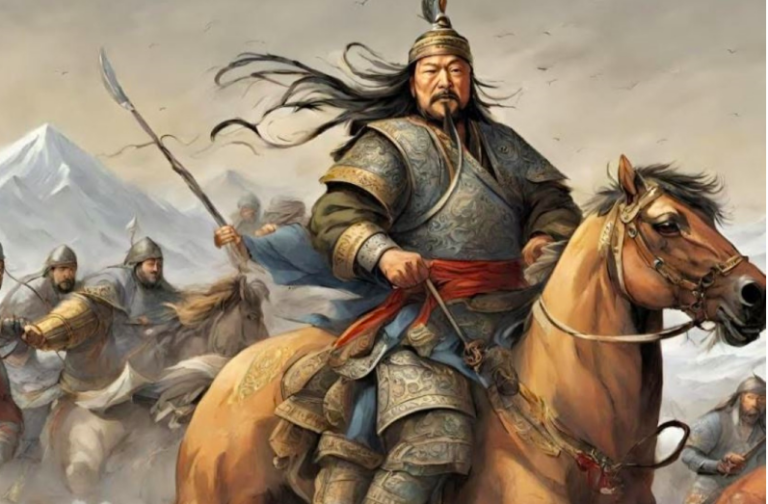
One of the figures frequently mentioned in the comments of our article on Alexander the Great’s childhood years was Genghis Khan. Many pointed out that the Mongol conqueror was superior, militarily, to the Greek general. Of course, the two men were separated by about 1,500 years, making any comparison difficult from the outset. After discussing the life and actions of Genghis Khan, whom we had not previously examined, we will present some of our thoughts on the matter. The information primarily comes from an article in Britannica, found in the 57th volume (1993 edition) of the PAPYRUS-LAROUS-BRITANNICA Encyclopedia and the WORLD BIOGRAPHICAL DICTIONARY from EKDOTIKI ATHINON.
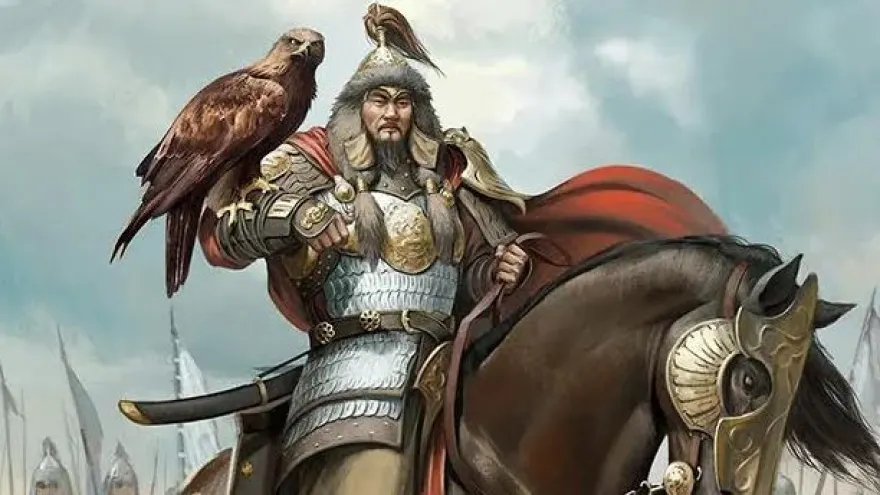
The Childhood Years of Genghis Khan
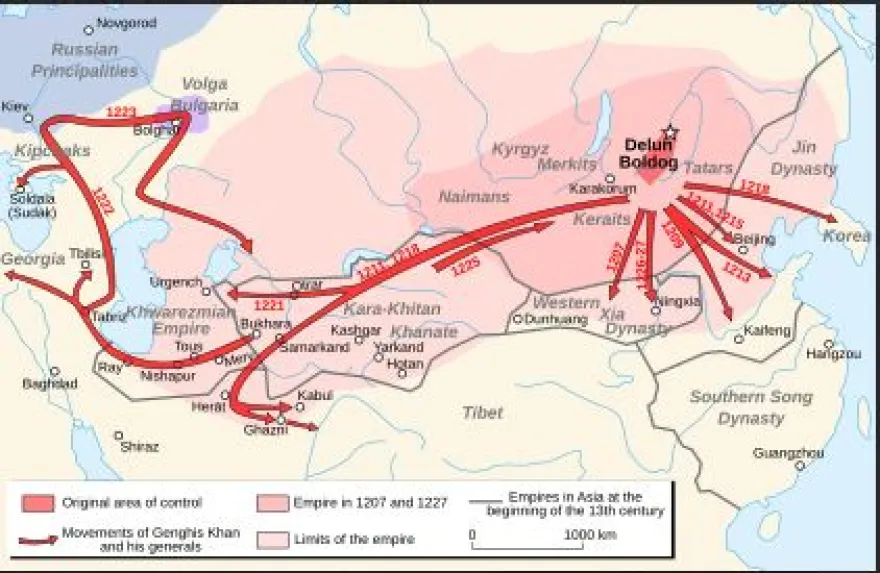
Regarding the life and deeds of Genghis Khan (also known as Genghis, Jenghiz, or Chingis Khan), whose real name was Temujin (or Temuchin), there are no primary sources from his time, apart from the “Secret History of the Mongols,” an epic chronicle likely written around 1240. This is the name we will use to narrate the events until 1206, when Temujin became Genghis Khan. Temujin was born in 1155 or 1162 (there are also references to his birth in 1167) in Deluun Boldog, near the Burkan Khaldun Mountain and the Onon and Kherlen rivers, not far from Ulaanbaatar, the capital of modern Mongolia. He was named after a tribal leader his father Yesügei had defeated when he was born. According to legend, Temujin was born holding a clot of blood in his palm, considered an auspicious sign. It was also said that his origins were divine (the first ancestor of his line was a gray wolf), and that his destiny was preordained by heaven.
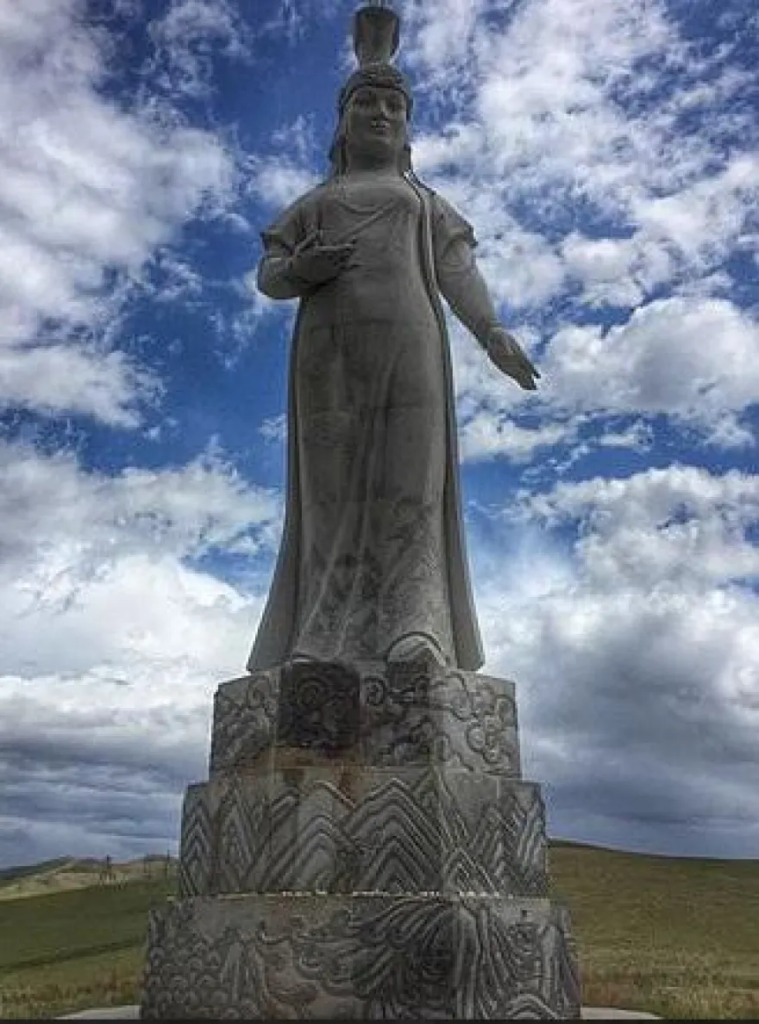
The Taichiud, the rival family of Yesügei, poisoned him and seized power. Yesügei’s widow, Hoelun, and their children were left at the mercy of fate. They had to eat plant roots and fish (the two rivers mentioned above are very close to where Genghis Khan was born). However, the noble origins of Temujin’s family gave him a lot of prestige. When he married Borte, the girl his father had betrothed him to before his death, the Merkits, a tribe in northern Mongolia whose own wife had been stolen by Yesügei, abducted her. Temujin, however, sought the help of his father’s blood brother, Toghril, Khan of the Kerait tribe. As a gift, Temujin offered him a sable skin, the only thing he could give him. Toghril managed to rally Temujin’s scattered people and convince his old friend Jamukha to send his own forces. Together, they gathered 20,000 men. How an obscure and penniless man became the leader of such a large army remains a mystery, as the only source is the Secret History of the Mongols.
The Rise of Temujin to Power
With this army and his allies, Temujin defeated the Merkits. He then turned against the aristocracy of the Jirkin clan. While Temujin was fighting the Merkits, they took the opportunity to plunder his wealth. After defeating the aristocrats of the Jirkin, Temujin took the remaining members of the tribe with him as soldiers and servants. He continued to build his army and faced off against the Tatars, defeating them as well. He also massacred anyone taller than the axle of a cart! When his alliance with Toghril fell apart, Temujin also dispersed the Merkits, though he kept some of them as soldiers and servants. He did all of this to neutralize the old aristocracy and unite the nomads under his personal rule. The alliance with Jamukha, however, soon ended. It lasted about a year and a half.
The Unification of the Mongol Nation
1206 was a pivotal year for the Mongols. Temujin was recognized as the emperor by all the peoples of the steppe and officially became Genghis Khan (Great Khan). Internal disputes and conflicts ceased, and Genghis Khan abolished the old system of tribes and clans in favor of a new one, which bore many similarities to feudal structures. Those Mongols who wished to maintain the old system were marginalized and eventually disappeared. A unified Mongol nation emerged, which, despite challenges, still exists today.

The Mongol Empire’s Campaigns
Genghis Khan’s first conquests began around 1210, when he secured his western borders with a dynamic campaign against the Tangut Kingdom of Xi Xia (in Northwestern China). In 1211, he attacked the Jin Empire in Northern China. He temporarily halted the war in 1214 after seizing a vast treasure but resumed hostilities in 1215, capturing Beijing. The conquest of Northern China was completed by his general Mukali. Genghis Khan focused on the conquest of the Khwarezmian Empire, triggered by the massacre of a Mongol caravan by the governor of the city of Otrar. The Shah of Khwarezm refused to make reparations, resulting in an inevitable war, which made the name of the Mongols synonymous with barbarism and terror. One city after another in Khwarezm fell, with their inhabitants slaughtered or forced to fight as front-line soldiers against their own people. The fields and gardens were destroyed, as was the irrigation system, as Genghis Khan sought revenge on the Khwarezmian royal family. By 1218-19, after a dispute with the Shah of Khwarezm, he captured and looted Bukhara and Samarkand, as well as regions of modern-day Iran. Genghis Khan withdrew from the battlefields in 1223 but led his army again in 1226-27 during a final campaign against the Xi Xia.
Assessment of Genghis Khan’s Character
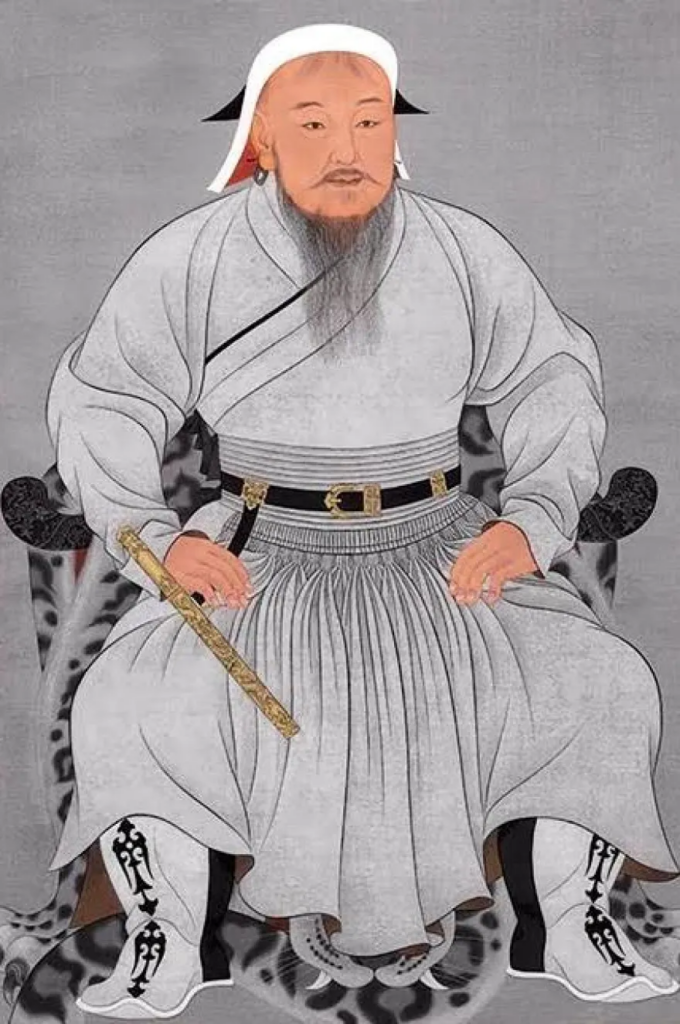
Genghis Khan was a multifaceted personality. He had great physical strength, endurance, and a powerful will. He was not stubborn and was open to contributions from others, even from his mother and wives (he had nine wives, though his greatest love was Borte). He had many children, though the exact number is unknown, as only the names of his sons were recorded. He was religious and believed he had a divine mission. As he moved further from the steppes and interacted with other peoples, he changed. He adapted easily and had the ability to attract individuals from all walks of life, including the elderly Taoist sage Ta’ange-Tsun, who traveled almost all of Asia to meet him and discuss religious matters.
As a military leader, Genghis Khan achieved much. After uniting the nomads of the steppes, he was able, with relatively small forces, to defeat much stronger adversaries. However, he ensured that his people did not suffer too much from the wars. He carefully chose his successor, his son Ogedei, ensuring the loyalty of his brothers and leaving behind a prosperous nation and empire. Upon his death in 1227, Genghis Khan had conquered lands stretching from Beijing to the Caspian Sea, and his generals had reached Persia and Russia. His descendants expanded the empire, including all of China, Persia, and most of Russia. His grandson, Kublai Khan, is considered the founder of the Yuan Dynasty in China.
Conclusion
It is significant that all historians, even those who served the Mongols, emphasized the immense destruction caused by their raids. An Arab historian unequivocally expressed his disgust for these actions. The 13th-century English chronicler Matthew Paris, relying on secondary sources, described the Mongols as “a vile nation of Satan that emerged from Tartarus, explaining the name Tartars” (a pun between Tartarus, the underworld, and the name Tartars used for some Mongol tribes). The destruction caused by Genghis Khan’s armies has not been forgotten by the peoples who faced them. It is estimated that Genghis Khan was responsible for the deaths of 40 million people!
On the other hand, some of our compatriots (?!) call Alexander the Great a “butcher,” even though he is worshiped as a god by the peoples he conquered. Comparing him to Genghis Khan, in this context, seems entirely misguided…
Ask me anything
Explore related questions




