

×
GreekEnglish

×
  • Politics
  • Diaspora
  • World
  • Lifestyle
  • Travel
  • Culture
  • Sports
  • Cooking
Saturday
31
Jan 2026
weather symbol
Athens 17°C
  • Home
  • Politics
  • Economy
  • World
  • Diaspora
  • Lifestyle
  • Travel
  • Culture
  • Sports
  • Mediterranean Cooking
  • Weather
Contact follow Protothema:
Powered by Cloudevo
> Environment

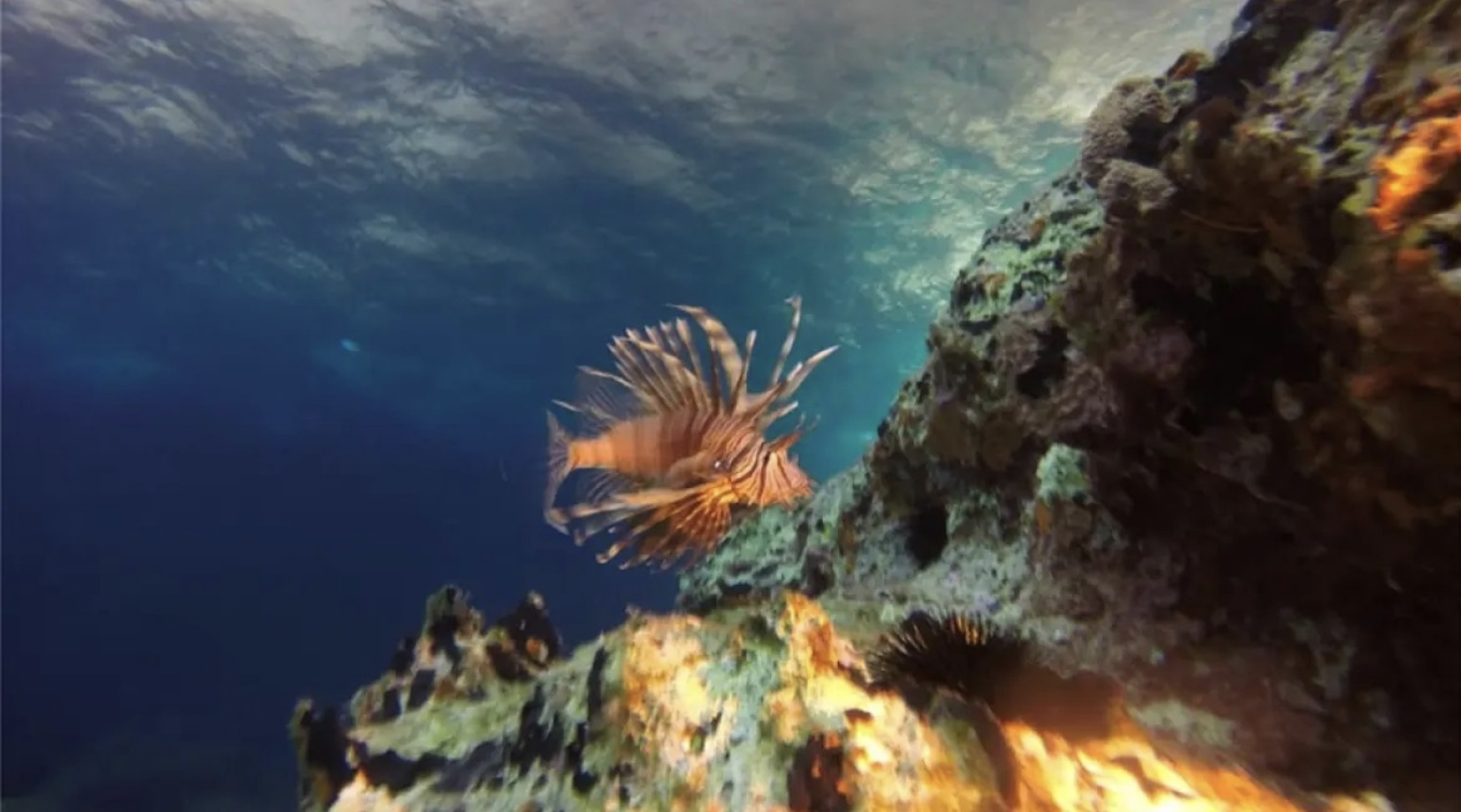
Lionfish in the Mediterranean: The solution is to catch it and eat it

The lionfish is spreading rapidly in the Mediterranean, threatening fisheries, biodiversity, and the balance of a unique ecosystem

Newsroom September 17 05:55

In Greece, we have a habit: to deal with problems only when they have already reached uncontrollable proportions – usually because we already have enough problems. In the case of the lionfish, by the time we realize the magnitude of the danger, it will already be too late.

A Growing Threat

The invasion of the lionfish in the Mediterranean began in 2013, when it was first recorded off the coast of Cyprus. This species entered via the Suez Canal, taking advantage of the opening of the waterway between the Red Sea and the Mediterranean. Rising water temperatures have allowed the lionfish not only to survive but also to establish a permanent presence in the eastern and southeastern parts of the basin.

Today, its population is growing exponentially, seriously threatening fisheries, biodiversity, and the ecological balance of this unique marine ecosystem. The lionfish is impressive in appearance but destructive in behavior. In areas where it has settled, it sweeps everything in its path.

Destructive Behavior and Rapid Reproduction

And that’s not all: a female lionfish can lay up to 42,000 eggs per week – over 2,200,000 eggs per year. If its spread continues at this rate, in five years we could have up to 30% fewer fish in the Mediterranean than today.

The Importance of the Mediterranean

The Mediterranean is not just another sea. It is the largest enclosed marine ecosystem on the planet and hosts more than 11,000 animal species, of which 9% of the approximately 540 native fish species are endemic – meaning they exist nowhere else in the world. Every loss here is global.

The hope that local fauna will adapt is probably utopian. Even removing them is not easy. Their spines remain dangerous even after death, as the venom remains active. A simple puncture can cause intense pain and swelling due to the release of venom from specialized glands located in the dorsal spines.

Human Consumption as a Solution

>Related articles

Emergency Weather Bulletin: Prolonged heavy rainfall, thunderstorms & hail from tomorrow, Sunday

Mitsotakis on the 30th anniversary of the Imia crisis: There are no “grey zones” in the Aegean; once again we bow to the fallen

Imia Crisis 30 Years On: What brought down the helicopter? What really happened after the “no ships – no troops – no flags” decision? (video)

However, there is a way out: human consumption. Lionfish are tasty, nutritionally valuable, and not poisonous – only their spines contain venom. In areas where programs promoting lionfish consumption have been implemented, a partial reduction in their populations has been observed.

Unfortunately, misinformation remains strong. Many fishing communities avoid catching them because they believe the fish are entirely venomous, allowing lionfish to continue their destruction unchecked, while targeting species that are ecologically valuable.

If we want to protect our sea and our traditions, we must act now. Awareness, targeted fishing, commercial utilization. The lionfish will not disappear. But we can control it – if we truly want to.

Ask me anything

Explore related questions

#greece#lionfish#mediterranean#Red Sea#Suez Canal
> More Environment

Follow en.protothema.gr on Google News and be the first to know all the news

See all the latest News from Greece and the World, the moment they happen, at en.protothema.gr

> Latest Stories

Emergency Weather Bulletin: Prolonged heavy rainfall, thunderstorms & hail from tomorrow, Sunday

January 31, 2026

Mitsotakis on the 30th anniversary of the Imia crisis: There are no “grey zones” in the Aegean; once again we bow to the fallen

January 31, 2026

Imia Crisis 30 Years On: What brought down the helicopter? What really happened after the “no ships – no troops – no flags” decision? (video)

January 31, 2026

Horror in a basement in Thessaloniki: He strangled 46-year-old Maria and threw her in the trash, hid the body of 43-year-old Vicky

January 31, 2026

New Epstein documents: Photos show Prince Andrew over a woman lying on the floor (photos)

January 31, 2026

Historic opportunity for Greek agri-food products from the EU–India agreement – Tariffs on olive oil reduced to zero

January 31, 2026

Hellenic Police on Laura’s disappearance: It appears she had already landed in Germany when her disappearance was reported

January 31, 2026

USA: Gold and silver prices plummet after Kevin Wears is chosen to lead the Fed

January 30, 2026
All News

> World

New Epstein documents: Photos show Prince Andrew over a woman lying on the floor (photos)

U.S. authorities have released more than three million documents, with new references and email correspondence that bring back into focus the relationship between the former Duke of York and Jeffrey Epstein

January 31, 2026

More than 3.5 million Epstein case documents made public: Andrew’s email about a “beautiful” 26-year-old Russian woman, 3,200 references to Trump

January 30, 2026

Syria: ‘Closed security zone’ declared in Al Hall camp, where relatives of Islamic State members live

January 30, 2026

Luigi Manzione does not face the death penalty for the murder of UnitedHealthcare CEO

January 30, 2026

Minneapolis: The 37-year-old man killed by ICE had fought with agents of the same agency 11 days earlier

January 30, 2026
Homepage
PERSONAL DATA PROTECTION POLICY COOKIES POLICY TERM OF USE
Powered by Cloudevo
Copyright © 2026 Πρώτο Θέμα



