


×
GreekEnglish

×
  • Politics
  • Diaspora
  • World
  • Lifestyle
  • Travel
  • Culture
  • Sports
  • Cooking
Saturday
17
Jan 2026
weather symbol
Athens 9°C
  • Home
  • Politics
  • Economy
  • World
  • Diaspora
  • Lifestyle
  • Travel
  • Culture
  • Sports
  • Mediterranean Cooking
  • Weather
Contact follow Protothema:
Powered by Cloudevo
> Greece

Nomikou to Protothema: Which Greek regions must be “Tsunami Ready” – The Red Zones & active seismic areas

Professor of Geological Oceanography at the University of Athens speaks to Direct – What happened in Santorini in February and how the earthquakes stopped – “Greece is a paradise for foreigners to study phenomena; it’s the supermarket of natural disasters”

Newsroom September 19 09:40

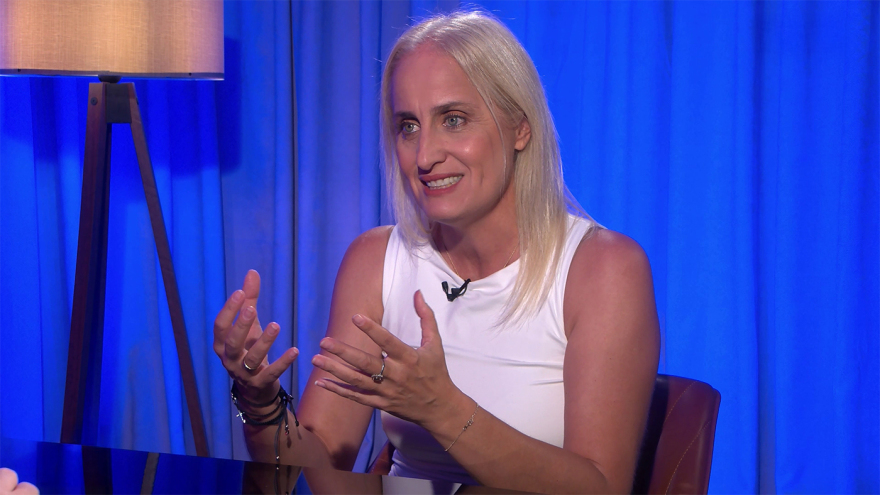
Evi Nomikou, Professor of Geological Oceanography at the University of Athens, spoke to Direct and Giorgos Evgenidis about the most “red” seismic zones shown on the map of Greece, as well as the areas that need to be “tsunami ready.”

The professor referred to the Santorini earthquakes, describing February as a “difficult month” while scientists tried to explain this rare geological phenomenon. “Kolumbo is a very active area because there are active faults nearby. When you have many tremors, you start to worry as a geologist.”

She noted that the scientific team has studied the area for more than twenty years and “has fully analyzed what is happening.” Explaining the findings, she said: “The magma chamber has been affected, which activated the faults. It’s a combination of magma and tectonics. In Greece, we have active volcanoes, and the most active is Santorini, which erupts every 70 years. But we are not talking about a destructive eruption.”
nomikoy-1

She clarified that the discussion concerns only Kolumbo and not Nea Kameni, emphasizing that “there has never been any mention of a possible eruption there.” She also stressed the need for better funding of marine research: “In December, we will retrieve the equipment to process the data and then redeploy it. The underwater seismographs are the only witnesses that hear the pulses of the volcano.”

The professor explained that the seismic tremors were caused by rising magma and rock fracturing: “This fracturing is the earthquake. The magma stopped rising at the end of March, and that’s when the earthquakes stopped.”

She pointed out that the map of Greece shows the red areas—the most active seismic zones. “If we also include the volcanoes, for example in Santorini, the zones are even more active. Conversely, if we move further north to the Cyclades, they are aseismic; we do not expect earthquakes there.”

Referring to tsunami examples, she said the phenomenon is also a concern for Greece and mentioned the areas where residents must know that in the event of a major earthquake, they should move away from the coast: “Areas like Samos, Rhodes, and Kalamata must be ‘tsunami ready.’”

>Related articles

President of Air Traffic Controllers: Another communications blackout possible in the near future

X is down, thousands report problems

Less alcohol and lower speeds with the new Highway Code and strict fines

She also mentioned the high cost of international research: “The German ship cost €100,000 per day, paid by Germany. Greece is a paradise to study these phenomena; it’s the supermarket of natural disasters. But it also requires investment from the Greek state.”

Finally, she referred to the Geopark of Nisyros: “Nisyros is a volcanology museum. For the first time, marine areas are included. Geopark means that residents protect the environment, and the island becomes a hub for higher-quality tourism. Large infrastructure is not needed—just protection.”


nomikoy-2
nomikoy-3


Ask me anything

Explore related questions

#earthquakes#Evi Nomikou#greece#interview#Nisyros#santorini#seismology#tsunami
> More Greece

Follow en.protothema.gr on Google News and be the first to know all the news

See all the latest News from Greece and the World, the moment they happen, at en.protothema.gr

> Latest Stories

New tensions in the Middle East as Trump invites regional leaders to the Gaza Peace Council

January 17, 2026

Weather: A return to winter in the coming days – Cold and strong northerly winds – Kolydas’ post

January 17, 2026

A view of Nikolaos Stasinopoulos of Viohalco – The “enduring imprint” of Greece’s greatest industrialist

January 17, 2026

The horror of the “Tariff of the Dead”: how the Iranian regime prices the bodies of protesters

January 17, 2026

Mitsotakis on the Karystianou party: “There is a long distance between being the parent of a tragedy victim and being the leader of a political party”

January 17, 2026

Patras in carnival mode – This evening, the city’s official opening ceremony

January 17, 2026

Greenland as the first line ofdefense for the U.S. and NATO:

January 17, 2026

Changes at top universities: Oxford abolishes the term ‘doctores’ for inclusion reasons

January 17, 2026
All News

> Greece

Weather: A return to winter in the coming days – Cold and strong northerly winds – Kolydas’ post

Winter tightens Its grip across Greece as cold spell persists

January 17, 2026

A view of Nikolaos Stasinopoulos of Viohalco – The “enduring imprint” of Greece’s greatest industrialist

January 17, 2026

Patras in carnival mode – This evening, the city’s official opening ceremony

January 17, 2026

Weather: Noticeable drop in temperature from today – Where it will snow and at which altitudes

January 17, 2026

President of Air Traffic Controllers: Another communications blackout possible in the near future

January 16, 2026
Homepage
PERSONAL DATA PROTECTION POLICY COOKIES POLICY TERM OF USE
Powered by Cloudevo
Copyright © 2026 Πρώτο Θέμα



