





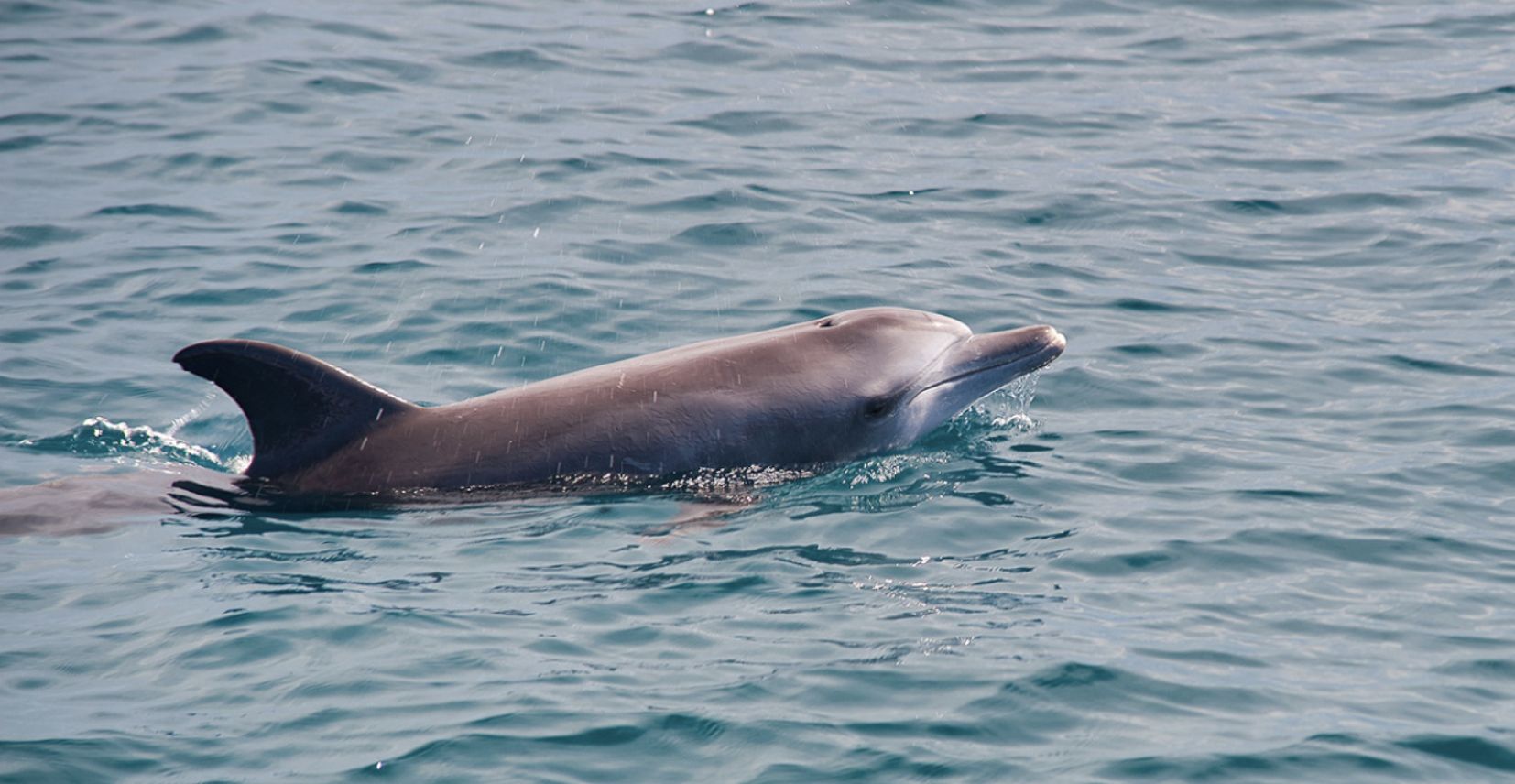
A rare and heartbreaking wildlife incident has been unfolding in recent days in the Ambracian Gulf.
According to an announcement by the ARION Research Center for the Rescue and Rehabilitation of Cetaceans, a female bottlenose dolphin (Tursiops truncatus) has refused to abandon her dead newborn calf, remaining beside it and displaying intense protective and grieving behavior.
According to testimonies from maritime professionals in the Ambracian Gulf area, as well as collaborators of the Marine Mammal Monitoring Unit of the Department of Ichthyology and Aquatic Environment at the University of Thessaly — including Giannis Giovanos of Amvrakikos Cruises — any human approach causes severe stress to the mother dolphin, who attempts to move her calf away from people and vessels.
In a related statement, authorities strongly urged citizens, visitors, recreational boats, fishermen, and anyone involved in marine activities in the area not to approach the dolphin and to maintain a large safety distance.
The statement emphasized that human disturbance could seriously affect the natural grieving process, cause extreme stress, lead to unpredictable or aggressive behavior by the dolphin, and potentially result in legal consequences, as marine mammals are strictly protected under international, European, and national legislation.
At the same time, avoiding contact is also necessary for human safety reasons, as dolphins experiencing intense stress or protective behavior may react unpredictably to the presence of humans or boats.
Speaking to the Athens-Macedonian News Agency, Elena Akritopoulou, a representative of the ARION Research Center for the Rescue and Rehabilitation of Cetaceans, explained that mourning in cetaceans is a documented and highly complex social behavior.
“Mother dolphins and whales have been observed internationally remaining beside their dead calves for days, weeks, or even months, carrying them or staying close to them before eventually abandoning them,” she noted.
Akritopoulou added that, based on current data, this may be the first documented case of cetacean mourning behavior ever recorded in Greece.
The bottlenose dolphin population of the Ambracian Gulf is considered one of the Mediterranean’s most important and unique populations, with high ecological value for the marine biodiversity of Greece and the Eastern Mediterranean.
The ARION Research Center for the Rescue and Rehabilitation of Cetaceans is scientifically monitoring the incident and informing international organizations and cross-border marine mammal protection agreements. In its announcement, the Center stressed that “respecting the animal’s peace is an act of civilization, empathy, and meaningful wildlife protection.”
Ask me anything
Explore related questions




