





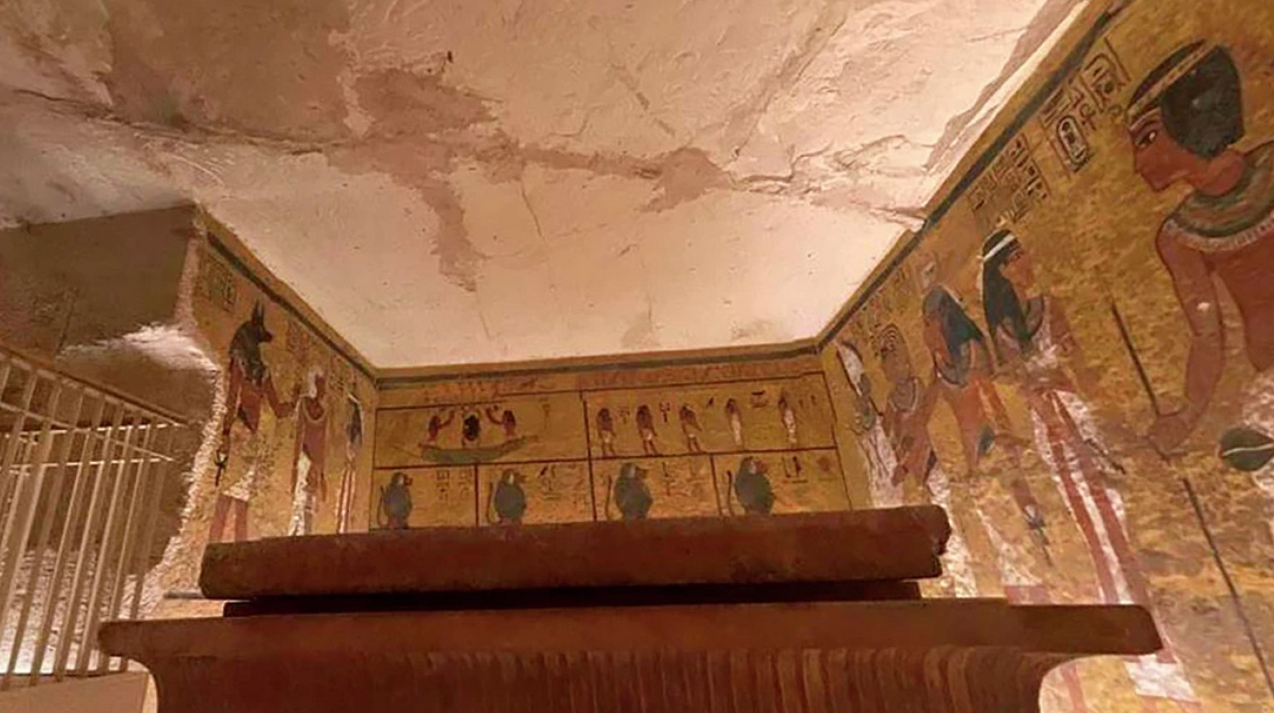
When Tutankhamun’s tomb was discovered by Howard Carter in 1922, it was considered the most significant archaeological discovery of the 20th century.
However, archaeologists warn that the 3,300-year-old tomb is at risk of collapsing. Researchers have found large cracks running through the rock that could trigger the tomb’s collapse. Additionally, increasing moisture is causing pieces of the surface to detach and encouraging the growth of fungi that damage the murals.
In a study published in Nature, researchers from Cairo University found that the tomb has developed a crack running along the roof of the entrance and burial chamber. This extensive network of cracks allows rainwater to seep in from above, causing erosion.
Since the tomb is made of Esna shale, which expands and contracts with changes in humidity, the spread of moisture means that collapse is now a serious risk, according to the Daily Mail.
Sayed Hamada, author of the study and Professor of Architectural Heritage Conservation at Cairo University, told the Daily Mail: “Royal tombs in the Valley of the Kings require urgent intervention and precise scientific studies to analyze risks and how to mitigate them.”
The Valley of the Kings, located west of Luxor, houses dozens of royal tombs, of which Tutankhamun’s is one of the smaller ones. Although they have withstood thousands of years, they are vulnerable to flooding.
Professor Hamada explains: “These tombs were dug into the foothills of the valley mountains, which exposed them—and will continue to expose them—to the risk of sudden floods caused by heavy rains, especially when these carry debris, rocks, and soil along the way.”
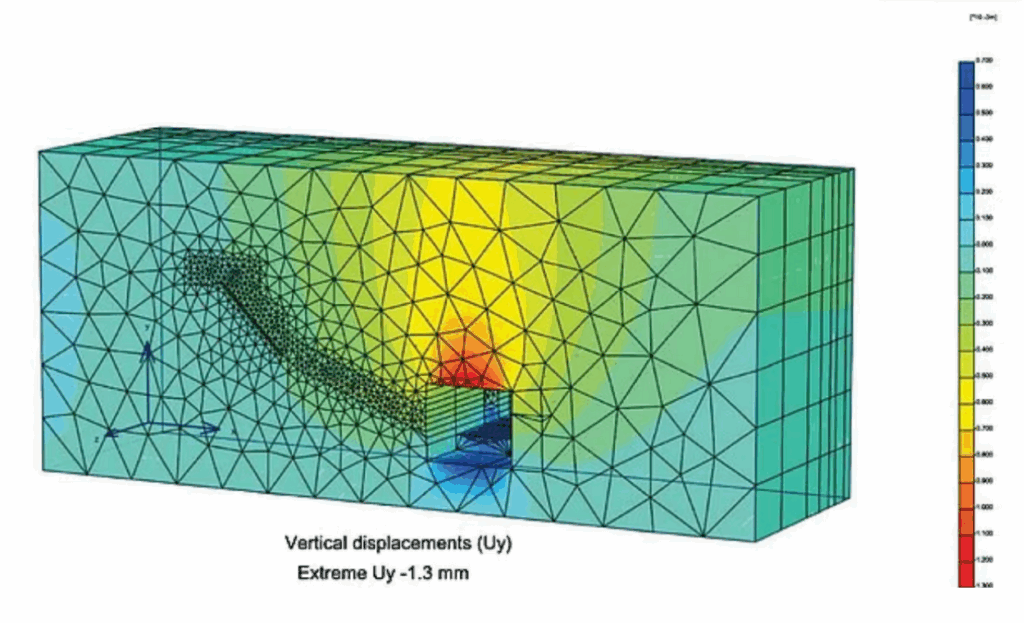
The worst of these floods occurred in October 1994, when most of the tombs in the Valley of the Kings were submerged. Professor Hamada says this flood was a turning point for the structural integrity of Tutankhamun’s tomb.
The muddy waters flooded the burial chamber, opening new cracks, raising humidity levels, and promoting fungal growth that has caused severe damage to the murals.
In his study, Professor Hamada noted that the growing crack “allowed rainwater to penetrate and worsened the cracks, putting pressure on the roof that exceeded the strength of the Esna shale rock, especially given its tendency to expand and contract with humidity fluctuations.”
Although Professor Hamada states that the tomb “will certainly not collapse soon,” this damage means it may not last as long as it potentially could. “There are current and future risks threatening the necropolis, which will affect its structural integrity in the long term and may prevent it from lasting thousands of years as originally built,” he says.
However, despite the risk of another flood at any time, researchers warn that little is being done to address this possibility.
Professor of Architectural Conservation at the Cairo University School of Archaeology Mohamed Atia Hawash told Independent Arabia that the surrounding mountains have extensive cracks. These cracks carry the risk of large rock pieces detaching and falling onto the tombs.
“A disaster could happen at any time, and if we want to preserve the Valley of the Kings, measures must be taken before it is too late,” he says.
Ask me anything
Explore related questions




