





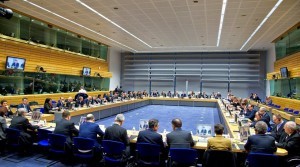
The Ministry of Finance is examining alternative scenarios for Greek reforms following the Euro Working Group teleconference between Greek and European technical experts on Wednesday. The discussion covered a number of issues including Greece’s request that the European Financial Stability Fund return 1.2 billion euros to Greece that is being reviewed by the ESM. The groups also discussed liquidity, the country’s fiscal course and reforms.
Reforms being considered are in favor of vulnerable groups of society. In this framework, the government is planning an increase to the tax-free threshold for minimum wages as well as tax exemptions for people living below the poverty line. Middle and high income earners will bear the brunt of the government’s reforms with VAT increases for luxury items.
Athens is expected to have a list of measures ready by this weekend. These will be discussed at another Euro Working Group teleconference aimed at paving the way for an emergency Eurogroup meeting so that the 7.2 billion euros benchmarked for Greece can slowly be released.
The people who hold Greece’s future in their hands
George Houliarakis, a highly-respected economics lecturer who heads the Body of Sworn-in Valuer (SOE), is a key figure in the negotiations as it will be his job to convince the three institutions that Greece owes debt to that the government’s proposals are enough to get the country back on track. Meanwhile, teams headed by Finance Minister Yanis Varoufakis, Deputy Finance Minister Nadia Valavani, Alternate Revenue of Greece Minister Dimitris Mardas and Deputy Prime Minister Giannis Dragasakis are working on creating a convincing package of reforms.
The new list of reforms being considered
1. A higher tax-free threshold, possibly around 15,000 euros per annum, that would allow income earnings from 1,000 to 1,200 euros per month to remain untaxed. If this measure is applied, then around two out of three households would no be required to pay taxes. The cost of the measure would be at 250-300 mln euros. The proposal is based on the premise that low income wage earners are unable to pay income and property taxes.
2. The transfer of some goods and services from medium to high VAT (from 13% to 23%). Basic goods, such as bread and milk will not be affected, nor will hotel taxes be increased. Nonetheless, the luxury items are expected to bring 300-500 mln euros per annum in additional revenue. Items such as flowers, sugar substitutes etc. are some of the secondary items that may end up having their VAT increased.
3. A new tax index for high (and some medium) incomes. The gaping fiscal hole will be covered with taxes from 45-50% placed on high incomes. A plan tax for new emergency taxes on liquor, and possibly, tobacco, are ready for consideration.
Ask me anything
Explore related questions




