





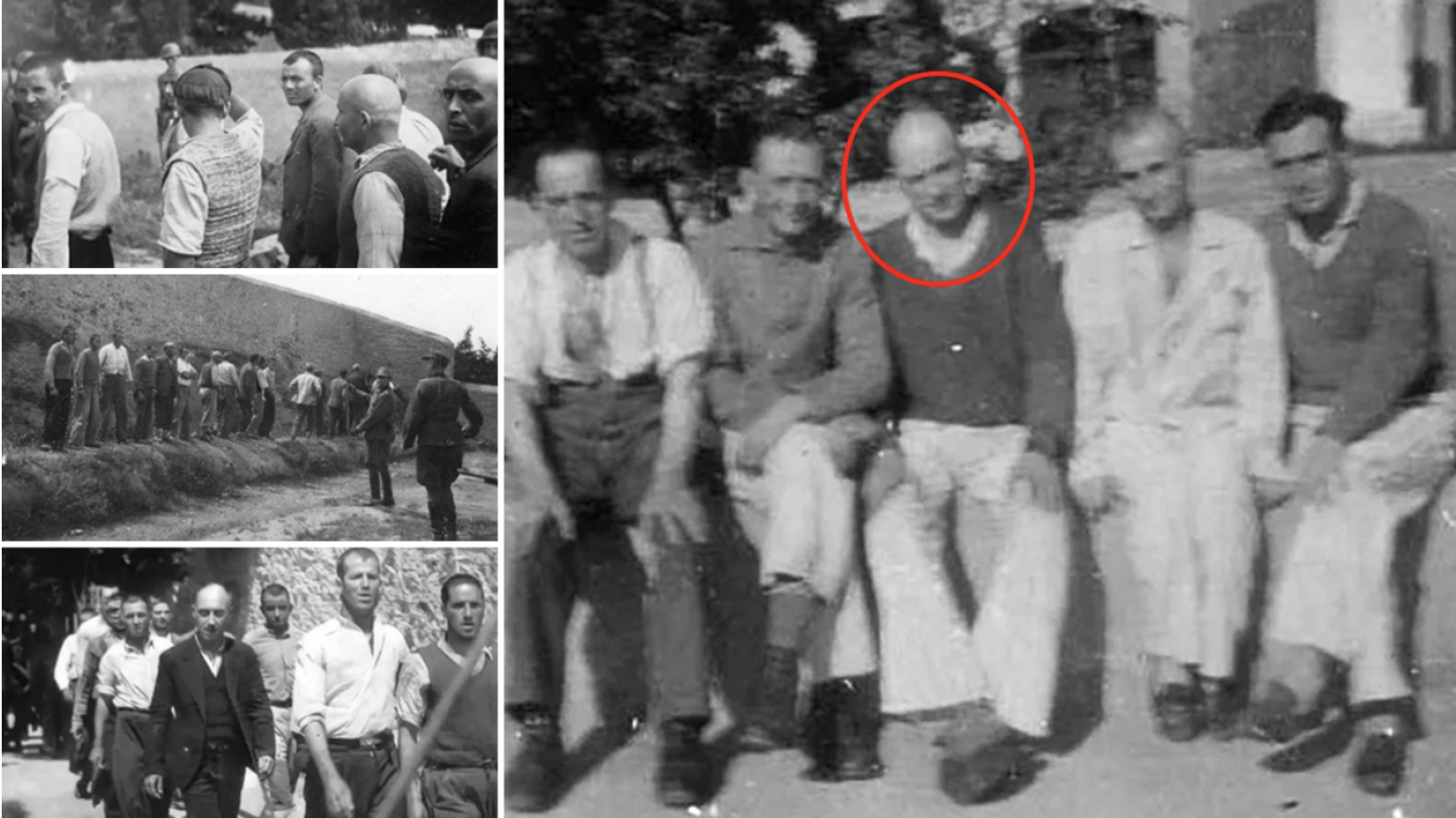
It is 1944. At the Arsakeio of Psychiko—requisitioned by the occupying forces and operating as a military hospital—five Germans pose for a commemorative photograph. At the center stands the owner of the camera, Sergeant Hermann Hoyer, who certainly could not have imagined that 82 years later some of the images he captured would send shivers of emotion and become the subject of negotiations.
It is the film with 262 photographs, which include—for the first time in history—images of the execution of 200 Greek communists (and others) in Kaisariani on May Day 1944. Hoyer’s album, which contains these historic images, includes many photographs from the period 1943–44. After being deemed authentic by the Ministry of Culture’s committee of experts—who traveled to Belgium and to the town hall of Evergem—the album is coming to Greece, as the Belgian collector reached an agreement with the ministry in negotiations personally handled by Minister Lina Mendoni.
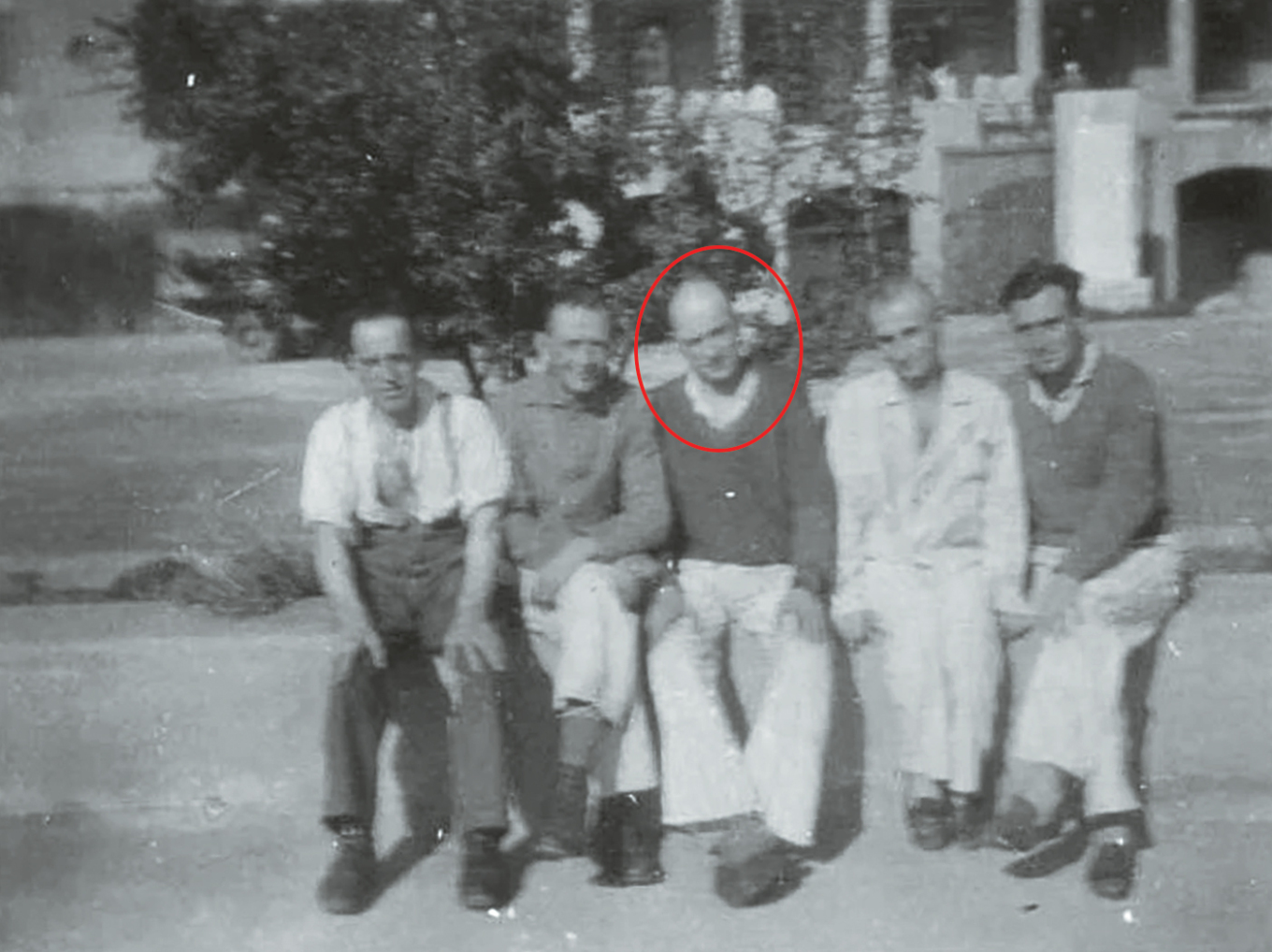
German Sergeant Hermann Hoyer, at the center of the photograph, during his hospitalization at the Nazi-requisitioned Arsakeio of Psychiko, which at the time was used as a military hospital.
A preliminary agreement was signed with the Belgian collector Tim de Kren, who says he is “happy and relieved” that the collection is coming to the Greek state. The total cost of acquiring the photographs is estimated at €100,000, and the process is expected to be completed in the coming weeks.
The documents
In the historical document presented today by THEMA from the uploaded material of Belgian collector Tim de Kren—who is also the legal owner of the film with the 200 executed in Kaisariani—researcher and collector Alexios G. Katefidis helps identify and present for the first time the person who captured proof of the crime.
It is Sergeant of Battalion 1012, Hermann Hoyer, from Birkenfeld, Germany, who with a camera in hand filled film with images from the places he passed through as an occupier—such as the Isthmus of Corinth, Patras, and Chaidari—while also documenting historical evidence.
From the reception of Wehrmacht Major General Franz Krech by seaplane to the ambush that cost him his life—as well as that of four escorting soldiers—to their funeral in Athens (with images of coffins draped in the flag of the Third Reich), to the order for “reprisals,” the related publications, and the execution of the 200 patriots in Kaisariani.
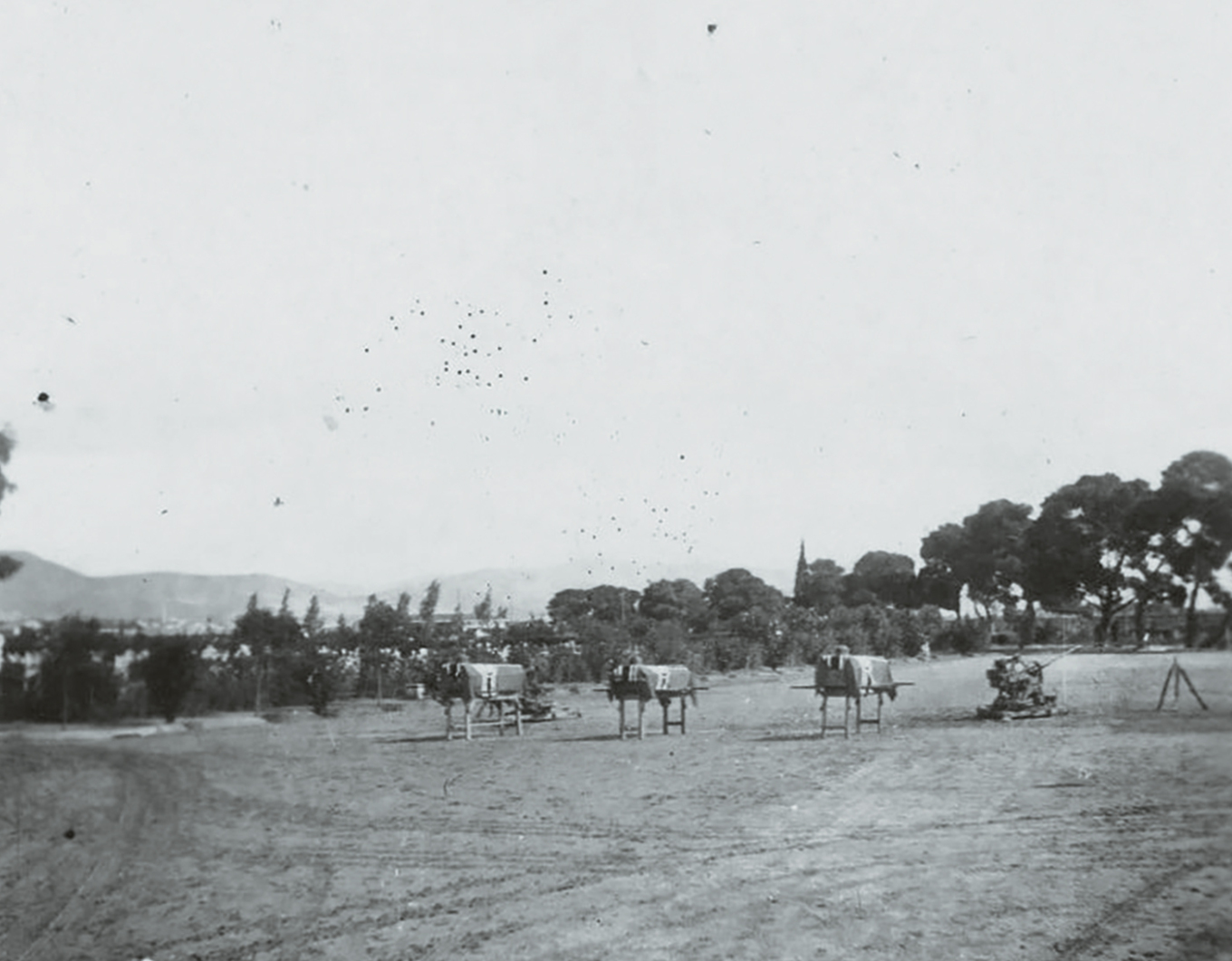
Sergeant Hoyer also captured moments from the funeral of German Major General Franz Krech. Krech was executed by partisans as soon as he set foot in Molai and was buried in Athens.
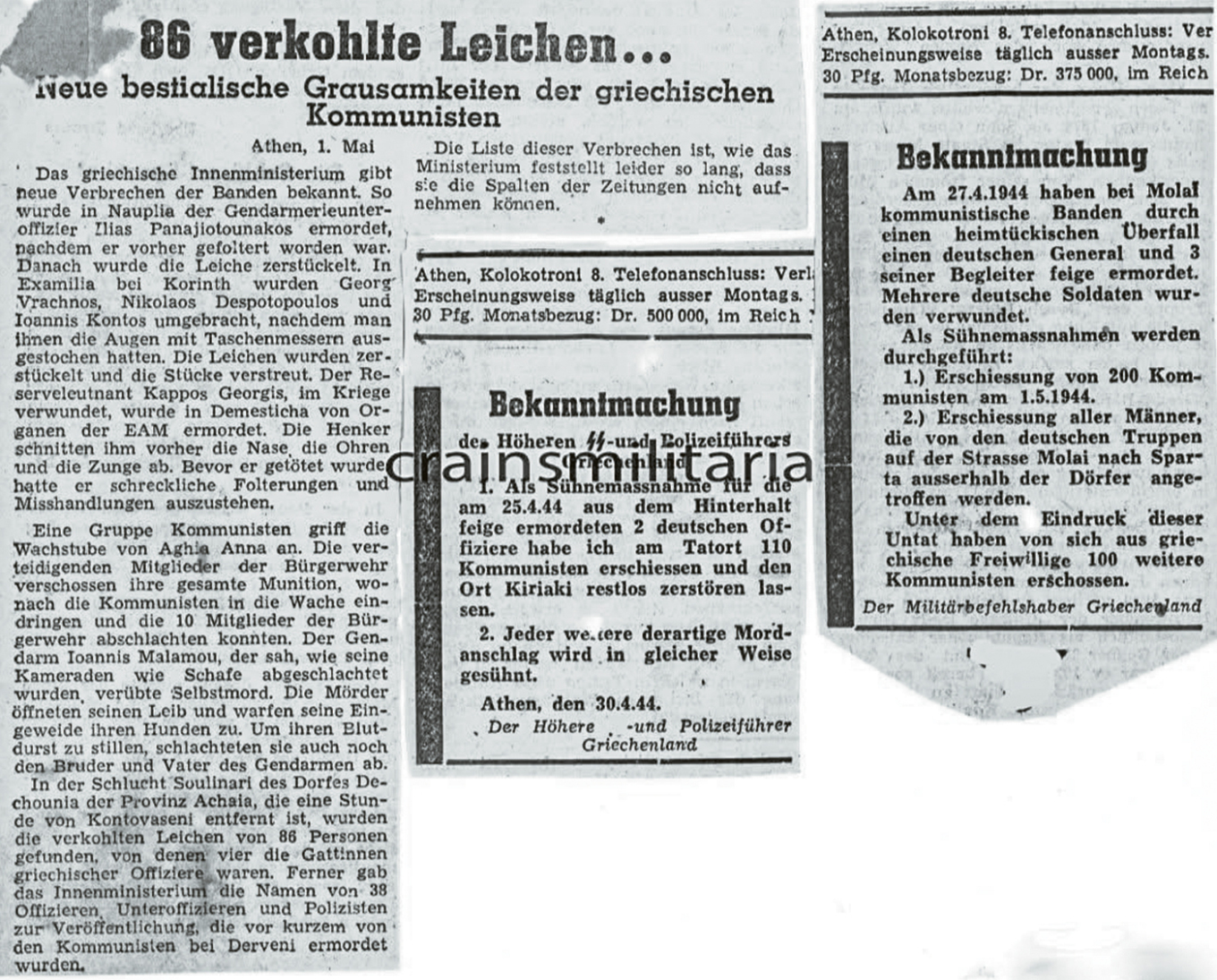
A German newspaper article announcing the execution of the 200 in Kaisariani.
As Mr. Katefidis explains to THEMA, this photograph comes from a brief period during which Hoyer, it appears, was hospitalized at Arsakeio. The German sergeant—initially confused with Captain Hermann Otto Hoyer—took 262 surviving photographs with his small camera, likely a Leica: some from Arsakeio, many from Battalion/Garrison 1012 or 1012 Festungs-Bataillon based in Malakasa (which largely consisted of “undesirables”), from Isthmia, and from all the places he passed through.
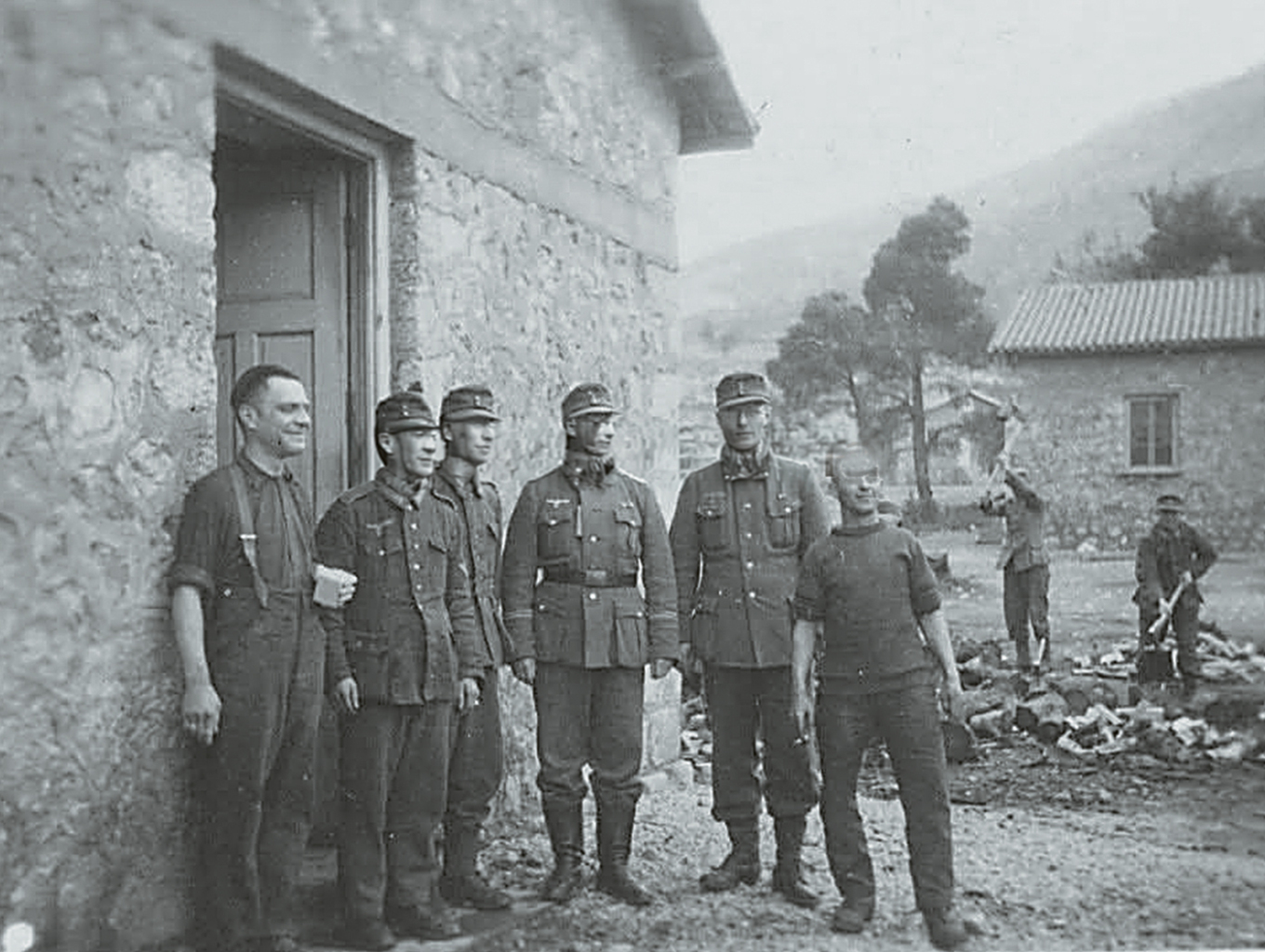
Wehrmacht soldiers at the Malakasa unit.
According to Hoyer’s biography—derived from his Soldbuch (military service book), held by the seller—the sergeant fought with this rank and as a platoon leader from 1939 and the German invasion of Poland. He saw extensive action, serving on the Siegfried Line and in the campaigns in the Netherlands, Belgium, and France.
A period of inactivity followed, as he was demobilized in the summer of 1940 and returned to action after being mobilized in September 1943. By the end of that year he participated in the campaign in Yugoslavia and in the Occupation Army in Greece. He left Greece and the Balkans in September 1944, by which time he had photographed, among other things, the Isthmus of Corinth just one month before the Germans blew it up while withdrawing from Greece. According to the seller, the sergeant survived the war.
What have we not yet seen—and may never see? The so-called “aftermath”: the patriots being shot and their bodies lying dead afterward. It is considered certain that Hoyer photographed these chilling scenes, printed them, and mounted them in the commemorative album German soldiers commonly assembled.
“The Germans,” Mr. Katefidis tells THEMA, drawing on his vast experience with circulating historical photographs, “used to document everything at the operational and strategic level.” That is why we have seen—and continue to see—historical evidence of war crimes.
Thus, it is assumed that the album that ended up in De Kren’s hands originally included photographs of the crime. It is possible that Hoyer himself, realizing these were proof of grave war crimes, removed and destroyed them—or that someone among the “intermediaries” did so before they reached De Kren: a relative or an auction house from which, THEMA learns, Crain’s Militaria purchased this album along with other Hoyer items.
Another possibility is that De Kren has already sold those specific photographs or is withholding them, knowing that evidence of war crimes cannot be sold. The last scenario—keeping them hidden to sell later—seems increasingly unlikely, with testimonies from collectors and researchers attesting to his professionalism. “He has around 27,000 photographs. He’s not a random person; he’s a serious professional,” Mr. Katefidis explains.
Thousands of photos that speak
For those wondering about the commotion over the 12 photographs of the execution of Greek communists in Kaisariani, the significance is not that we are seeing some among thousands of images from the War and the Occupation. It is that this is a unique document showing the faces of the executed moments before the firing squad—images for which no other visual evidence existed beyond descriptions.
Just imagine the emotion—the tears—that seeing one’s ancestor, a grandfather or great-grandfather, standing proud before the firing squad can provoke. It is the faces that caused this “earthquake.”
Are there others?
Thousands, is the answer. At first glance it may sound exaggerated, but it isn’t. On eBay alone, more than 2,500 photographs relating to Greece during the invasion and Occupation are currently for sale. There are dozens of other platforms—such as PicClick and Jp-militaria in Germany—as well as auctioneers’, antique dealers’, and antiquarians’ websites in Belgium, Germany, and elsewhere inside and outside Europe.
There are hundreds of thousands, if not millions, of photographs from World War II, and tens of thousands relating to Greece. Prices range from €3 to over €30.
“It’s a matter of culture, strange as it may seem,” says Mr. Katefidis, explaining that in German culture it has long been a pastime to share details—slides until recently, now fully replaced by digital media—from holidays and travels inside and outside Germany.
Why, then, keep photographs of executions and the executed? In some—perhaps most—cases, it was a perversion that needs no analysis. In others, they were kept as precious evidence to be passed on to future generations. In still others, owners viewed them coldly, as records of experiences and adventures during the campaign.
There has been, is, and will be an abundance of such documents—some shocking, recording horrific crimes against humanity committed by the Nazis in Greece; others, as Mr. Katefidis notes, of historical significance for different reasons. From time to time, such striking documents of Greek history have surfaced for sale—most saved by this small community of specialists.
From the broader Meteora region, the author’s place of origin, there exists a color photograph taken on color film and printed on such paper in 1941, says Mr. Katefidis. It is a Luftwaffe photograph—of global historical importance—one of the very few color images of that decade worldwide, showing the propaganda technology the Nazis employed.
Over the years, other shocking photographic records from the dark, blood-soaked pages of the German, Italian, and Bulgarian invasion of Greece have also come to light. A few years ago, Greek collectors quietly acquired photographs from the only demonstration in Athens in 1943 against the expansion of Bulgarian occupation.
Other documentary photographs awaiting discovery come from massacres in Agrinio, Florina, Distomo, and Lemnos. There are dozens more from the German advance in Crete and the Viannos massacre—and beyond: Kondomari, Kerdyllia, Domeniko (Larissa, by Italian Blackshirts), Kleisoura, Kefalonia, Katranitsa, Thessaloniki, Thessaly—holocausts across Greece.
Relatives of victims desperately seek an image of their loved ones, often in vain. As in the Holocaust of Vasiliki, where Germans not only executed 33 brave patriots but razed the village, burning every photograph and all civil and other records. To this day, no photograph from that fateful day has surfaced.
In other cases, fortune—if one can call it that—suddenly smiles, as with the Kaisariani documents. These days, unpublished documents from the Civil War era have also emerged from another seller in Australia. From every corner of the world, documents surface, awaiting rescue or publication.
How are the photographs found?
Aside from those held in Germany’s Federal Archives—in Berlin, Freiburg, Koblenz, and elsewhere—most photographs and documents, Mr. Katefidis explains, come either from heirs of occupying soldiers or from companies that clear and renovate the homes of the deceased.
In the first case, heirs seek out antique dealers and collectors to sell personal belongings—including photo albums—rather than discard them. In the second, heirs who don’t wish to deal with it hire specialized companies in Germany to clear a relative’s home so it can be quickly rented; often, they know what is inside.
Auctions
In any case, these companies organize auctions for such items, typically sold in lots: albums, medals, uniforms, swords, cigarette packs, propaganda leaflets, and, of course, documents—such as the Soldbuch, which proves each soldier’s existence and service path. Antique dealers usually participate in these auctions, which is how the Kaisariani photos ended up in Belgium.
“Belgium is the capital of Europe’s antique dealers—its flea markets are world-famous,” Mr. Katefidis tells us. There are literally thousands of active dealers.
In Hoyer’s case, the owner of Crain’s Militaria won the auction for the sergeant’s items (he holds hundreds of such collections, often documenting Nazi war crimes in countries beyond Greece, and more than 70 collections from World War I).
That is: the 262 photographs, orders and newspapers of the period (including execution announcements), Hoyer’s Soldbuch, and other personal items—for an estimated €4,000–5,000. From the Soldbuch, researchers can indirectly verify authenticity: his service in the specific unit, its movement to Athens at the time, his hospitalization at Arsakeio (even noting suspicion he feigned illness), and his presence near the time of the Kaisariani executions.
Buyers can use the Soldbuch and other military records to contact competent German federal services to verify whether the details are genuine or forged.
Authenticity verification and documentation are crucial, complex, and difficult, as many fake photographs circulate internationally—especially where demand is high and copies (not original film) are easily accepted. A notorious case involves the 120 executed in Agrinio, where a doctored fake photo even reached a museum.
The best outcome is for documents to reach researchers and collectors committed to preserving history. Some are publicly posted by pages like Greece at WWII Archives on Facebook, by groups such as Aetolia and Acarnania Through Time, and on the personal accounts of collectors, researchers, and historians. A notable example is the discovery of the horrific photos of the hanging of 15 Greek patriots by the Nazis in Kladorachi, Florina, on 8 August 1943.
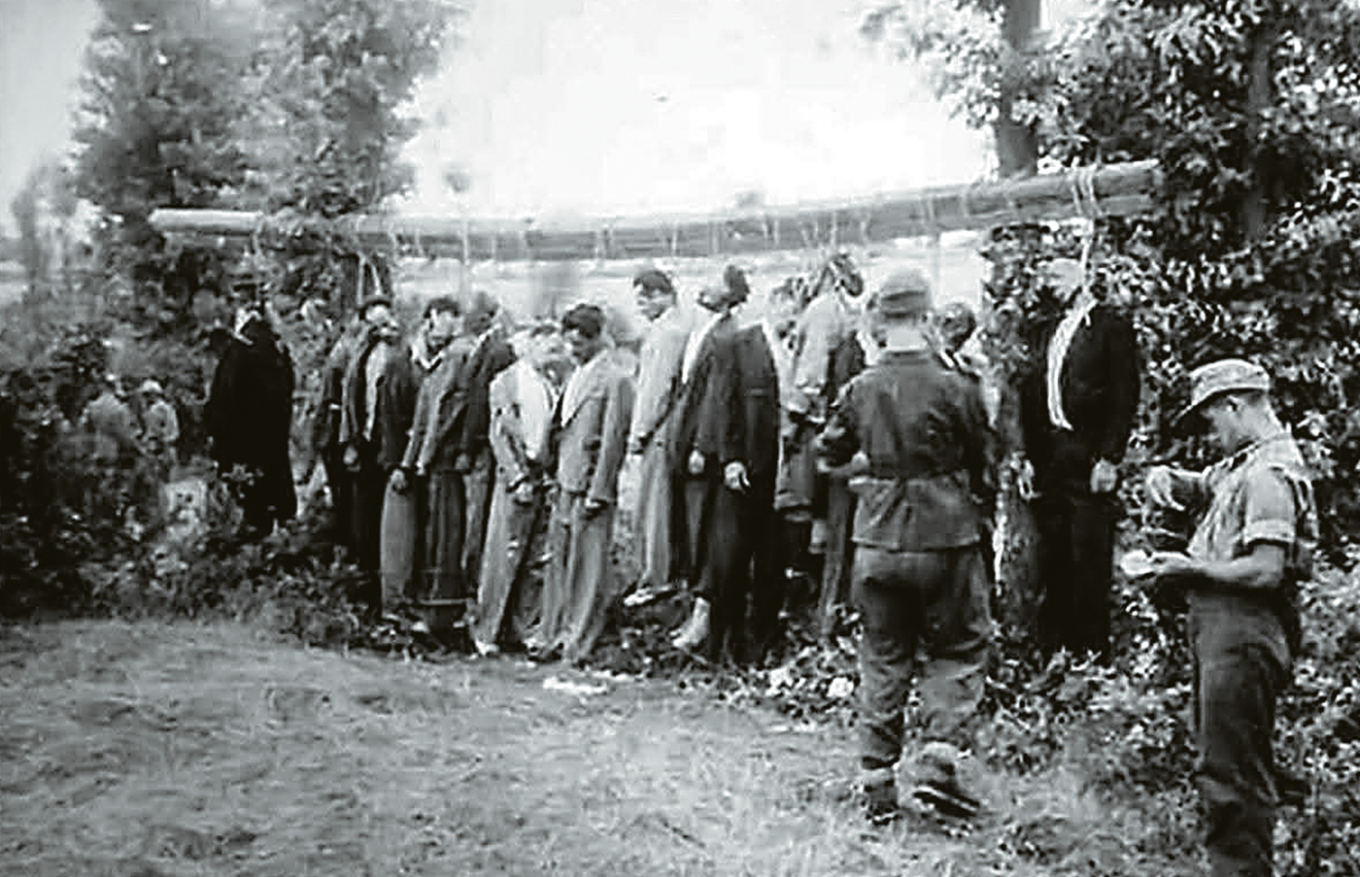
One of the thousands of photographs circulating online depicting Greek patriots hanged by the Nazis in Florina.
All 15 executed shown in the photos were identified. The album of the crime was completed in two stages: the first by EAM in 1946, and the second from a German archive that later provided the remaining images after a recent auction.
Researcher Manolis Kasimatis of Photographing, who posted the Florina photo series, says: “Because executions by German Nazis, Italian Fascists, and Bulgarian Fascists occurred across Greece and have been documented by researchers, the state must now take serious interest in all photographic and film material—along with all bodies, local, photographic, and political. Open the archives to researchers.”
The case of the 12 (or more) photographs from the execution of the 200 patriots in Kaisariani was not different from those described above. The difference is that it was identified by a Greek historian and published on his Facebook page—and that it gained wide publicity when posted on Greece at WWII Archives, which has broader reach.
From there, developments were dramatic. Coordinated bidding by Greek collectors multiplied as publicity grew, driving prices for each image auctioned by Crain’s Militaria on eBay to over €2,100, from a starting price of €36.50.
Identifications
As debate intensified over the commercial circulation of war-crime material, relatives of the executed began identifying their loved ones. The KKE, based on its research, identified Thrasivoulos Kalafatakis and Dimitris Papadopoulos. Relatives recognized Vasilis Papadimos and Ilias Rizos. Others followed.
Amid the publicity and political dimension, Belgian auctioneer/antique dealer Tim de Kren of Crain’s Militaria reacted swiftly. Though the auction was proceeding successfully, he halted it one week early.
In a brief statement—affirming ownership and opposing the unauthorized removal of his watermarks (which caused distortions and doubts about authenticity)—he said he was open to talks with Greek authorities.
In Greece, procedures unfolded as they should. First, the Ministry of Culture contacted him and set a meeting. Then, the photographs were declared a monument by the Central Council of Modern Monuments, and a meeting was arranged with the Ministry’s experts from the Directorate of Modern Cultural Heritage. The case was personally handled in all its aspects by Culture Minister Lina Mendoni. The rest is known…
Ask me anything
Explore related questions




