





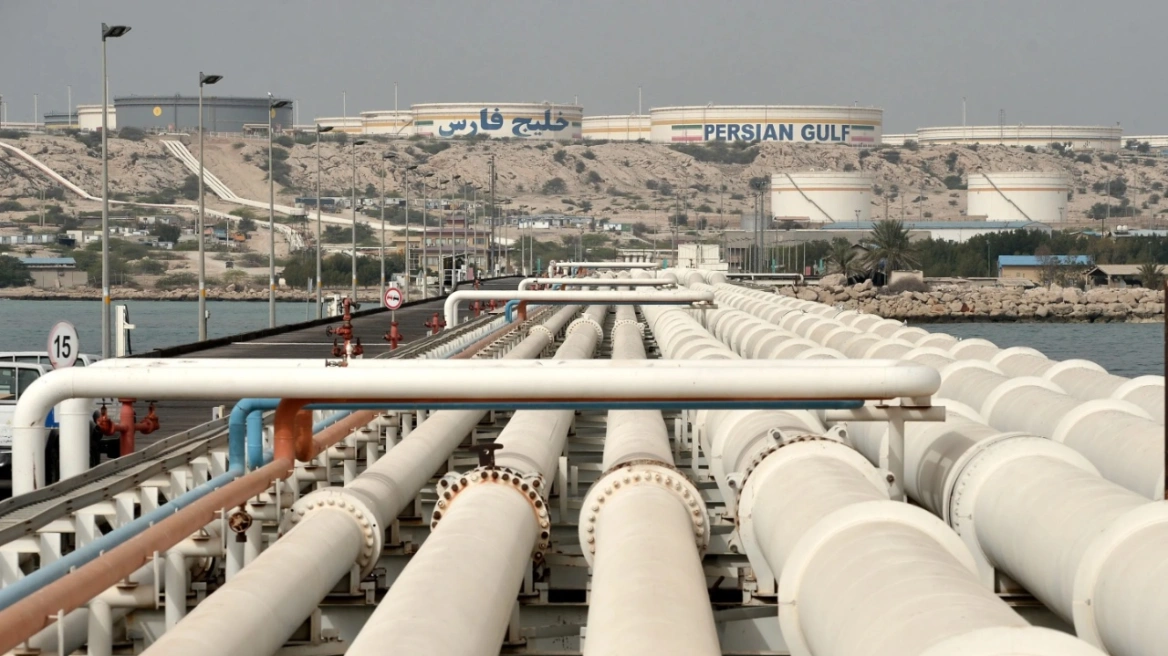
For more than 50 years, Gulf oil-producing nations have promoted themselves as stable and reliable suppliers of low-cost energy. However, the third war in the region—now in its fifth week—has overturned that image. With the Strait of Hormuz largely blocked, a significant portion of global oil supply cannot reach international markets, while Gulf states have reduced production and seen export revenues decline.
Iran, however, is following a different path. Despite U.S. and Israeli strikes that began on February 28, its tankers continue to operate in the region, and daily oil revenues have nearly doubled compared to pre-conflict levels. While the country faces intense pressure on the battlefield, it appears to be gaining ground in the energy sector.
Exports Estimated at Up to 2.8 Million Barrels per Day
Accurately assessing export volumes remains difficult, as Tehran increasingly relies on covert transportation methods. Satellite imagery of the region is no longer available from several commercial providers, while electronic interference creates an “information fog” in the Gulf.
A source familiar with the data told The Economist—on condition of anonymity—that Iran is currently exporting between 2.4 and 2.8 million barrels of oil and petroleum products per day, including 1.5 to 1.8 million barrels of crude. This is comparable to—or even higher than—last year’s average, but at significantly elevated prices.
Iran’s export system has adapted to withstand both military strikes and economic sanctions. A large share of revenues now flows to the Islamic Revolutionary Guard Corps (IRGC), while China plays a key role in sustaining financial flows. Much of Iran’s financial reserves are held in Asian markets, beyond the reach of Israeli attacks.
How the Export Network Operates
Iran’s oil trade relies on three main pillars: sales networks, transportation logistics, and a parallel financial system. Officially, exports are conducted through the state-owned National Iranian Oil Company (NIOC). In practice, however, various state and semi-state entities receive oil allocations to sell independently.
Government ministries, security services, and religious foundations all participate in the system, while around 20 powerful businessmen manage networks that convert oil into cash—many of them closely linked to the IRGC.
According to shipping analytics firm Vortexa, the IRGC is behind a significant portion of the recent export surge. Its Quds Force controls roughly 25% of Iran’s crude production. The decentralized structure of the network makes it highly resilient to disruption from military strikes.
During the war, the IRGC has also strengthened its grip on transportation. Companies tied to the Khatam al-Anbiya construction conglomerate coordinate much of the maritime logistics in cooperation with NIOC. These include firms such as Sahand, Sahara Thunder, Pasargad, Admiral, and Persian Gulf Petrochemical Company—many of which are under U.S. sanctions as front companies.
Iran has also increased security measures to protect oil shipments, with tanker cargoes valued at up to $150–200 million. On Kharg Island—through which about 90% of crude exports pass—emergency evacuation procedures have been introduced for vessels in case of attack. Smaller terminals such as Jask, Lavan, and Siri are also expanding storage and can partially take over export operations if needed.
As tankers approach the Strait of Hormuz, they receive special security codes from Iranian authorities. IRGC patrol boats often escort them through narrow coastal routes. According to maritime sources, some vessels are required to pay multi-million-dollar transit fees for safe passage.
Despite a recent U.S. decision to ease sanctions on approximately 150 million barrels of Iranian oil already at sea, tankers continue to employ concealment tactics, including falsified documents and deceptive tracking signals. Ship-to-ship transfers frequently take place in international waters near Malaysia or Singapore before cargo reaches its final destination.
China Remains the Key Buyer
China continues to be Iran’s primary customer, absorbing more than 90% of its exports. Most of the oil is delivered to around 100 small independent refineries in Shandong province, known as “teapot” refineries. Although officially independent from China’s major state energy firms, there are indications of cooperation through joint investment structures.
Before the war, Chinese buyers purchased Iranian oil at discounts of $18–24 per barrel compared to Brent crude. With reduced supply from other Gulf producers, the discount has narrowed to $7–12 per barrel. Meanwhile, Brent prices have surged, with Iranian forward contracts reaching $104 per barrel—around 75% higher than pre-war levels.
A Shadow Financial System
The financial network underpinning these transactions relies on trust accounts in small Chinese banks or in Hong Kong, often under the names of shell companies. Funds are transferred through multiple intermediary accounts across various countries, enabling Iran to finance imports and channel money into global markets.
Evidence shows that companies involved in moving oil revenues have conducted transactions with plastic industries in India, Kazakhstan, and Turkey.
This network effectively operates as an informal banking system, controlled by entities linked to Iran’s Defense Ministry or the IRGC. Its vast scale—spanning thousands of accounts—helps absorb the shocks of sanctions and military pressure.
However, the system’s complexity also makes it difficult to fully control, even for Iran’s central bank, increasing the risk of financial losses through intermediaries. Nevertheless, Iran’s energy machine continues to function and is unlikely to be significantly curtailed unless major strikes target its core energy infrastructure—an escalation that could trigger retaliatory attacks on facilities across the Gulf.
Ask me anything
Explore related questions




