





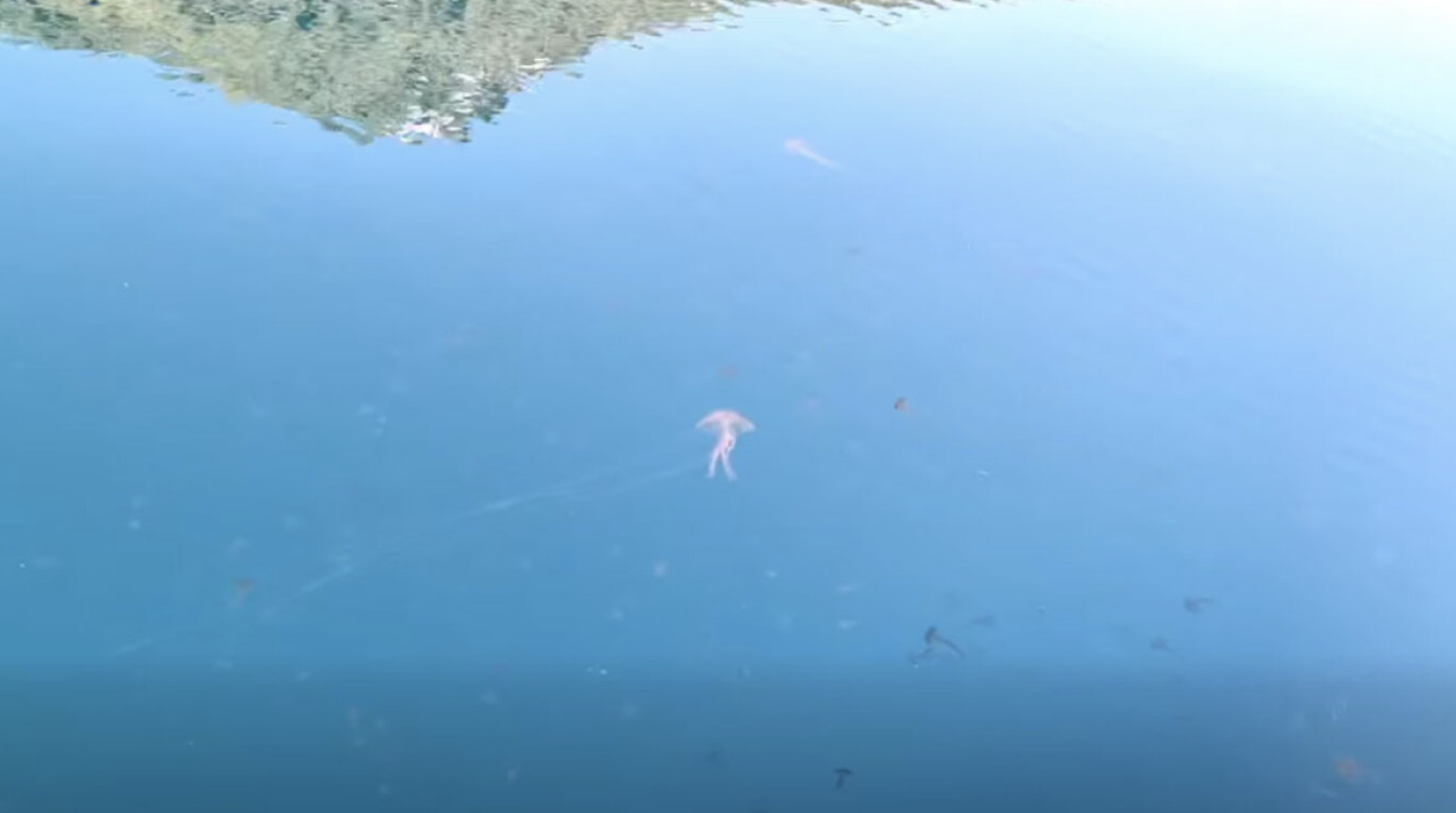
The footage, which is circulating widely online and was posted by a Facebook user, shows swarms of jellyfish spreading across more than five miles of coastline, from Politika, Euboea to Dafni, Euboea.
In the video, the user can be heard warning that if the situation does not improve, the sea in the area may become inaccessible for swimming due to the jellyfish population.
Jellyfish have returned to Greek seas, and the images have raised concern among beachgoers, as similar phenomena have been observed in recent years.
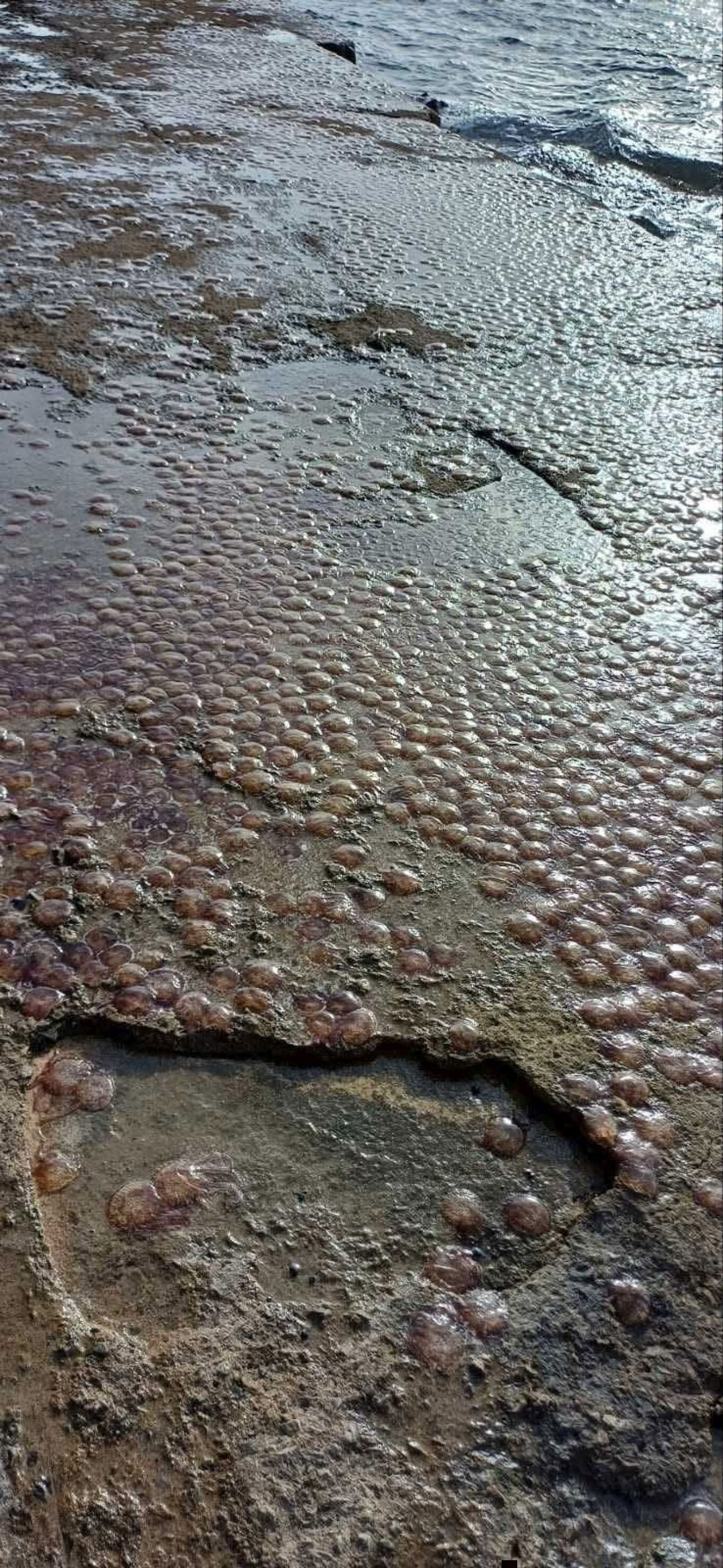
At the beginning of March, hundreds of jellyfish had also washed ashore on a beach in Euboea, in an incident documented in a photo shared by the Regional Governor of Central Greece, Fanis Spanos.
That image, taken at the Limenari beach in Politika, showed jellyfish covering rocky parts of the shore—reminiscent of similar outbreaks seen last summer, when large jellyfish concentrations made their presence strongly felt in the Euboean Gulf.
During that period, many swimmers avoided entering the sea, affecting beach visitation and, by extension, local businesses.
Experts note that the increase in jellyfish populations may be linked to environmental factors such as rising sea temperatures and the decline of natural predators. They stress the need for systematic monitoring and timely public warnings.
Authorities also urge visitors to exercise caution while swimming and to follow safety guidelines, while coastal clean-up efforts and scientific studies are being considered to better manage the phenomenon in the future.
Ask me anything
Explore related questions




