





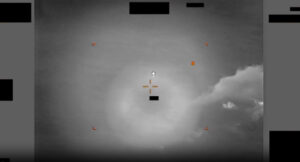
At least three of the six reports related to Greece include video footage and are part of the files released by the U.S. Pentagon regarding UFO sightings around the world.
In essence, these do not constitute confirmation or denial of extraterrestrial life, but rather incidents in which civilians or members of the U.S. Armed Forces saw, observed, detected unexplained phenomena on the horizon, or encountered unidentified flying objects that cannot be explained based on the available evidence.
The collection is hosted at WAR.GOV/UFO, and it is noted that additional files will be released “on a rolling basis.” It is worth noting that the collection includes files dating back as far as 80 years. The documents were published as part of the Trump administration’s initiative for greater transparency regarding records that had remained restricted for years.
The first batch includes 162 folders. Among them are documents from federal agencies, old diplomatic cables, and transcripts from NASA crewed missions. Of particular interest to the Greek public are the reports of sightings from Greece, either inland or in the Aegean.
According to the released information, two of the Greece-related reports recorded on video are from late October 2023, while the third dates from January 2024.
In the first case, on October 27, a small, apparently circular object was reportedly detected moving very low over the sea and was said to perform sudden maneuvers before disappearing from the tracking system.
Video description according to the report:
00:02: The sensor narrows its field of view to focus on a high-contrast area near the center of the screen.
00:03–00:19: The sensor tracks the high-contrast area as it moves against the backdrop of the sea.
00:20: As the background transitions from mostly water to land, the high-contrast area becomes difficult to distinguish.
The second case, on October 29, also concerns a small circular object which, according to the report, moved over the sea toward land before disappearing from view.
Video description according to the report:
00:04: A contrast area enters the sensor’s field of view from the lower-left quadrant of the screen.
00:07–00:19: The contrast area moves horizontally back and forth within the field of view while the sensor pans to follow it.
01:00–02:01: The sensor marks the contrast area with a blue crosshair, synchronizing its movement with the relative position of the contrast area.
02:02–02:21: The sensor activates a contrast filter to better distinguish the contrast area from the background.
02:22: The contrast area becomes indistinguishable from the background, and the crosshair loses focus.
02:27–02:57: After losing focus, the sensor rapidly changes zoom levels and contrast thresholds.
The same files also include a third unresolved UAP report, filed in January 2024. Based on the available information, no further details emerge regarding the circumstances of the observation or the nature of the object.
Video description according to the report:
00:04: A contrast area becomes distinguishable from the background in the center-right frame.
00:10: The display switches to a full-screen SWIR feed view for better focus on the contrast area.
00:55: The contrast area generally remains centered in the sensor’s field of view. It visually resembles an inverted teardrop with a vertically linear mass hanging below it.
00:56: The operator switches the sensor mode to the visible spectrum, causing the object to disappear into the background.
00:57–01:05: The operator switches the sensor back to SWIR (Black-Hot) mode but is unable to reacquire the contrast area.
The following document is a Mission Report (MISREP) from the U.S. military documenting the circumstances surrounding operations conducted from Greece in January 2024.
A U.S. Armed Forces operator reported observing a UAP, estimating its speed at “approximately 434 knots (800 km/h).” The observer described the UAP as diamond-shaped, with a probe-like feature underneath that did not maneuver. The observer noted that the UAP was visible only through an integrated Short-Wave Infrared (SWIR) sensor. The observer stated that the incident lasted approximately two minutes.
Ask me anything
Explore related questions




