





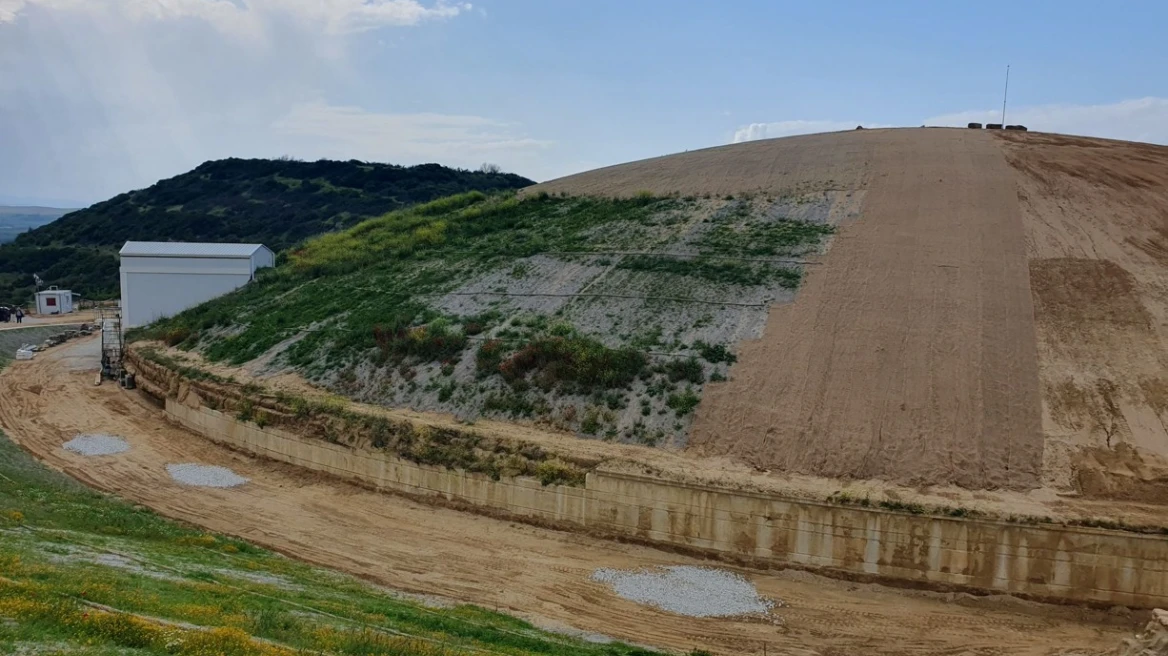
For the first time after fourteen full years of excavation and restoration work, the imposing enclosure wall of the Kasta Tomb in Mesolakkia, Serres, has been revealed almost in its entirety, offering a breathtaking sight even to those who have closely followed the monument since the beginning of the excavation.
The inspection carried out by Minister of Culture Lina Mendoni at the iconic burial site highlighted not only the progress of the restoration works, but also the impressive geometry of the enclosure, which can now be fully appreciated by visitors. For the first time, it is now possible to walk all the way around the monument, allowing visitors to grasp its true scale and architectural form.
The minister was thoroughly briefed by the monument’s architect, Michalis Lefantzis, and the project director, Mr. Vlachoulis, regarding the progress of the interventions, the technical challenges, and the major milestones already completed toward the full restoration of the funerary complex.
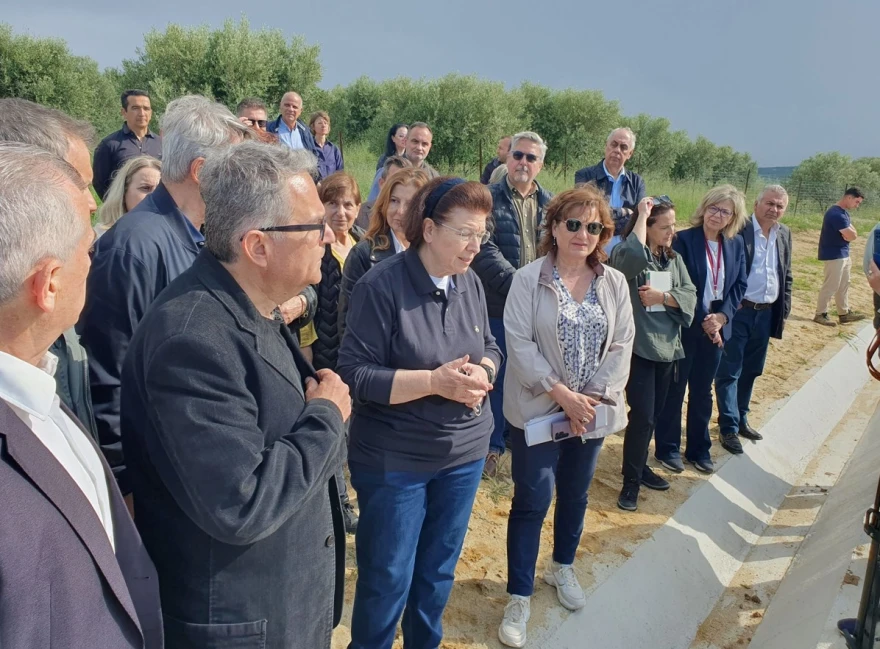
One of the country’s most important funerary monuments
The appearance of the site, with extensive stabilization and restoration works underway, reflects the scale of the effort being made by the services and departments of the Ministry of Culture to preserve and showcase one of the country’s most significant burial monuments.
In statements following the inspection, Lina Mendoni emphasized the importance of the Kasta Tomb, while also responding to those who, as she said, had long questioned both its significance and its dating.
“Another inspection at the Kasta Tomb and at a magnificent monument whose nature was clear to us since 2014. A monument that was heavily questioned, and for which everyone now comes forward claiming they had predicted what it was,” she remarked. The minister noted that the monument itself “is now answering its critics,” as the restoration of the enclosure and the unveiling of its overall geometry reveal its true dimensions.
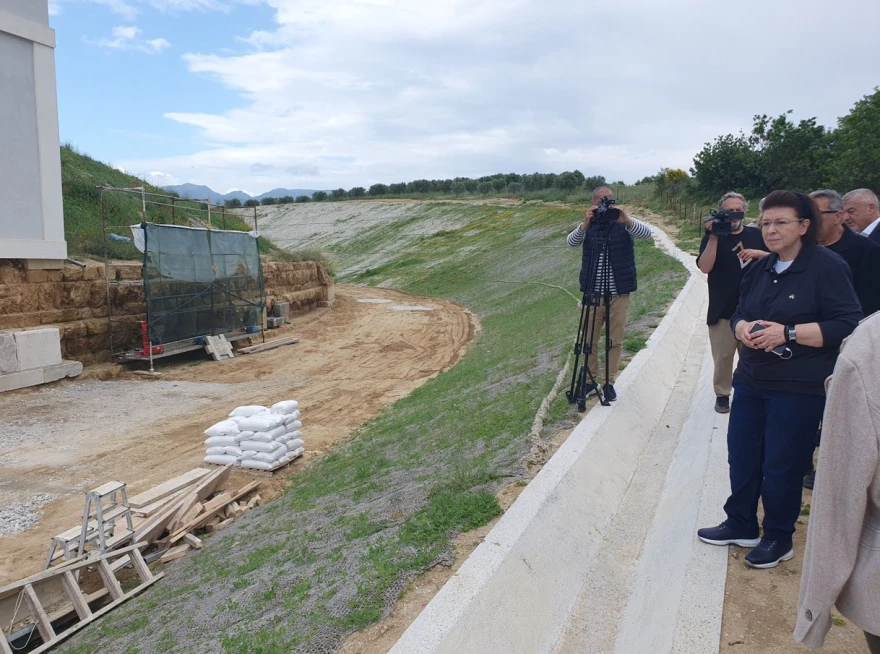
The contribution of the Region of Central Macedonia was decisive
“The monument is magnificent not only because of its size, but also because of the overall image of the enclosure that is being revealed,” she stressed. She also placed particular emphasis on the dating of the monument, noting that the evidence so far confirms the original assessment that it is a Macedonian monument from the last quarter of the 4th century BC, directly linked to the era of Alexander the Great.
“It is a monument which, as one can understand from both its size and the luxury of its construction, is inseparably connected to the era of Alexander the Great, when gold had begun flowing into the kingdom’s treasury,” she said.
She insisted that restoring such a complex monument requires time and scientific precision, noting that “every monument is a living organism” that must be studied and treated with absolute respect. According to the minister, the work carried out by the Directorate for the Restoration of Ancient Monuments, the Ephorate of Antiquities of Serres, and the other services of the Ministry of Culture has now matured to the point where the monument is “gradually revealing itself.”
She described the contribution of the Region of Central Macedonia as crucial, reminding that most of the project funding comes from the Region’s Operational Programs. As she explained, the cooperation between the Ministry and the Region began in previous years under former regional governor Apostolos Tzitzikostas and continues today under the administration of Athina Aidona, with the participation of Serres Deputy Regional Governor Panagiotis Spyropoulos.
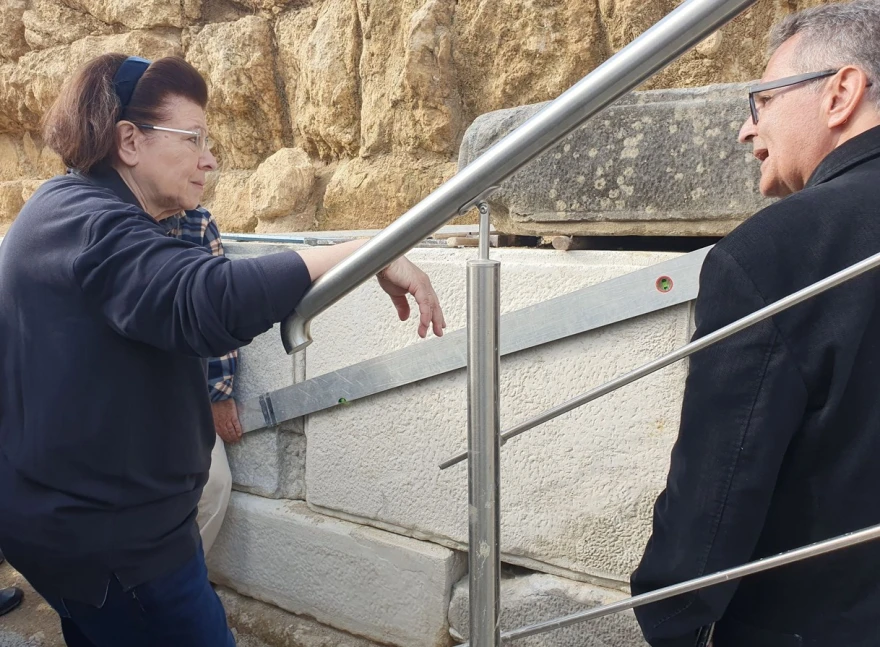
At the same time, the Ministry of Culture is funding research programs worth one million euros through national resources, in cooperation with the National Hellenic Research Foundation and “Demokritos,” aiming to investigate and evaluate every element found inside the monument.
The funerary monument will open to the public in early 2028
Meanwhile, procedures have already begun for the creation of a museum space on the eastern side of the enclosure, while the Ephorate of Antiquities of Serres is moving ahead with planning the necessary infrastructure for visitor services and the overall management of the archaeological site.
The monument is expected to be fully opened to the public in early 2028. As the minister clarified, the operation of the site concerns not only the restoration of the enclosure or the conservation of the interior, but a comprehensive presentation plan with modern infrastructure and organized visitor management.
“It is certain that such a monument will attract a large number of visitors from Greece and abroad,” she said. Indicative of the mound’s scale, she noted, is the fact that the mound at Aigai has a diameter of about 100 meters, while the Kasta mound exceeds 140 meters. The total budget for the projects planned at the Kasta Tomb is expected to exceed 15 million euros, 12 million of which come from programs of the Region of Central Macedonia.
Ask me anything
Explore related questions




