





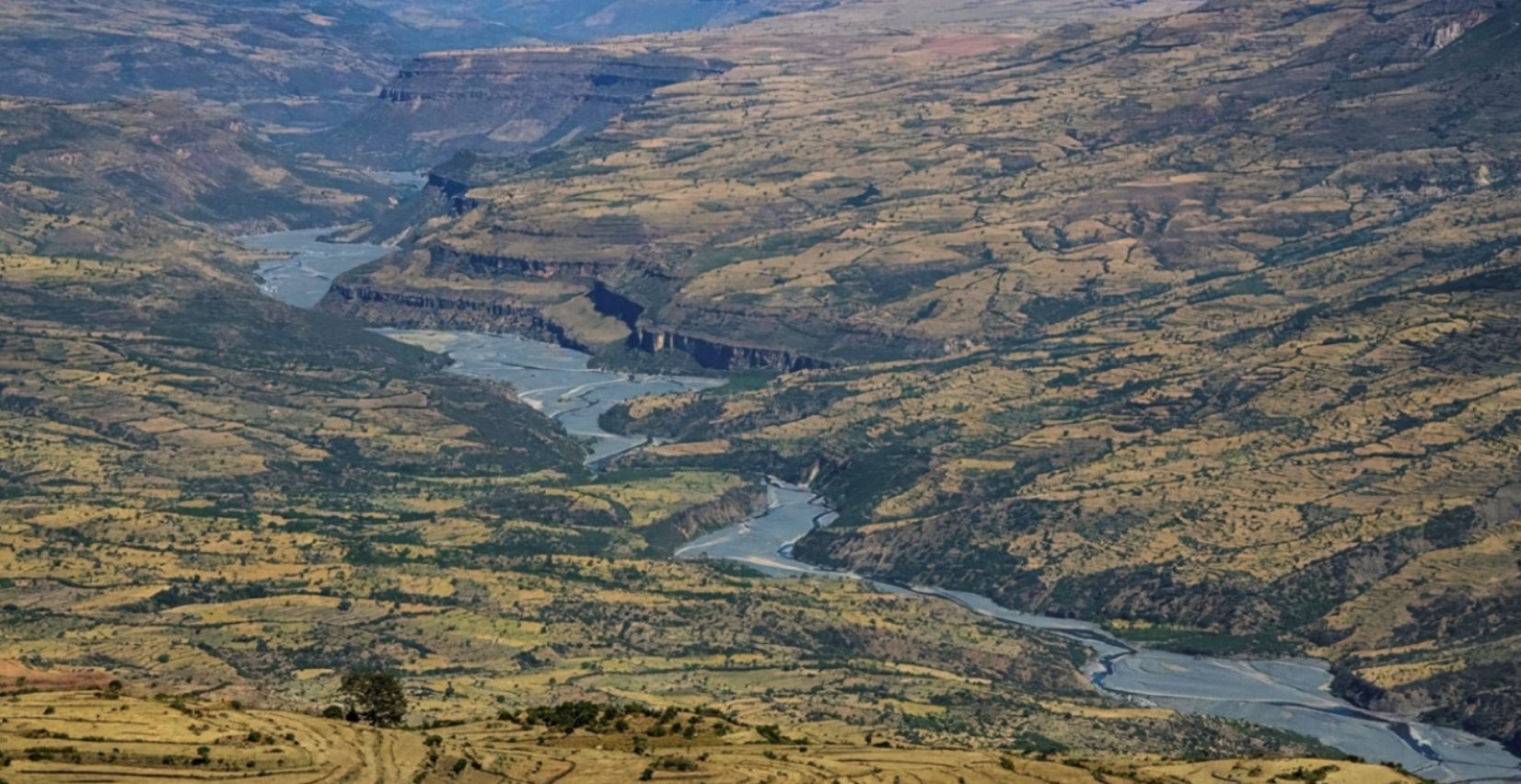
A discovery in Zambia is reigniting debate about Africa’s geological future. Scientists have identified evidence that the Kafue Fault, a major geological fracture running through the country, may be part of a new and active zone of crustal rifting that could, in the long term, evolve into a new tectonic plate boundary.
What is particularly notable is that the evidence did not come from seismic or volcanic activity, but from the analysis of gases released by hot springs in the area. Researchers found that the gases contained helium isotopic signatures pointing directly to Earth’s mantle, suggesting that deep geological layers are now connected to the surface through the fault.
The study was led by Professor of Geosciences at the University of Oxford, Mike Daly, who and his team collected gas samples from eight geothermal springs and boreholes. Six of these were located within the Kafue fault zone and two outside it, in geologically stable areas. The analysis showed that only samples from within the fault contained strong mantle-derived helium signals.
“Hot springs along the Kafue Fault in Zambia show helium isotopic signatures indicating a direct connection to Earth’s mantle,” Daly said.
Similar characteristics to the East African Rift
The results were compared with data from the East African Rift System, which has been developing for millions of years and is considered the best-known example of continental rifting on Earth. Scientists found that measurements from Zambia fall within similar ranges, although they represent a much earlier stage of the process.
According to the study, the Kafue Fault appears to be in a phase where fractures in the crust are beginning to extend to greater depths, allowing fluids and gases from the mantle to rise toward the surface. There are no volcanoes in the area yet, but geochemical data suggest the process is underway.
The fault is part of the so-called Southwestern African Rift System, a zone stretching roughly 2,500 km from Tanzania to Namibia, through Botswana and Zambia. If tectonic activity continues, some scientists believe that in the very distant future a new tectonic plate boundary could form, gradually leading to the separation of parts of the African continent.
Interest in geothermal energy, helium, and hydrogen
The discovery is not only of geological interest. Early rift zones are considered areas with high potential for geothermal energy, as well as concentrations of valuable gases such as helium and hydrogen.
Helium is a critical raw material for MRI scanners, the microchip industry, and space applications, while hydrogen is increasingly attracting attention as a potential clean fuel of the future. Zambia is already conducting geothermal research along the Kafue Fault, and the new data strengthen expectations for the exploitation of underground resources in the region.
However, scientists remain cautious in their conclusions. As Daly notes, the study covers only one section of a system spanning thousands of kilometers, and further research in Botswana and Namibia is needed to clarify the full picture. These studies are already underway, with initial results expected later this year.
Nevertheless, the new research shifts geological attention from East Africa toward Zambia, which is now considered one of the most promising regions for the development of a future tectonic boundary that could eventually reshape the map of the continent.
Ask me anything
Explore related questions




