





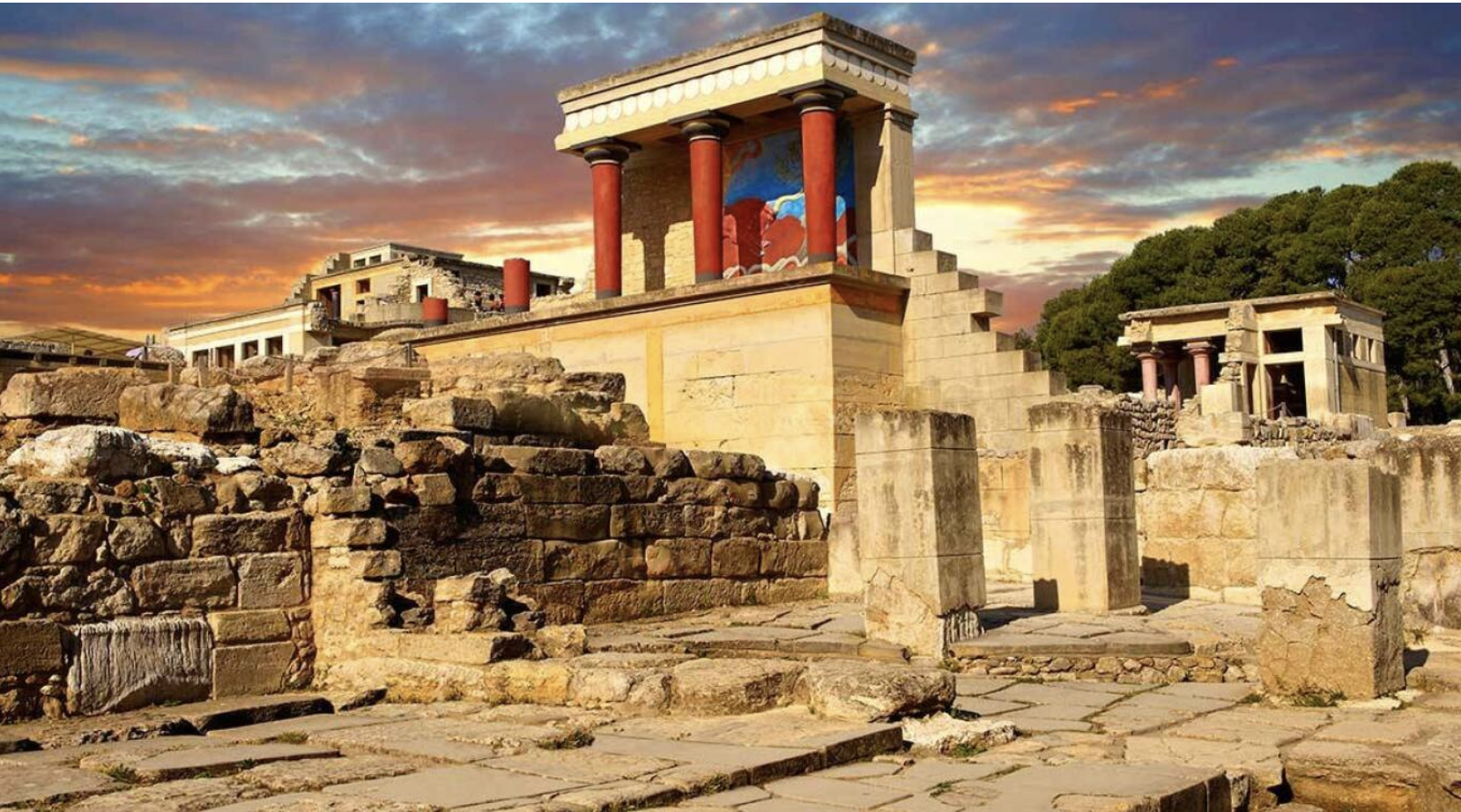
The significance of the inscription of the Minoan Palaces on the UNESCO World Heritage List, the conditions that accompany this international recognition, the systematic planning that preceded it, as well as the major projects currently underway in the region, were highlighted by Culture Minister Lina Mendoni during the unveiling ceremony of the UNESCO commemorative plaque at Knossos.
“Today we are celebrating a landmark moment of international recognition for Greek culture, as it is officially confirmed that the Minoan civilization is an integral part of the world’s cultural heritage and the collective memory of humanity,” she said, adding that “Minoan art, with its unique naturalistic character, its sense of movement, its relationship with nature, the sea and light, continues to fascinate and inspire.”
However, the Minister of Culture strongly emphasized the significant obligations that come with inscription: “We must all understand, it must be made absolutely clear, that the inscription of properties on the World Heritage List does not in any case constitute merely an honorary distinction, which is granted once and remains valid forever, without terms and conditions. Nor is it eternal, as it requires evaluation, nor without terms and conditions. On the contrary, it is primarily a recognition and acceptance of a binding responsibility for their continuous and effective protection. It obliges the state and its services, municipal and regional authorities, as well as local communities as a whole, to collectively ensure, within each one’s competence, the preservation of their integrity and authenticity, as well as their safeguarding for future generations.”
She also explained that the care of the Minoan palace centres by the state did not begin after their inscription on the World Heritage List: “It was preceded by a long period of systematic planning, maturation and methodical preparation, ahead of the submission of the nomination dossier, in order to meet not only formally but also substantially all the strict, and rightly strict, UNESCO specifications and requirements. In this context, specialized documentation and protection studies of the monuments were carried out, along with risk management plans for both natural and human-made threats. Visitor management, accessibility, and infrastructure upgrade plans for the operation of the sites and public service were developed. In this way, the necessary scientific and institutional framework was established for the creation of the required unified management plan for the Minoan archaeological sites.”
In addition, the Minister referred to the programme of major works being implemented in parallel. “At Knossos, the most emblematic Minoan site, projects are starting for the protection and structural reinforcement of the monuments, the modernization of visitor facilities, the improvement of accessibility, and the upgrading of visitor management systems, aiming to ensure the authenticity and functionality of the site under conditions of increased tourism,” she said. She added: “Closely connected to these works is the integrated spatial investment of emblematic routes in Crete, ‘Environment and Culture’, which constitutes one of the most important strategic interventions currently being implemented in Greece in the field of cultural management and sustainable regional development. At its core lies the establishment of the Minoan Cultural Route. The initiative is a project of the Region of Crete, developed in close cooperation, as is the case with almost everything done in Crete, with the Ministry of Culture. Funding comes from a combination of national and European resources. Specifically for the Minoan Cultural Route, approximately €15 million have already been secured, mainly from the NSRF, demonstrating the strategic importance attributed to the protection and promotion of Minoan monuments as a key pillar of cultural and development policy for Crete.”
Finally, Lina Mendoni stressed that the major success of the inscription of the Minoan Palace Centres was not the result of coincidence but of a coherent plan. “It is part of the strategic choice and implemented policy of the government of Kyriakos Mitsotakis, which treats culture not as a luxury but as a critical strategic resource for development, social cohesion, and the country’s international presence. The successful inscription of the Minoan Palace Centres on the World Heritage List was the culmination of a long-term, systematic and collective effort.”
Ask me anything
Explore related questions




