





The history of humanity remembers individuals who left an indelible mark on the course of nations. Some distinguished themselves as men of God, enlightened by the prophetic gift, while others emerged as great leaders who altered the course of world history.
Among these remarkable figures stand the Prophet Jeremiah and Alexander the Great of Macedonia. The former was one of the major prophets of the Old Testament; the latter, one of the greatest military commanders of all time.
Although centuries and very different missions separated them, an ancient tradition connects them in a unique way in Alexandria, Egypt. Moreover, their historical and spiritual presence contributed, each in his own sphere, to preparing the world for events that would ultimately transform human history.
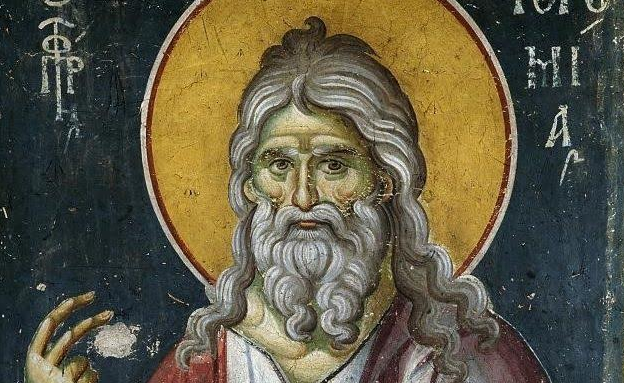
The Prophet Jeremiah lived during the final decades of the Kingdom of Judah and witnessed the fall of Jerusalem to the Babylonians in 586 B.C. His life was filled with sorrow, persecution, and trials.
He did not hesitate to rebuke the apostasy of his people and call them to repentance, even when his words provoked opposition. Yet his message was not merely one of judgment.
Throughout his biblical writings, there also shines forth the great hope of salvation. Jeremiah was among the prophets who spoke of a new relationship between God and humanity and foretold the coming of the Messiah.
His most significant Messianic prophecy is the proclamation of the New Covenant: “Behold, the days are coming, says the Lord, when I will make a new covenant with the house of Israel and with the house of Judah” (Jeremiah 31:31).
The Church has always understood this prophecy as a foreshadowing of the New Covenant inaugurated by Christ. Likewise, Jeremiah foretold the coming of the righteous King from the house of David: “I will raise up for David a righteous Branch, and a King shall reign and prosper” (Jeremiah 23:5).
Ancient Christian interpretation regarded these words as clear references to the expected Messiah.
According to tradition, Jeremiah was taken to Egypt after the destruction of Jerusalem. There he spent the final years of his life and was buried in a place that became greatly honored by the local inhabitants.
The apocryphal work “Lives of the Prophets” preserves an intriguing account. According to this tradition, the Egyptians believed that the prophet had protected the region from venomous snakes, known as “asps,” as well as from crocodiles. His reputation for holiness endured for centuries, and his tomb was regarded as a place of blessing and protection.
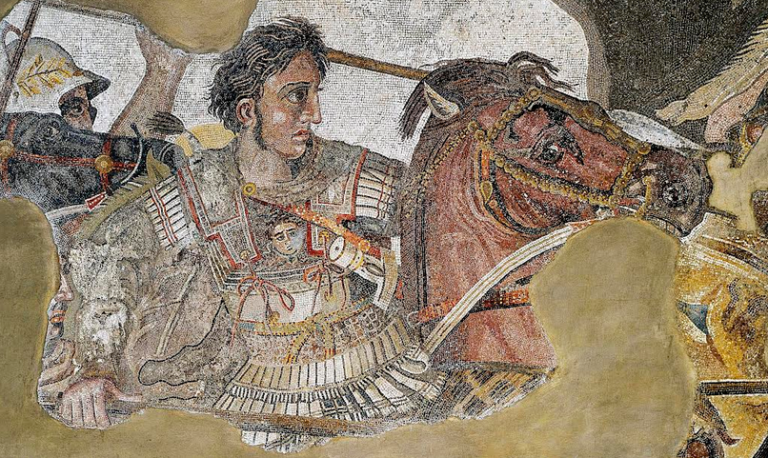
Approximately two and a half centuries after Jeremiah, Alexander the Great appeared on the stage of history. The son of Philip II of Macedonia and a student of Aristotle, he succeeded in creating one of the largest empires the world had ever known in only a few short years.
His campaigns began in Macedonia and extended through Asia Minor, Syria, Palestine, and Egypt, continuing into Mesopotamia and Persia and reaching as far as Central Asia and India.
His victories at the Granicus River, Issus, and Gaugamela brought an end to Persian dominance and established Alexander as ruler of the known world. Yet his significance extends far beyond his military achievements.
The spread of the Greek language, Greek culture, and the Hellenistic way of life created a common cultural sphere stretching from Egypt to India.
Later, it was within this very Hellenistic world that the New Testament was written and the Gospel of the Apostles was proclaimed. For this reason, many historians consider the Hellenistic world shaped by Alexander to have been one of the most important factors in the rapid spread of the Christian message.
The “Lives of the Prophets” relates that Alexander the Great, during the founding of Alexandria, learned of the special honor the Egyptians accorded to the Prophet Jeremiah. According to the tradition, he ordered the prophet’s relics to be transferred to the new city.
The relics were reportedly placed around Alexandria as a means of protecting the city from venomous snakes and crocodiles that plagued the region. While this tradition is not confirmed by the principal historical sources concerning Alexander, it nevertheless reveals the esteem later generations held both for the great conqueror and for the prophet.
Even if this account belongs more to the realm of pious tradition than documented history, it remains noteworthy that it portrays Alexander—a Gentile ruler who did not belong to the people of Israel—honoring a prophet of the true God and recognizing the importance of his presence in the lives of people.
This tradition demonstrates that holiness and virtue command respect even beyond the boundaries of religions and nations.
Jeremiah and Alexander never met in history. One was a prophet of God; the other, a world-conquering king. Yet history brings them together from a deeper perspective.
Jeremiah spiritually prepared the people for the coming of the Messiah by proclaiming the hope of the New Covenant and salvation. Alexander, though not part of biblical history, helped shape a unified cultural world in which the Greek language and communication among peoples later facilitated the spread of the Christian proclamation.
Thus, the ancient tradition connecting the Prophet Jeremiah and Alexander the Great in Alexandria acquires a profound symbolism. The man of God and the great military leader appear, each in his own way, to serve the course of history as it moves toward the fulfillment of God’s plan for the salvation of the world.
The Prophet Jeremiah and Alexander the Great fulfilled two different yet equally significant missions. Jeremiah was a prophet of hope and expectation for the Messiah. Through his prophecies concerning the “new covenant” and the righteous King from the house of David, he cultivated in the hearts of believers an anticipation of the coming salvation.
Alexander the Great, by contrast, was not a prophet, nor did he fully understand the Messianic expectations of Israel. Nevertheless, his historical mission proved decisive for the course of humanity.
Through his campaigns, he broke down barriers between the peoples of East and West, founded new cities, established commercial and cultural connections, and spread the Greek language throughout nearly the entire known world.
The Apostles traveled through a world that already possessed common cultural foundations and the ability to communicate across vast regions—from Syria and Palestine to Egypt, Asia Minor, Greece, and Rome. This unity was not created by the Apostles themselves but had largely been established beforehand through the Hellenistic world that emerged after the conquests of Alexander the Great.
In this sense, many historians regard the Hellenistic era as one of the most important preparatory periods for the spread of the Christian message. This does not mean that Alexander was consciously aware of this future role, nor that he directly participated in the plan of divine revelation. It does mean, however, that Divine Providence can make use even of the actions of great historical figures to prepare events that far exceed their own intentions.
Thus, the prophet and the conqueror, though belonging to different worlds and different eras, meet symbolically along the path of history. One appears as the herald of God’s promise; the other as a historical instrument who, without realizing it, contributed to preparing the world for the spread of the message of salvation brought by Christ.
Without knowing the future of the Christian faith, Alexander the Great contributed through his conquests to the creation of the Hellenistic world. The common Greek language, the founding of cities such as Alexandria, and the cultural unity of the Eastern Mediterranean provided the foundation upon which the Apostles later traveled and through which the message of Christ spread throughout the world.
Ask me anything
Explore related questions




