





While the number of ships passing through the Strait of Hormuz is gradually increasing, the appearance of partial normalisation masks a situation that remains highly fragile. International maritime security officials describe an environment in which the threat no longer comes solely from a potential missile strike, but from a combination of military, cyber, and operational risks that increasingly complicate daily maritime transit.
The two attacks that occurred within a 72-hour period—first against Evergreen Marine’s container vessel EVER LOVELY and then against the tanker KIKO—marked a turning point that prompted the Joint Maritime Information Center (JMIC) to raise the maritime threat level to “Substantial.” Although neither vessel suffered catastrophic damage and no injuries were reported, the message to the shipping community was clear: security in the Strait of Hormuz remains extremely fragile.
According to maritime security sources, captains are now operating in an environment of persistent interference with satellite navigation systems (GNSS), repeated VHF hails from Islamic Revolutionary Guard Corps (IRGC) units, tracking by military assets, and increased unmanned aerial vehicle activity. In several cases, crews are reportedly forced to continuously verify their position using alternative navigation methods, as electronic jamming undermines the reliability of standard positioning systems.
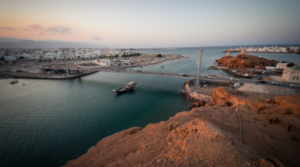
At the same time, reports of sea mines in the area are raising serious concern. Sources familiar with the situation do not rule out the possibility that as many as 80 mines may be present in the Persian Gulf, significantly limiting available transit routes. In practice, vessels are effectively constrained to two narrow shipping corridors: the northern route near the Iranian coast and Larak Island, and the southern route along the Omani coast, where surveillance and clearance operations are already underway.
Shipping security executives also believe that Tehran is seeking to tighten control over commercial traffic by pushing more vessels toward the northern route, closer to Iranian territorial waters. They note that it is no coincidence the two recent attacks occurred in the southern Omani corridor, which had previously been considered the safer option by many shipping companies.
The operational situation is also reflected in traffic data. In the past 24 hours, only nine ships transited the Strait, compared with pre-escalation levels of roughly 17 to nearly 30 daily passages. Despite the cautious resumption of traffic, shipowners continue to assess each transit in near real time, as security conditions can shift within hours.
A notable example is the CMA CGM container ship Galapagos, which successfully exited the Strait of Hormuz, while the French shipping group still reportedly has ten vessels stranded in the Persian Gulf since the crisis began.
This uncertainty is also being felt in the market. War risk premiums remain elevated, tanker freight rates continue to fluctuate sharply, and shipping companies are repeatedly revising voyage plans. Despite the gradual increase in transits, market participants believe that a return to normality will depend not only on a de-escalation of military tensions, but also on restoring confidence that key maritime routes can operate without the daily risks of attacks, electronic interference, and mines.
Ask me anything
Explore related questions




